

19-05-2026 10:27
Patrice TANCHAUDBonjour, récolte récente sur terre retournée i
04-06-2026 18:39
Gernot FriebesHi,I collected this species in two different locat
22-05-2026 13:29
Gernot FriebesHi,I am curious to hear your opinion on this mater
04-06-2026 10:50
 François Freléchoux
Bonjour, J'ai trouvé hier un petit asco observé
04-06-2026 07:02
François Freléchoux
Bonjour, Voici la description d'une espèce qui p
04-06-2026 13:34
Gernot FriebesHi,I am interested to hear your opinion on this Le
04-06-2026 11:36
Gernot FriebesHi,found on Vaccinium myrtillus.Asci: IKI –, 8-s
 Hello everybody,
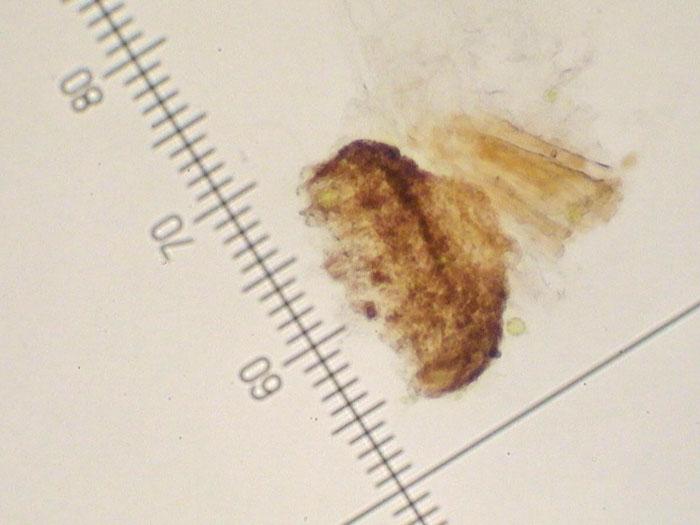
I found an ascomycete (0,1 mm) on arnica.
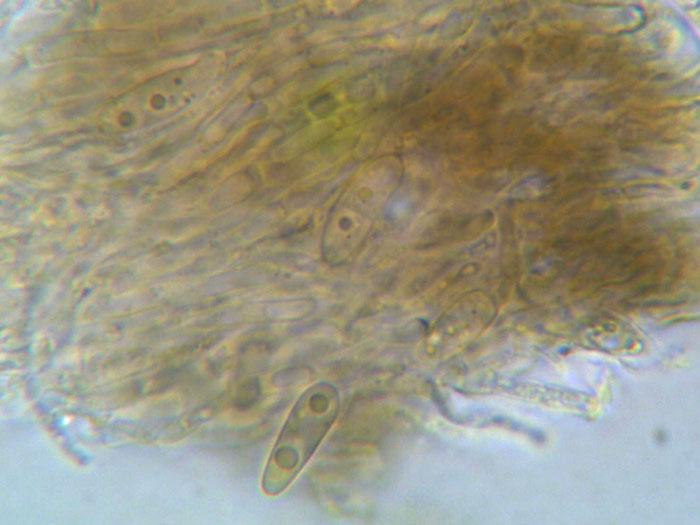
Spores (11-13) 11,72 x 3,88 (3-4,5) µm, with two bigger oildrops and many small ones on both ends.
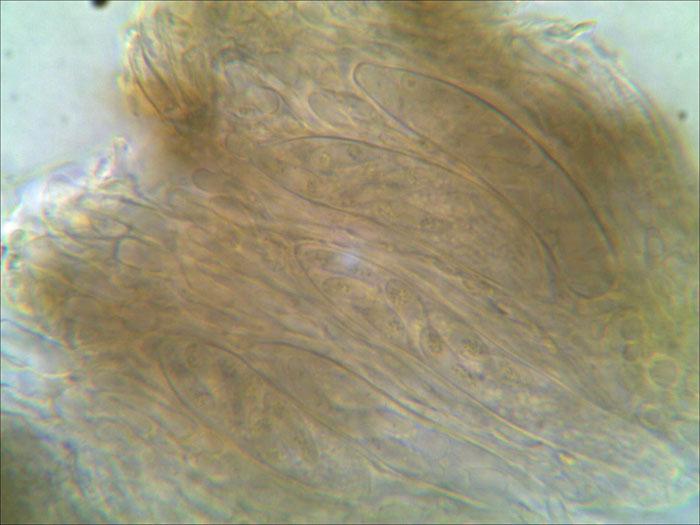
Asci 48-50 x 9-11, IKI blue, paraphyses 3 µm.
Thanks
Regards
Maren
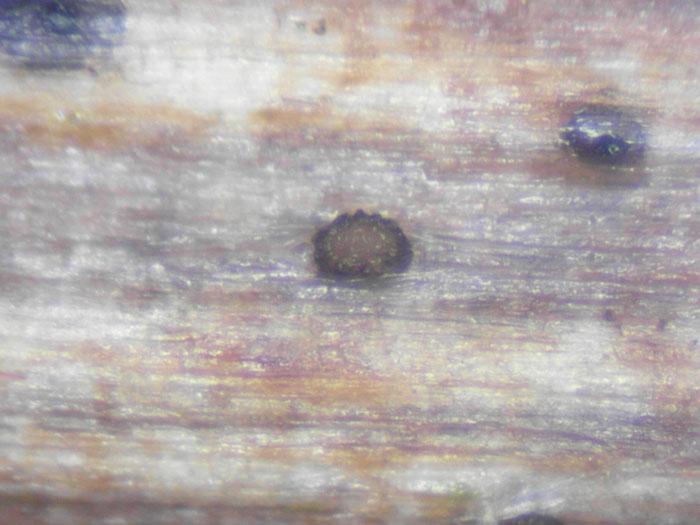
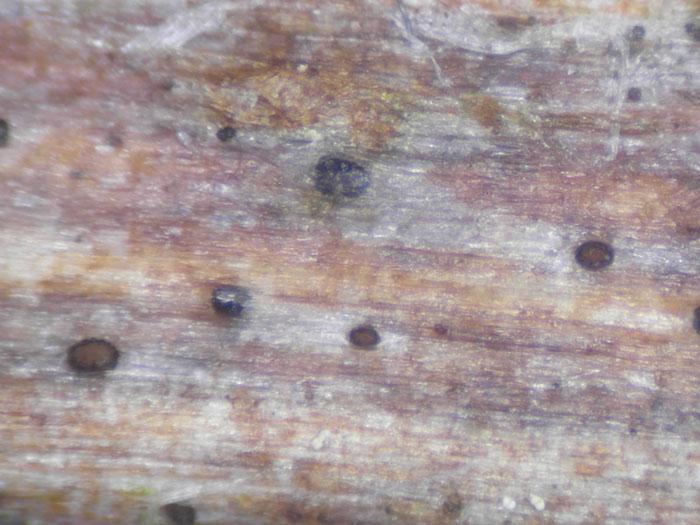
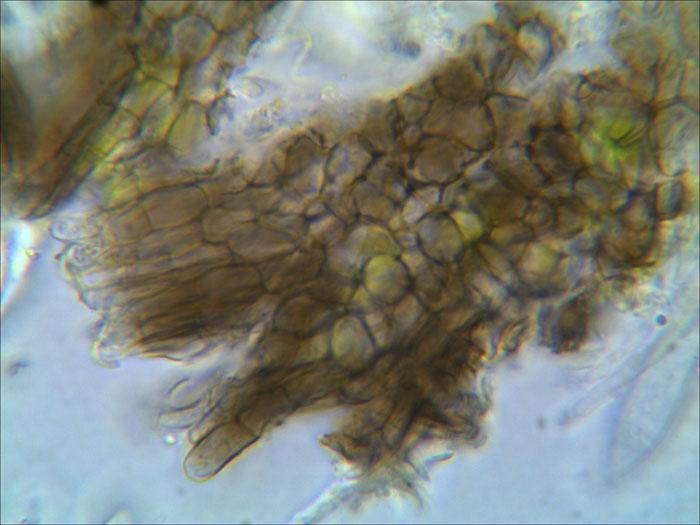
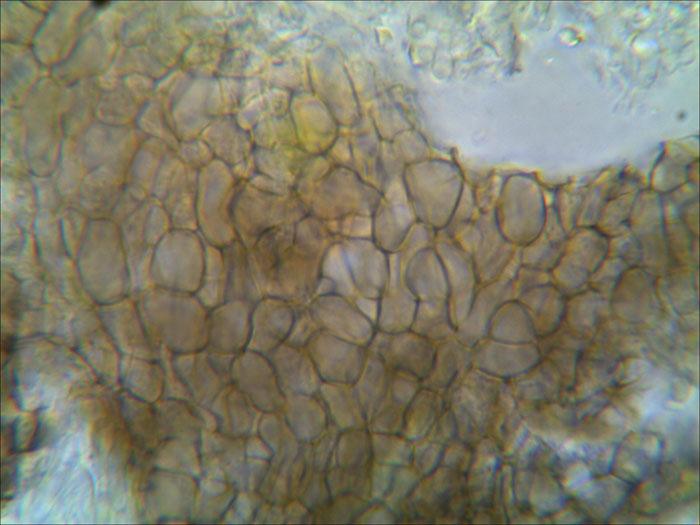
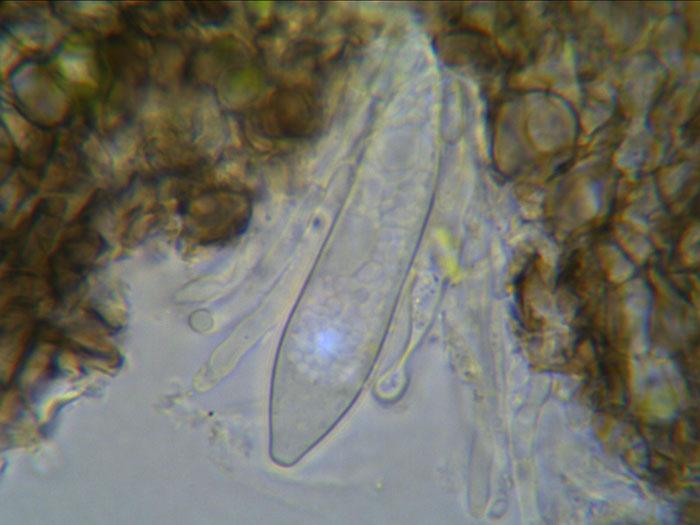
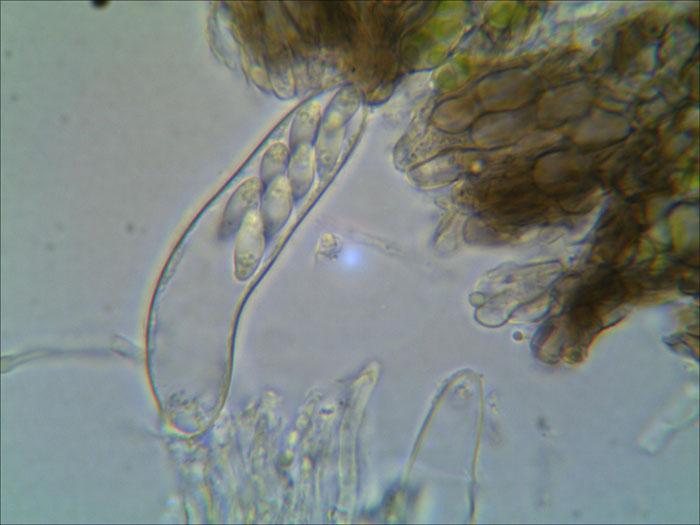
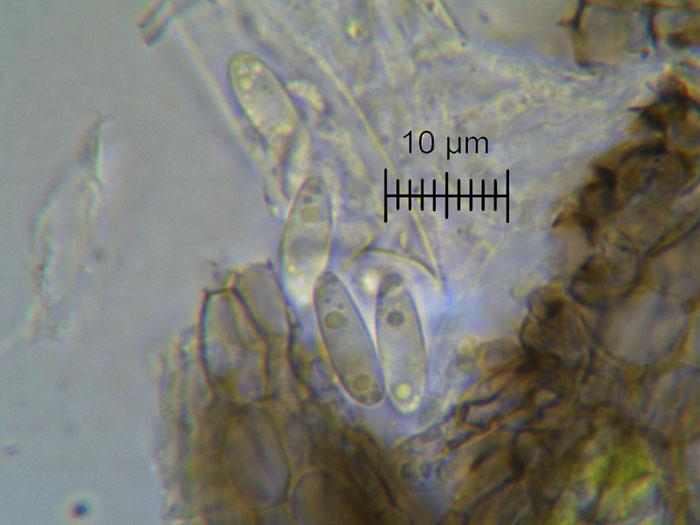


you made no mistake with 0.1 mm? And it was in the mountains? On the old stems?
No idea actually. I looked in my database for Asteraceae with such a spore size, no good result.
Something of the Naevioideae perhaps. Schizothyrioma has larger apos and is reported on Achillea.
Zotto
thank you for your opinion.
There is an artifical arnica meadow on the westcoast of Schleswig-Holstein, we accompanied the botanical sektion to this spot to look after ascomycetes on arnica. What we didn't knew was that the meadow is mowed regularly and the clippings are removed. So we searched for arnica-stems. The botanist I talked to identified my stem as arnica, but it is not impossible that he was wrong.
On the same stem I found Cyathicula tomentosa, Mollisia cf. revincta (still without spores :( and Leptospora rubella.
The apos are really very small, max up to 0,15 mm.
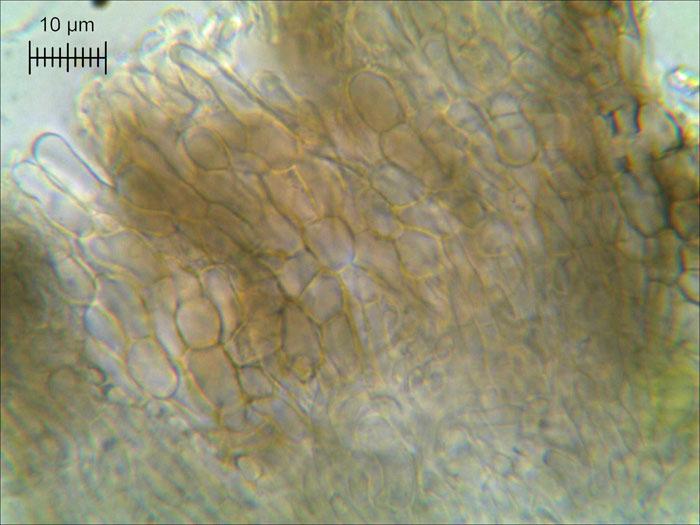
I checked with the Naevioideae? on your DVD, the color and the macroscopical habitus matches Ploettnera solidaginis, but the microscopical details of course not.
The spores get one septa with age.
I think it could be a Diplonaevia sp. but which one?
Regards Maren
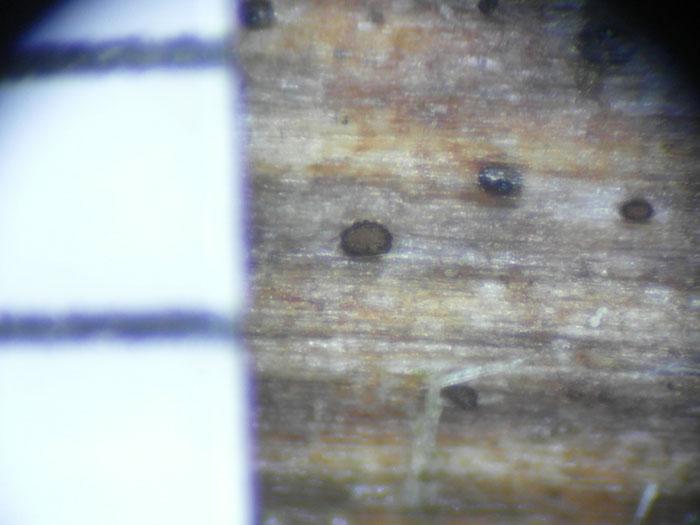
Arnica is not in the list of substrates in Hein 1976.
Zotto