
12-06-2026 14:50
 François Freléchoux
Bonjour, Voici la brève description d'une Mollis
10-06-2026 21:16
François Freléchoux
Bonsoir,Le dernier du jour, en attendant votre avi
11-06-2026 19:01
 William Slosse
Hello all,In an attempt to make a culture of a sus
11-06-2026 19:03
 Nicolas VAN VOOREN
Chers membres d'Ascofrance,Le site sera placé en

09-06-2026 18:32
Camille MertensSur morceau de roseau immergé 0,5 - 0,7 mm de dia
10-06-2026 12:54
Steve ClementsBonjour encore, Pouvez-vous m'aider, s'il vous pl
10-06-2026 21:07
François Freléchoux
Toutes les tiges de gentianes jaunes de l'an passÃ
10-06-2026 13:41
François Freléchoux
Bonjour à nouveau, Voici une trouvaille d'hier.
 Dear friends
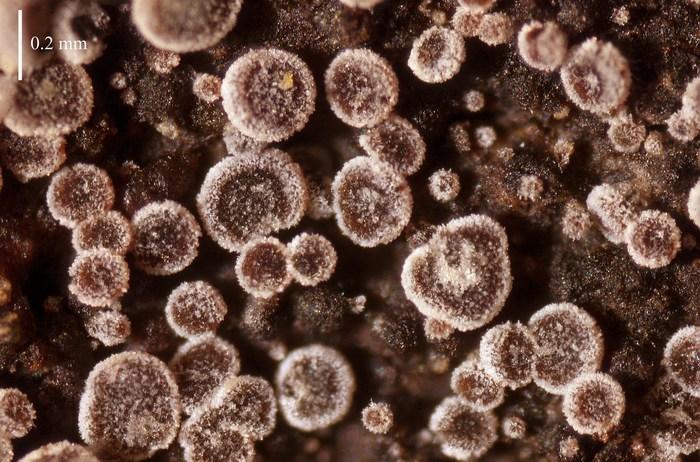
We have found these minute (up to 0.5 mm), very densely gregarious ascomata growing on
stromata of Eutypa sp. on Fagus wood. There were hundred of fruit bodys filling
the surface of the stromata that, on the other hand, were fertil. No anamorph.
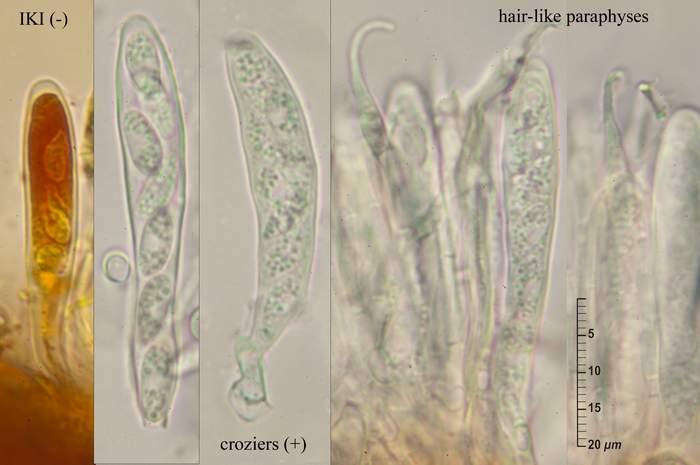
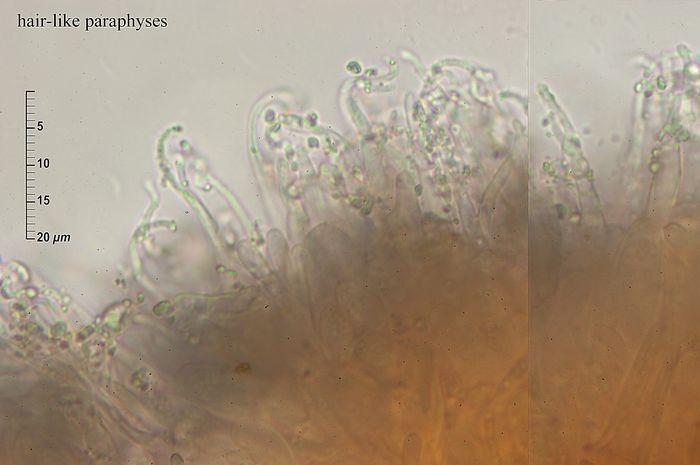
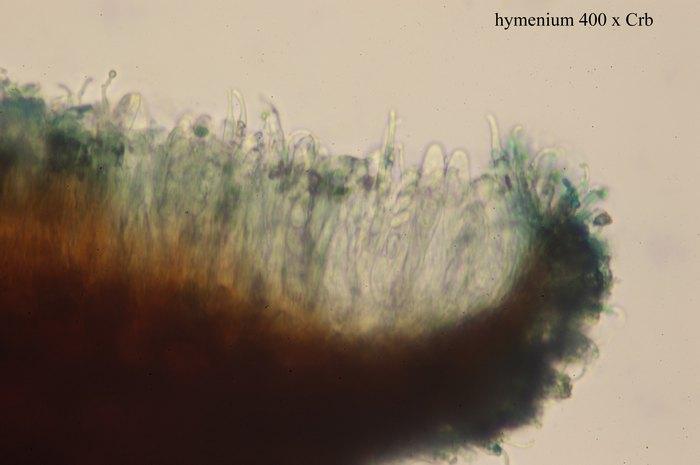
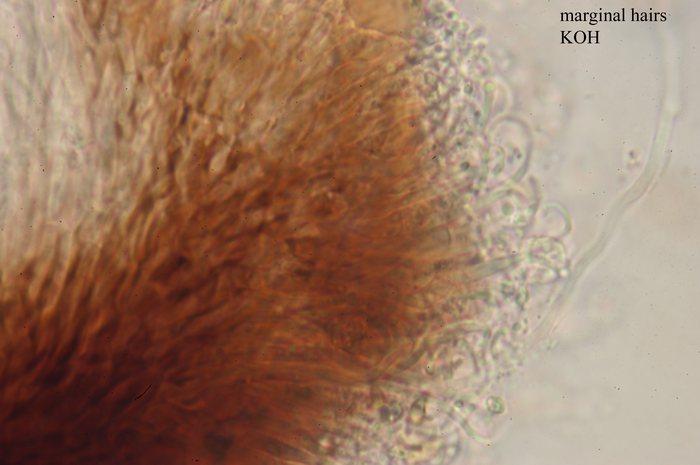
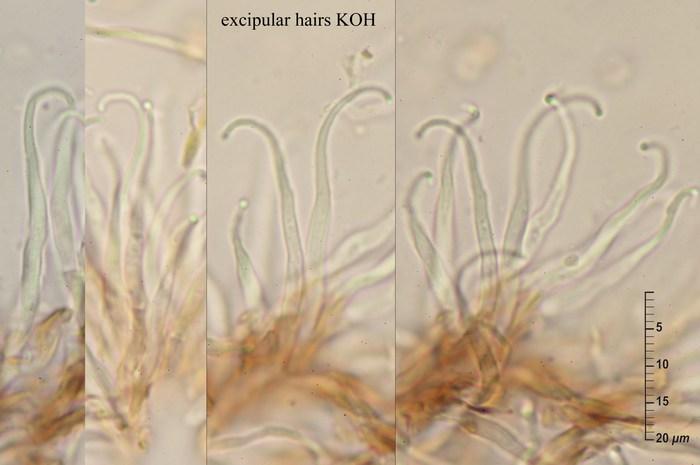
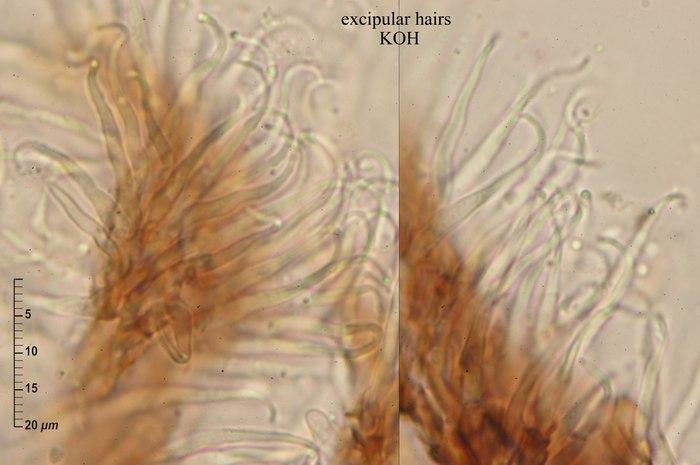
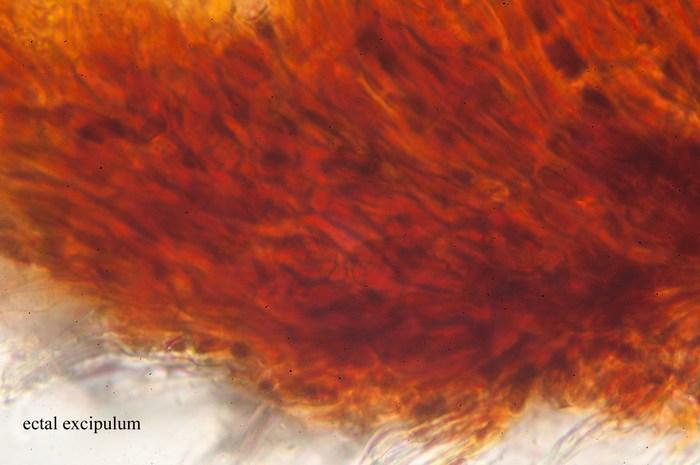
The ascomata, turbinate and attached by a narrow point, are vinaceous brown and the hymenial surface (and the excipulum too) is very pruinose by the existence oh hooked granulate hair-like paraphyses. The excipular and marginal hairs are hyaline or subhyaline with hooked and granulate neck, whith any refringence at their walls and they arise from the
gelified and reddish brown cells of the excipulum.
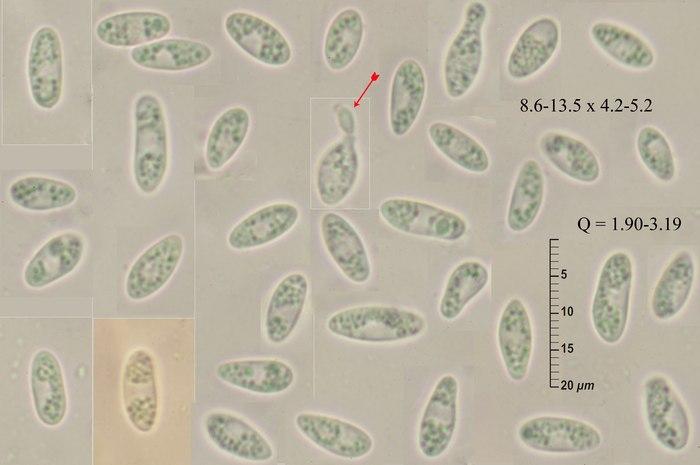
The asci are 8-spored, IKI negative, croziers positive. Some ascospores seem to make
ellipsoid microconidia.
I don't know an Unguiculariopsis species with these characters. ZHUANG (1988) describes
U. parasitica and U. dimorpha as parasitic of pyrenomycetes, but their ascospores are different.
Can you help me
Thanks again

you once had such a species: Unguiculariopsis, ERD-5523:
Arbeyales (Asturias), 14-IV-2012, as Unguiculariopsis. On Rosa sp. stems (on cankers) at 1000 m of altitude. The paraphyses are partially hooked as the excipular/marginal hairs.
I never saw such large-spored Unguiculariopsis myself. The hooked paraphyses are unknown in the genus, but occur in Unguiculella. Species of that genus are more hyaline....
You can send me your pics, that would make it easier and in better resolution.
Zotto
I was searching the photos of the collection on Rosa but I don't find them.
I think these collections are the same thing and they are closely related with Eutypa.
A good name for the fungus. Maybe you will collect it when you arrive to Somiedo!