
28-04-2026 20:07
 Lothar Krieglsteiner
... on twig in the air at standing Ceratonia siliq
11-05-2026 12:32
 Bernard CLESSE
Pourriez-vous m'aider à identifier cette héloti
29-04-2026 10:44
Lothar Krieglsteiner
growing at moist, drying-out soil at the side of a
05-04-2026 22:46
Lothar Krieglsteiner
on wood of Ceratonia, Algarve, 3.4.2026.The color
10-05-2026 16:18
brigitte vignotbonjour trouvée en Ariège sur bois une petite
10-05-2026 23:17
 Andreas Gminder
Hello,today we found in a moist steep decidous for
27-04-2026 17:16
Lothar Krieglsteiner
.. Algarve, moist lying.The conidiomata look like
10-05-2026 09:02
Buckwheat PeteHello everybody, ould this be Lachnum subvirgineu
Sporormiella dubia
Joop van der Lee,
09-05-2013 12:48
 Found on horse dung
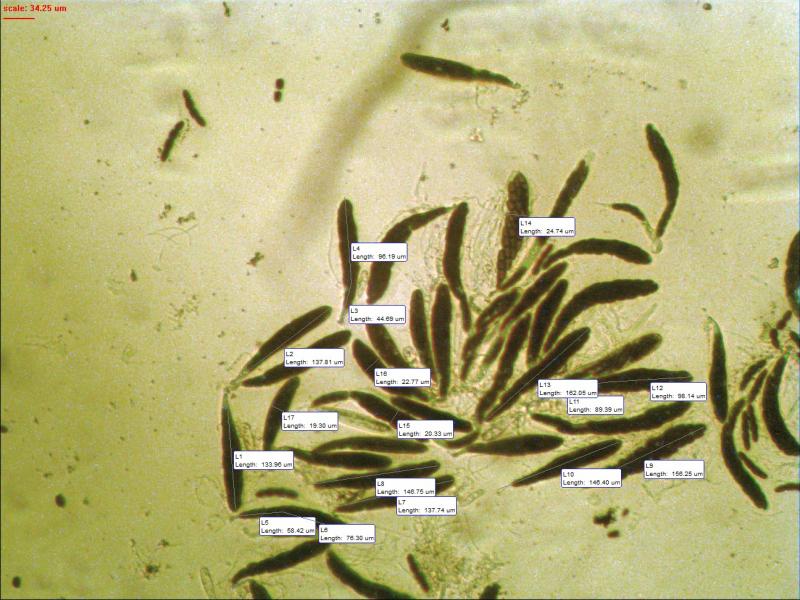
Asci: 137.74-162.05x19.30-22.77 um
Broad on top and gradually tapering into a short stipe.
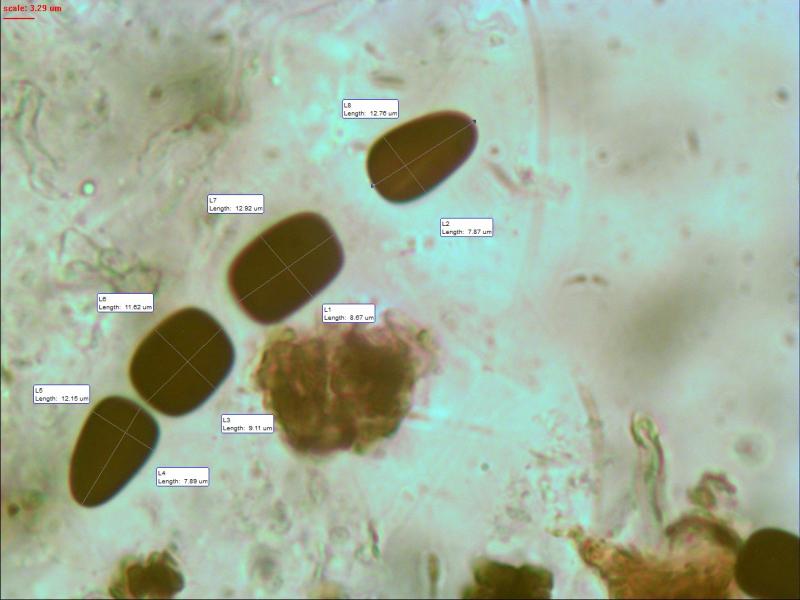
Spore: Only one mature spore collected, the rest were still too young and olive/brown in colour 49x7.87-9.11 um
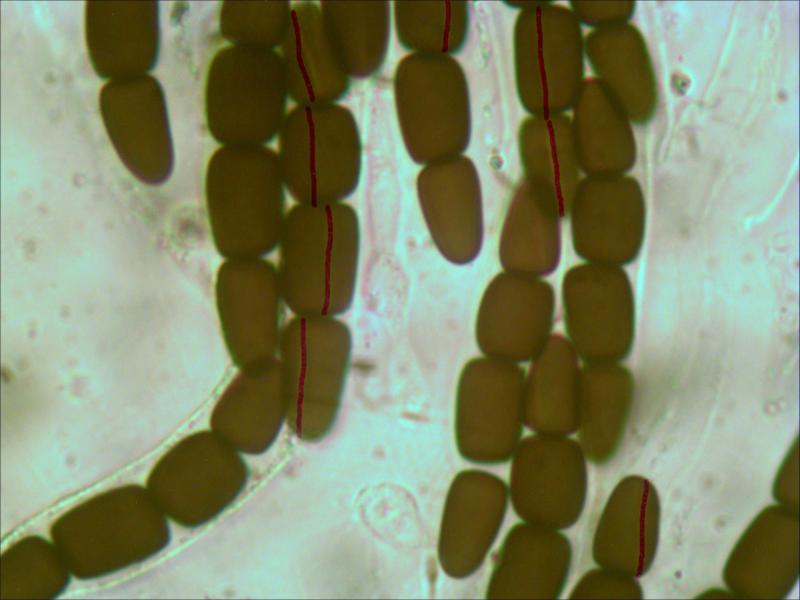
Germ slits parallel
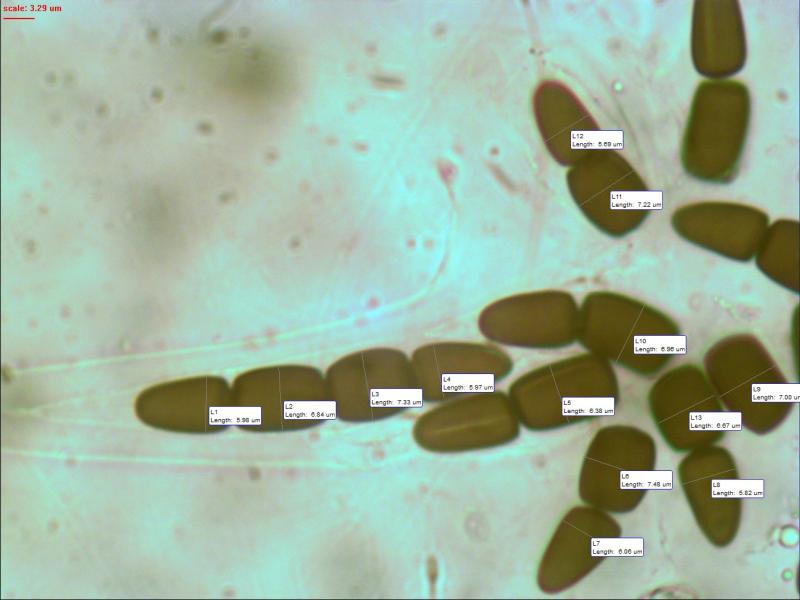
Separate cell m easurement from apex cell to basal.
12.15x7.89; 11.62-9.11; 12.92x8.67; 12.76x7.87 um
Michel Delpont,
09-05-2013 12:54

Re : Sporormiella Dubia?
hello Joop.
Il faudrait un peu plus de précisions pour pouvoir événtuellement t'aider; davantage de mesures de spores et de photos si possible bien sur.
Michel.
Il faudrait un peu plus de précisions pour pouvoir événtuellement t'aider; davantage de mesures de spores et de photos si possible bien sur.
Michel.
Joop van der Lee,
09-05-2013 13:23
Re : Sporormiella Dubia?
Merci Michel. I will see what I can find.
I have found some mature spores for you, measuring:
43.45-46.58x7.38-8.62 um. The width is measured on the broadest single cell.
I have found some mature spores for you, measuring:
43.45-46.58x7.38-8.62 um. The width is measured on the broadest single cell.
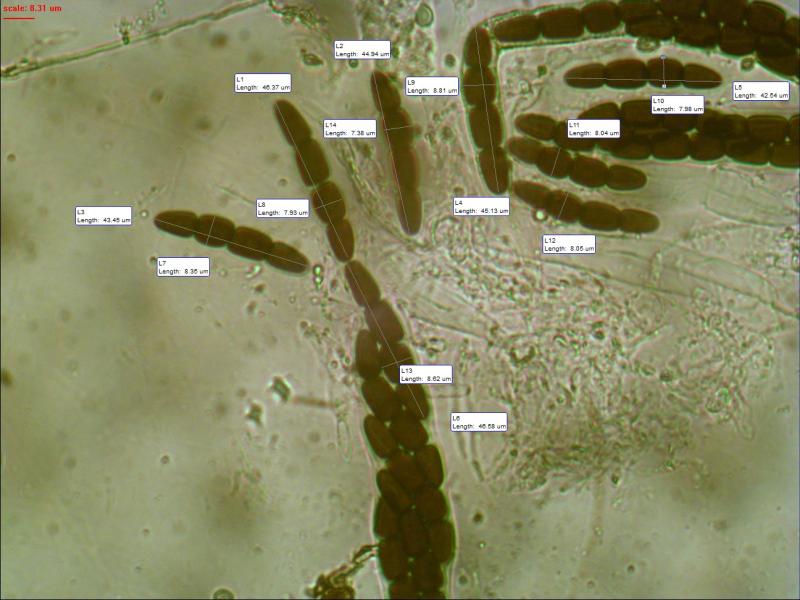
Michel Delpont,
09-05-2013 14:38
Re : Sporormiella Dubia?
Indeed, if the germ slits are parallel it could be S.dubia.
Michel.
Michel.
Joop van der Lee,
09-05-2013 17:44
Re : Sporormiella Dubia?
Hello Michel,
Cain describes in Revision of the genus Spoprormia and Sporormiella the following for S. Dubia.
Asci: 8-spored, cylindircal-clavate 140-16-(-170)x16-19 um broadly rounded above, broadest near upper end, gradually tapering below into a a short stipe, measuring up to 20 um.
Asco spores bi- or tri-seriate above and uni- or bi-seriate below, 4-celled, fusiform-cylindrical, 38-45x8-9 um narrowing prominently towards the ends, olivaceaous brown when young, becoming dark brown and opaque when mature; septa transvers; constrictions at septa deep; segments easily separable; cells about equal in length; terminal cells ovoid-conical; germ slit lprominent, parallel; gelatinous sheath hyaline, moderately broad.
Cain describes in Revision of the genus Spoprormia and Sporormiella the following for S. Dubia.
Asci: 8-spored, cylindircal-clavate 140-16-(-170)x16-19 um broadly rounded above, broadest near upper end, gradually tapering below into a a short stipe, measuring up to 20 um.
Asco spores bi- or tri-seriate above and uni- or bi-seriate below, 4-celled, fusiform-cylindrical, 38-45x8-9 um narrowing prominently towards the ends, olivaceaous brown when young, becoming dark brown and opaque when mature; septa transvers; constrictions at septa deep; segments easily separable; cells about equal in length; terminal cells ovoid-conical; germ slit lprominent, parallel; gelatinous sheath hyaline, moderately broad.
Norbert Heine,
09-05-2013 22:12

Re : Sporormiella Dubia?
I also think that Sporormiella dubia is a good name for this species, Joop.
Here it's the most common species of the genus on horse dung.
Norbert
Here it's the most common species of the genus on horse dung.
Norbert
Joop van der Lee,
10-05-2013 08:52
Re : Sporormiella Dubia?
Vielen dank Norbert