
12-06-2026 14:50
 François Freléchoux
Bonjour, Voici la brève description d'une Mollis
10-06-2026 21:16
François Freléchoux
Bonsoir,Le dernier du jour, en attendant votre avi
11-06-2026 19:01
 William Slosse
Hello all,In an attempt to make a culture of a sus
11-06-2026 19:03
 Nicolas VAN VOOREN
Chers membres d'Ascofrance,Le site sera placé en

09-06-2026 18:32
Camille MertensSur morceau de roseau immergé 0,5 - 0,7 mm de dia
10-06-2026 12:54
Steve ClementsBonjour encore, Pouvez-vous m'aider, s'il vous pl
10-06-2026 21:07
François Freléchoux
Toutes les tiges de gentianes jaunes de l'an passÃ
10-06-2026 13:41
François Freléchoux
Bonjour à nouveau, Voici une trouvaille d'hier.
I have no idea
hannie wijers,
15-03-2013 16:40
With regards
Hannie
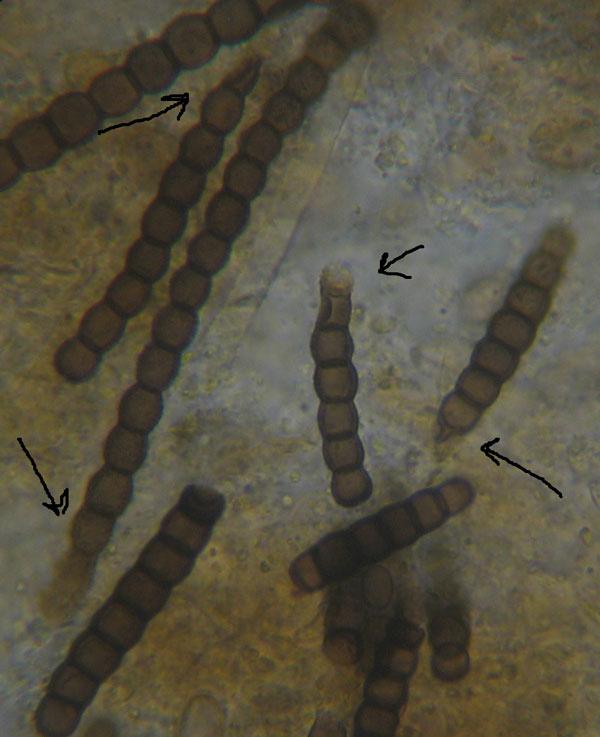
Chris Yeates,
15-03-2013 18:00

Re : I have no idea
Hello
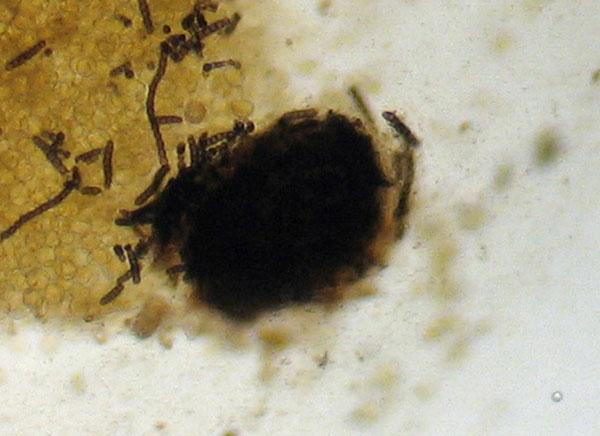
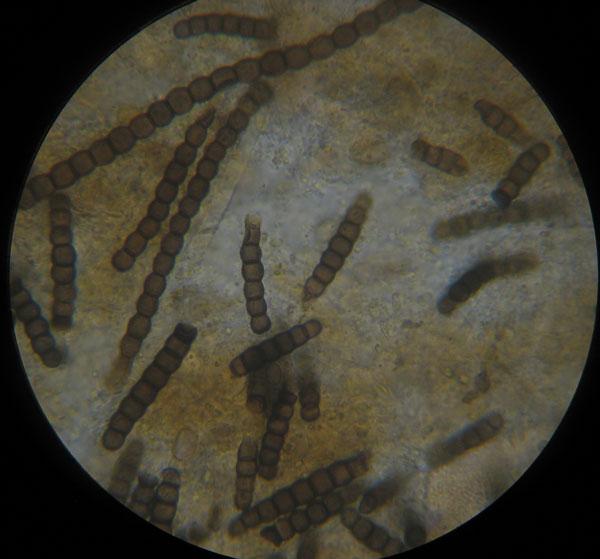
I think those spores are the condia of a 'hyphomycete"; it would be helpful to see conidiophores; genera such as Dendryphion and some of those similar to Torula can look like this.
I would suggest that these are purely fortuitously on the dung as these fungi are plurivorous on a wide range of dead plant material.
Amitiés
Chris
I think those spores are the condia of a 'hyphomycete"; it would be helpful to see conidiophores; genera such as Dendryphion and some of those similar to Torula can look like this.
I would suggest that these are purely fortuitously on the dung as these fungi are plurivorous on a wide range of dead plant material.
Amitiés
Chris
Mateusz Wilk,
15-03-2013 18:09
Re : I have no idea
Dear Hannie and Chris,
Exactly, this looks more like Torula, Dendryphion would have distinct conidiophores (but can be somewhere on the material).
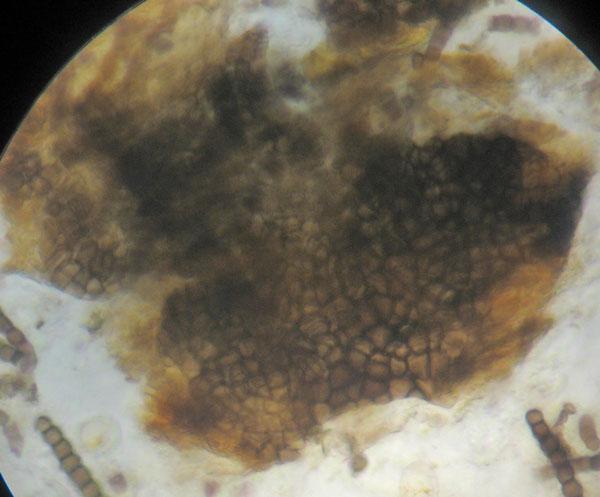
The question remains what are those "ascomatal" wall remains and those yellow round spore-like bodies...
Regards,
Mateusz
Exactly, this looks more like Torula, Dendryphion would have distinct conidiophores (but can be somewhere on the material).
The question remains what are those "ascomatal" wall remains and those yellow round spore-like bodies...
Regards,
Mateusz
Jacky Launoy,
15-03-2013 18:13
Re : I have no idea
Bonjour,
pour mieux vous aider ce serait bon de voir les asques. Une suggestion serait peut-être Sporormia fimetaria de Not.
Jacky Launoy
pour mieux vous aider ce serait bon de voir les asques. Une suggestion serait peut-être Sporormia fimetaria de Not.
Jacky Launoy
hannie wijers,
15-03-2013 19:25
Re : I have no idea
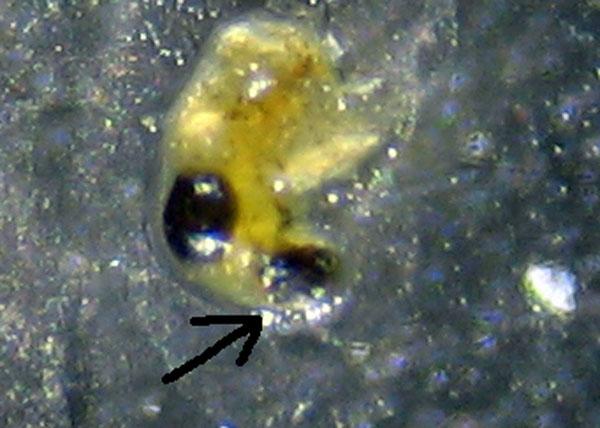
The yellow round spores, I think they aren from another fruitbody wich came with it. I also saw in the Doveri later this afternoon de Sporormis fimetaria and saw the asci. I could not find asci. I had three pieces under the mic, and couldn't find anyone. Maybe I can look tomorow if I can find a new frb.
Thank you for your answer
Regards
Hannie
Thank you for your answer
Regards
Hannie
Chris Yeates,
15-03-2013 21:40
Re : I have no idea
These conidia are clearly rough-walled which immediately rules out Sporormia; could the yellowish spores not be from a member of the Mucorales? Pilaira or Pilobolus . . . .
best wishes
Chris
best wishes
Chris
Esquivel-Rios Eduardo,
15-03-2013 23:42
Re : I have no idea
I gree looks as Torula graminis
Chris Yeates,
16-03-2013 15:09
Re : I have no idea
= Rutola graminis ;-)
hannie wijers,
16-03-2013 15:39
Re : I have no idea
Chris thanks for the clear explanation why it is not sporomia. Ritola graminis it belongs to the imperfect form or the hyphomyceten? I don't understand it quiet well. And the yellow spores I'll look for it in both species: Pilaria and Pilobolus.
Esquivel thanks for your suggestion. This is something I myself can not imagine.
Regards Hannie
Esquivel thanks for your suggestion. This is something I myself can not imagine.
Regards Hannie