
28-04-2026 20:33
Vitus SchäfftleinHello, I found Trochila ilicina on Ilex aquifoliu

30-04-2026 10:28
Rot BojanHello, by appearance I would say that I am dealing
27-04-2026 18:48
Tony MoverleyCollected 23rd April 2026, Norfolk, EnglandSwarms
14-04-2026 05:32
Ethan CrensonHi all, A few weeks back a friend pointed out som
27-04-2026 20:52
 Lothar Krieglsteiner
Found on hanging tiwg of Olea europaea in dried-ou
28-04-2026 22:51
 Bernard CLESSE
Bonsoir à toutes et tous,Pourriez-vous m'aider à
29-04-2026 08:01
Lothar Krieglsteiner
... on twig attached to small tree of Citrus auran
29-04-2026 10:44
Lothar Krieglsteiner
growing at moist, drying-out soil at the side of a

 Found on deer dung, colour of fruitbody bright orange with white hairs.
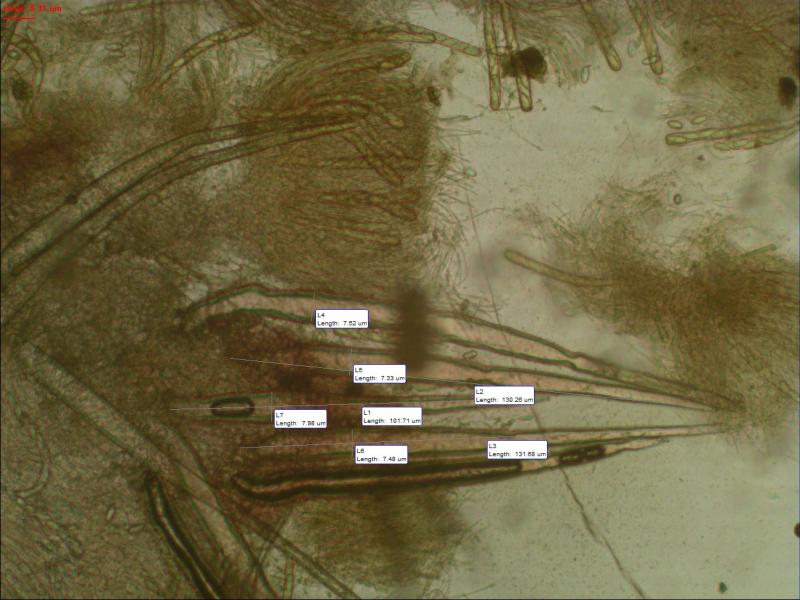
Hairs: pointed or rounded at the top, thick walls, no septa, 101.71-156.46x7.33-7.98 um. Sometimes the hairs had a constriction near the top.
Parafyses: Long straight and pointed at the top
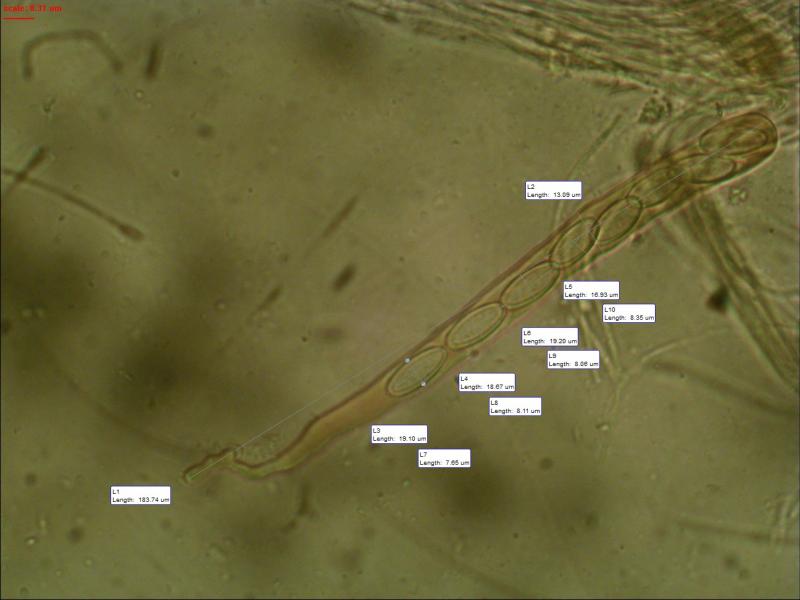
Asci: 183.74x13.08 um containing 8 spores.
Spores: Hyaline 16.93-19.20x7.65-8.35 um thick walls.
These specimen were always accompanied by an ascobolus that appeared next to the mentioned specimen above.
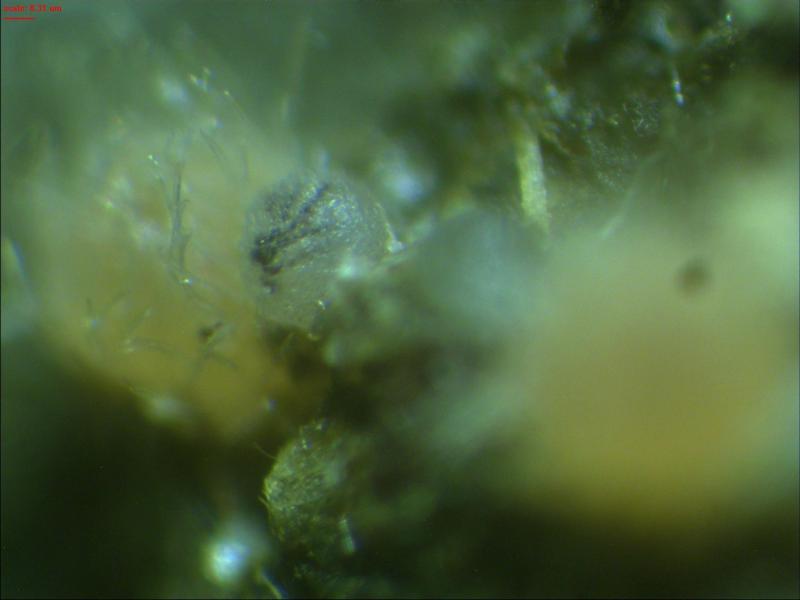
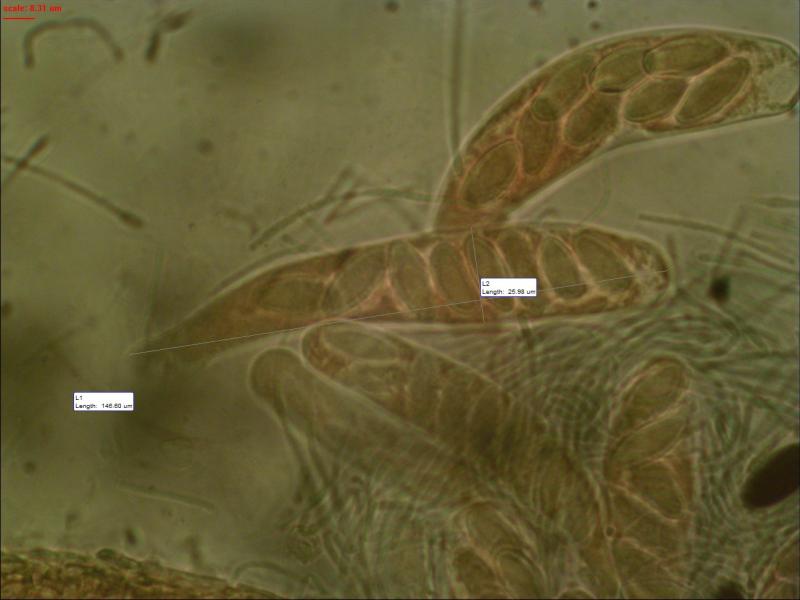
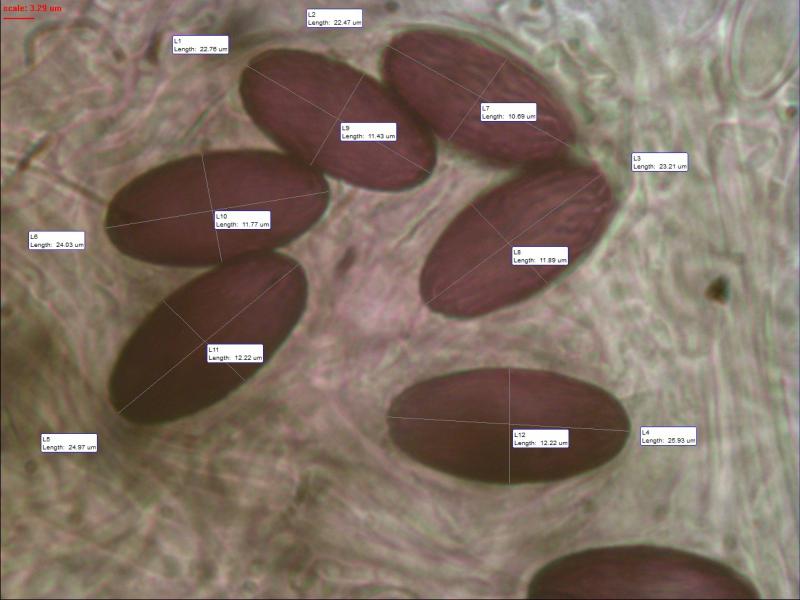
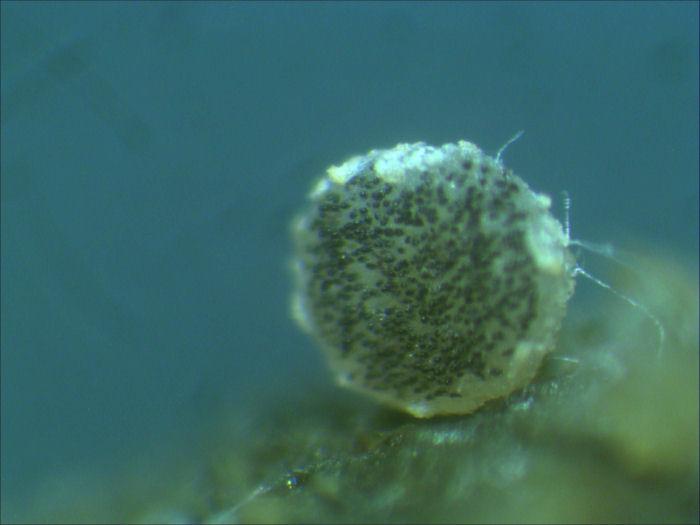
Fruitbody: white, rounded with dark brown ripe spores.
Asci: 146.6x25.98 um containing 8 spores.
Spores: 22.47-25.93x10.69-12.22 um
Ascobolus is determined as Ascobolus Sacchariferus.
Only fruitbodies that are small differ from the disk in the measurement of asci and spores.
Spores in the disk are smaller in size than those of the younger rounded ones.
Measuring 15-17x7.8-9 um.
The last picture is an update of the ascobolus in a young rounded state.
Lasiobolus intermedius also has a pure white form
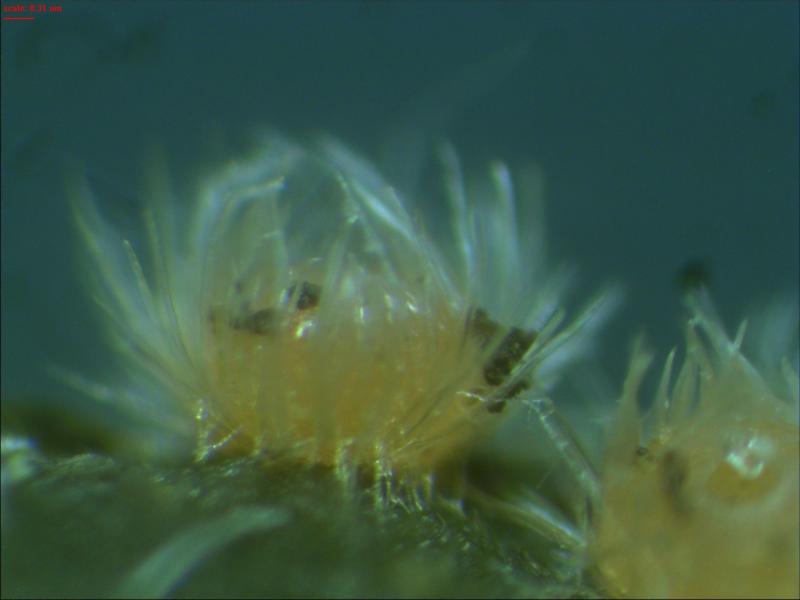
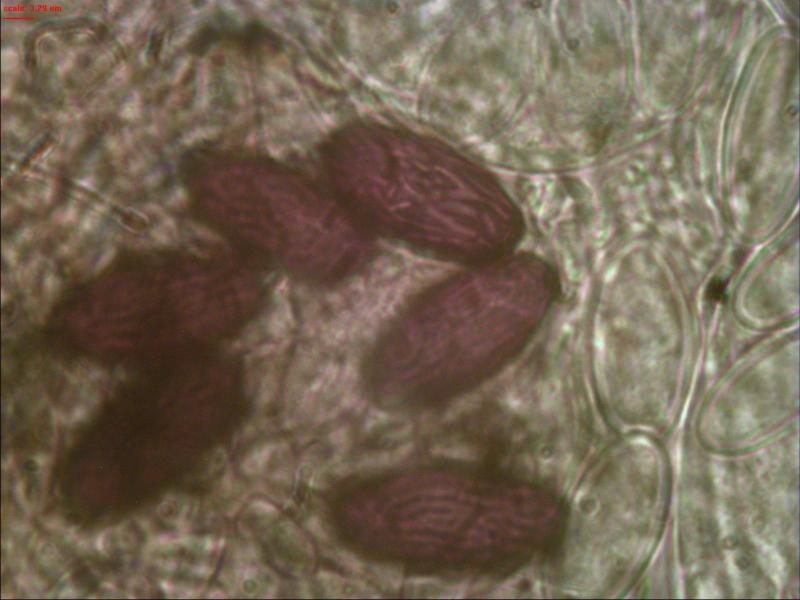
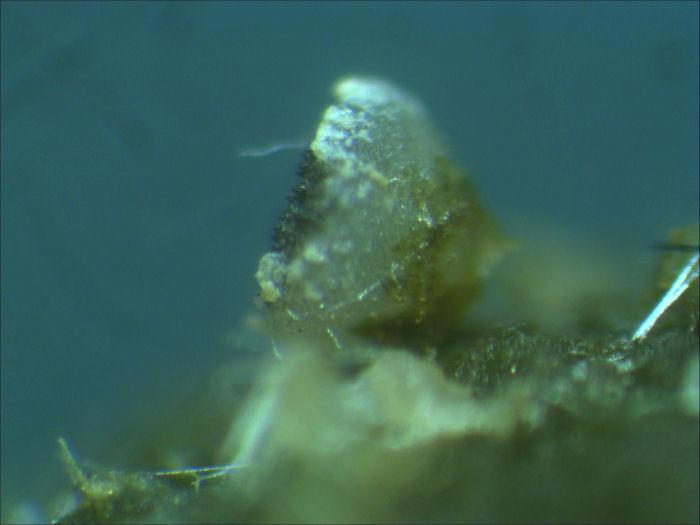
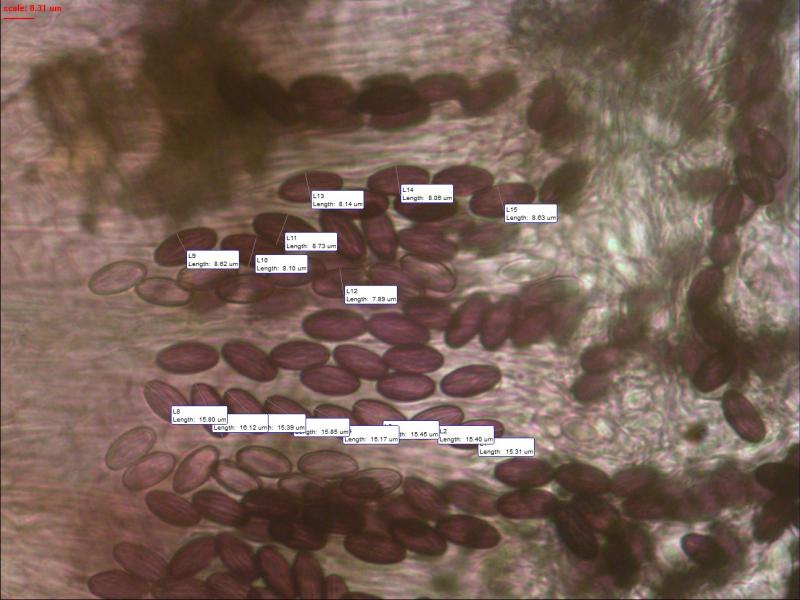
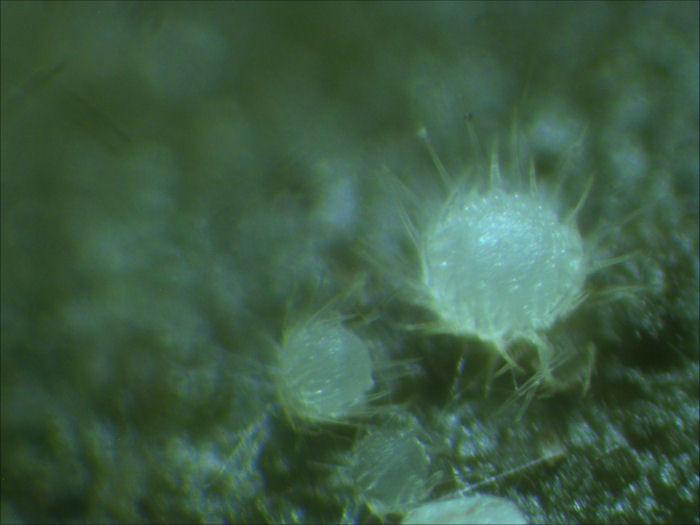
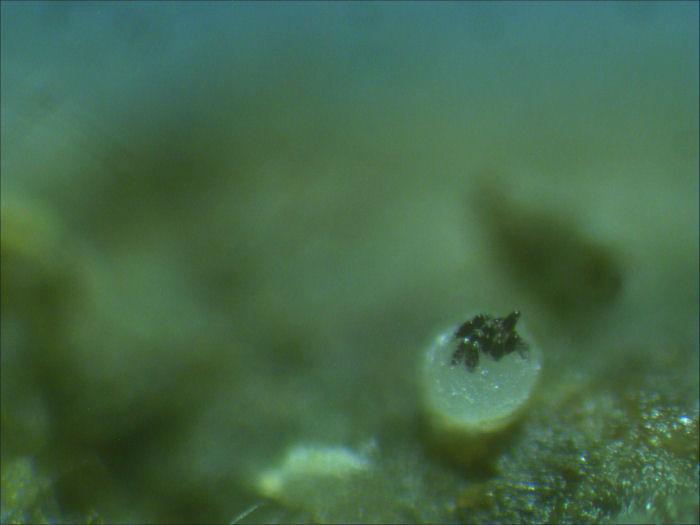
Il y a deux espèces de deux genres distincts, Lasiobolus sp, avec les poils non septés et Ascobolus sp. avec les ascospores violettes et striées. Il est très fréquent de trouver ces deux genres sur le même substrat et les ascospores de l'une sur l'autre. Ce serait trop facile sans cela !
René

Peter
Thx Peter
Gr. Joop
Je m' excuse pour la tard réaction à votre explication de mon question.
Je n' ai toujour pas une identification de l' ascobolus, les spores ressemblent beaucoup les spores d' ascobolus furfuraceus mais en moment je ne suis pas sure.
Joop
I do have some new measurements and they do'nt directly match to L. Intermedius or L. Ciliatus.
The length and width of the hairs 545-680x40.14-43.70 um, these hairs do have sharp and rounded tops, thickness of the walls was 5.59-5.76 um.
The length and width of the asci 207x11.91 um.
Spores 17.55-20.61x7.64-8.66 um with thick walls especially when young.
Also these specimen do have a white form with the same characteristics.
After your spores way, I was sure. If every day you're
experiencing a different spores size, it can also be something else.
Here's a part of my key.
3a Sporenlänger als 20 µm 7
7 Sporen nicht subfusiform 8
8a Sporen kleiner 9
9b Asci zylindrisch, Sporen uniseriat
10a Sporen 20-23 x 8,5-9,5, Harre 500-900 (1000) µm lang = Lasiobolus macrotrichus Rea
probably now Lasiobolus macrotrichus Rea
Peter
Joop