
12-06-2026 14:50
 François Freléchoux
Bonjour, Voici la brève description d'une Mollis
10-06-2026 21:16
François Freléchoux
Bonsoir,Le dernier du jour, en attendant votre avi
11-06-2026 19:01
 William Slosse
Hello all,In an attempt to make a culture of a sus
11-06-2026 19:03
 Nicolas VAN VOOREN
Chers membres d'Ascofrance,Le site sera placé en

09-06-2026 18:32
Camille MertensSur morceau de roseau immergé 0,5 - 0,7 mm de dia
10-06-2026 12:54
Steve ClementsBonjour encore, Pouvez-vous m'aider, s'il vous pl
10-06-2026 21:07
François Freléchoux
Toutes les tiges de gentianes jaunes de l'an passÃ
10-06-2026 13:41
François Freléchoux
Bonjour à nouveau, Voici une trouvaille d'hier.
Hysteronaevia olivacea
Nina Filippova,
12-02-2013 11:03
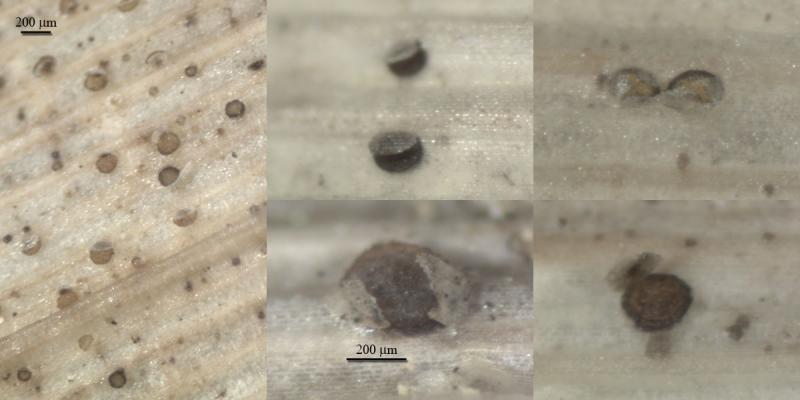
Inhabitant of Carex rostrata leaves in bog.
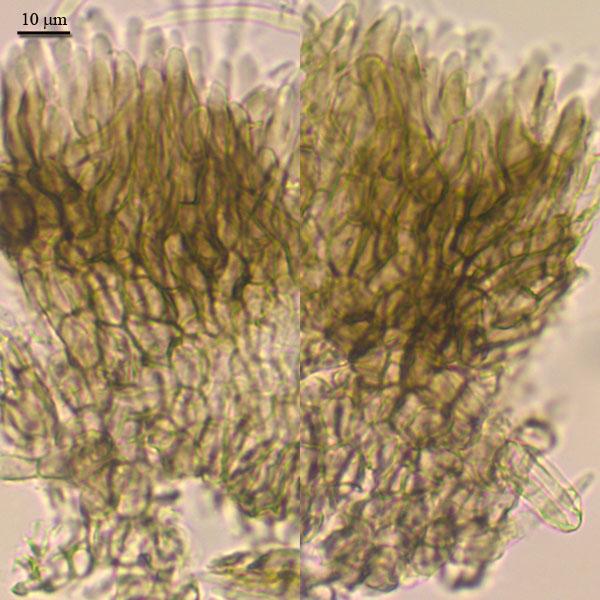
Apothecia immersed, circular to short-ellipsoid, 140 - 250 mk, opening by ellipsoid lid (rarely by irregular patches), disc pale yellowish-brownish, surrounded more or less conspicuous brown edge.
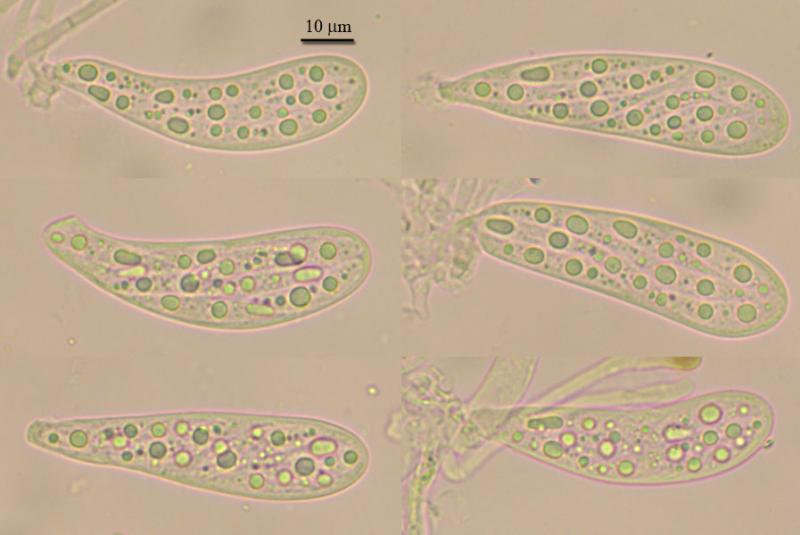
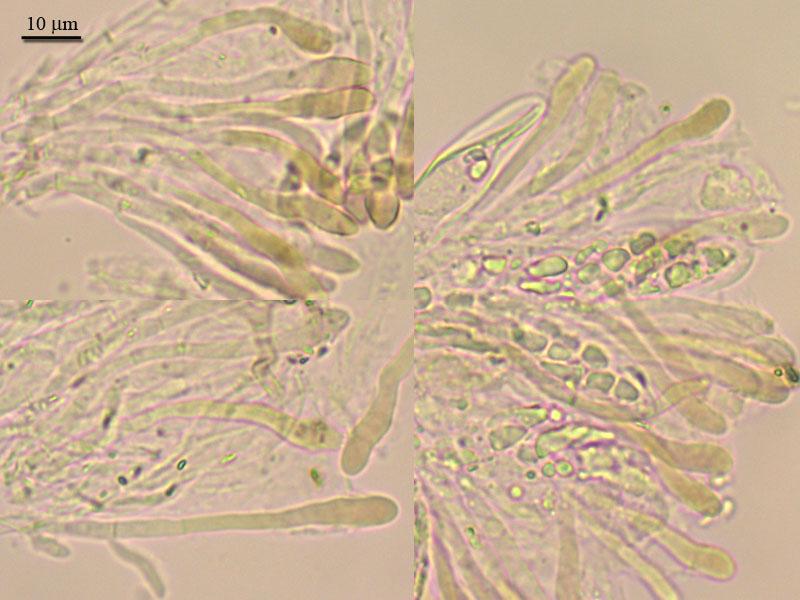
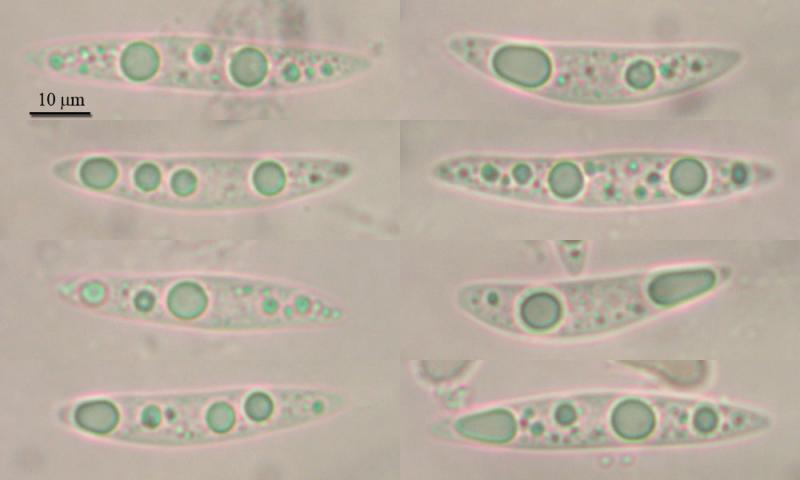
Excipulum from textura angularis, cells with thickened walls, brown, about 10 mk in diam at base and flanks, more prismatic (10 x 5) to the edge, end row of cells (hairs) cylindrical, two-celled, to 25 x 5, tips obtuse, smooth; asci clavate, clamped, inamyloid, 58,7-66,6 x 14-17,5; paraphyses cylindrical with enlarged clavate brownish end segment, lower part segmented, about 3 mk broad, with outgrowths or branched, upper segment enlarged to 5 mk, with yellowish-brown content, rare with incrustation, exeeding the asci for about 10-15 mk, embedded in gelatinose substance; spores fosoid, some curved, some with obtuse end, many-guttulate, 25 (22,1-29) x 4,5 (3,8-4,8) (Q=5,6; N=13).
Hans-Otto Baral,
12-02-2013 21:33

Re : Hysteronaevia olivacea
Could you please check the iodine reaction here also after KOH?
The Hysteronaevias that I know have much broader or longer spores.
Zotto
The Hysteronaevias that I know have much broader or longer spores.
Zotto
Nina Filippova,
13-02-2013 15:23
Re : Hysteronaevia olivacea
Yes, spores described as "narrowly oblong" by Nannfeldt, and pictured in Defago (1967) and Scheuer (1988) with more obtuse ends then in my specimen. I checked several frbs, all they had this fusoid shape. But other features quite similar, and host (Carex rostrata) often reported for H. olivacea. I will see if it shows up in other collections and what spores shape will there.
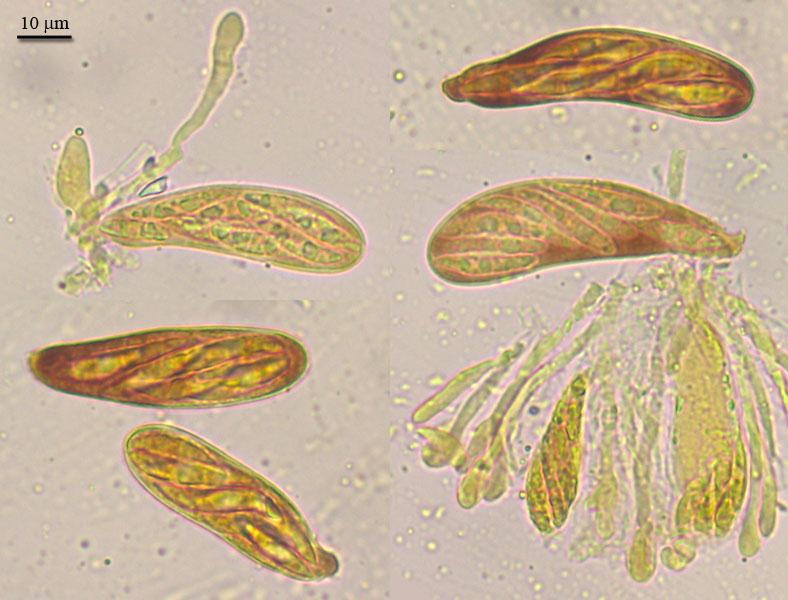
Asci inamyloid (in lugol, then after KOh and heat). There picture in lugol.
Asci inamyloid (in lugol, then after KOh and heat). There picture in lugol.
Nina Filippova,
13-02-2013 17:33
Re : Hysteronaevia olivacea
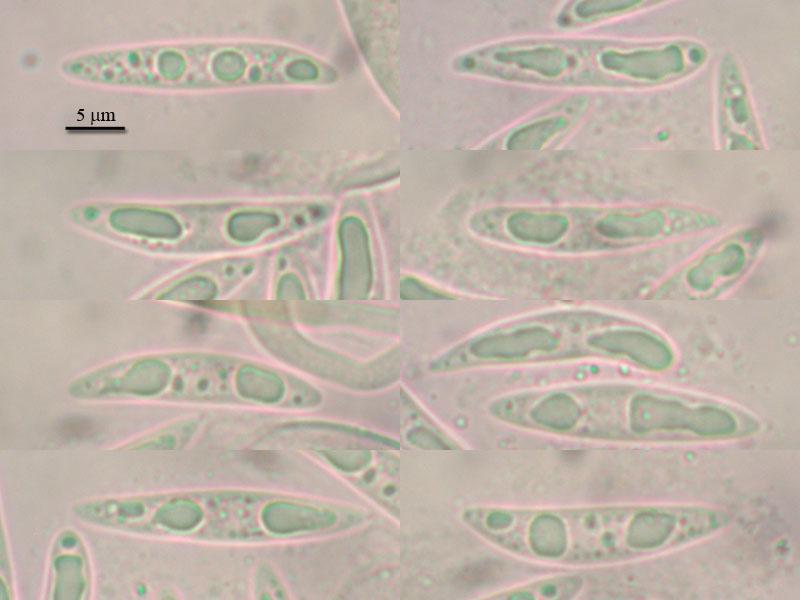
Found the same species on leaves of Carex limosa. The spores there mesured some smaller, but quite the same in shape (other characters not differ from previous on C. rostrata):
22,3 (19-25) x 4,5 (4-5) (Q=5,04; N=17).
22,3 (19-25) x 4,5 (4-5) (Q=5,04; N=17).
Hans-Otto Baral,
13-02-2013 18:56
Re : Hysteronaevia olivacea
I looked only in Defago, she says spores 18-26 x 5-6 µm for H. olivacea (probably dead state).
The living spores in HB 4138b are 5.5-6 µm, and those by Enrique start6 with 6 µm upwards.
The spore ends are acute in both finds.
Helpful could be the spore contents in your specimens (vital state), but I suppose they are not alive anymore.
Zotto
The living spores in HB 4138b are 5.5-6 µm, and those by Enrique start6 with 6 µm upwards.
The spore ends are acute in both finds.
Helpful could be the spore contents in your specimens (vital state), but I suppose they are not alive anymore.
Zotto
Nina Filippova,
14-02-2013 06:07
Re : Hysteronaevia olivacea
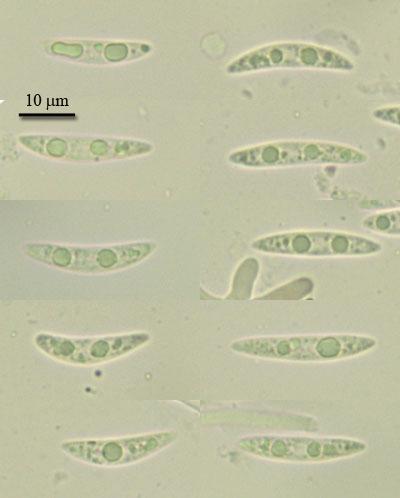
Spores in vital apothecia, from C. rostrata (were done in summer, but probably they were mounted in KOH too):
23 (20,5-26) x 4,4 (4,1-4,7) (Q=5,29; N=13)
23 (20,5-26) x 4,4 (4,1-4,7) (Q=5,29; N=13)
Hans-Otto Baral,
14-02-2013 08:28
Re : Hysteronaevia olivacea
Yes, surely in KOH :-(
Nina Filippova,
14-02-2013 08:57
Re : Hysteronaevia olivacea
Yes, because "oil is lumped together in one or two guttules?" (Stip wrote). So, i hope it will found more in summer.