09-06-2026 18:32
Camille MertensSur morceau de roseau immergé 0,5 - 0,7 mm de dia
10-06-2026 13:41
 François Freléchoux
Bonjour à nouveau, Voici une trouvaille d'hier.
10-06-2026 11:53
Steve ClementsBonjour, This disco is abundant on dead stems of
10-06-2026 12:54
Steve ClementsBonjour encore, Pouvez-vous m'aider, s'il vous pl
10-06-2026 10:45
François Freléchoux
Bonjour à nouveau, Encore une détermination qui
08-06-2026 10:16
 Spooren Marco
I don`t have a clou about this fungus,it is not in
10-06-2026 09:24
François Freléchoux
Bonjour, J'imagine que cette détermination ne do
08-06-2026 17:00
François BartholomeeusenGood day everyone, On June 5 2026, I collected de
07-06-2026 15:10
 William Slosse
Hello everyone,On 05-06-26, I found following asco
It is common on leaf litter of Leather-leaf (Chamaedaphne calyculata).
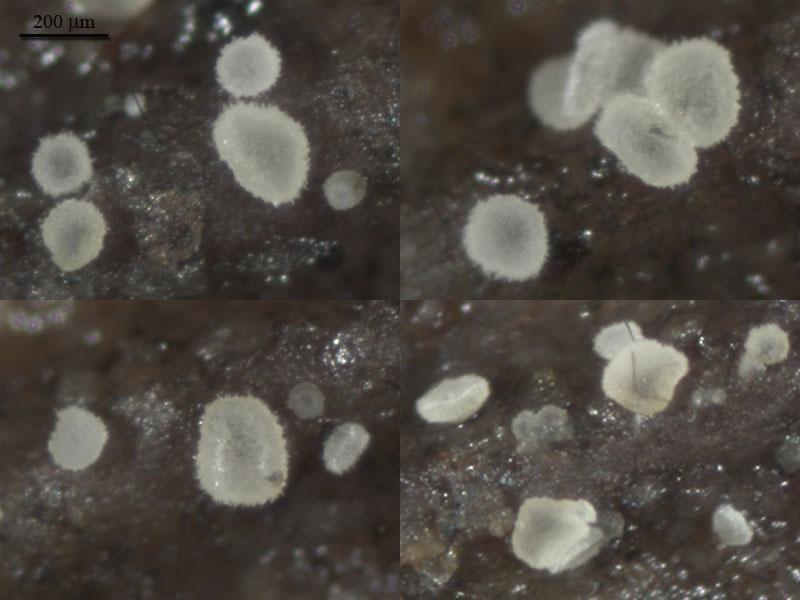
Apothecia discoid, whitish, sessile, to 170 mk, outer surface and edge minutely hairy.
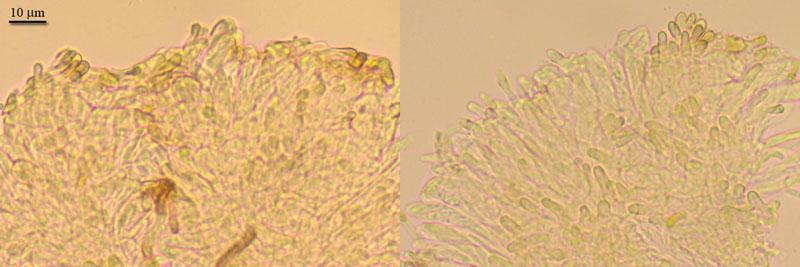
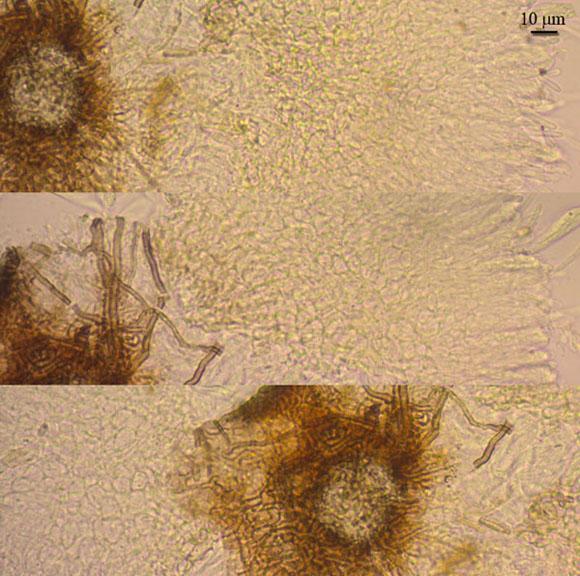
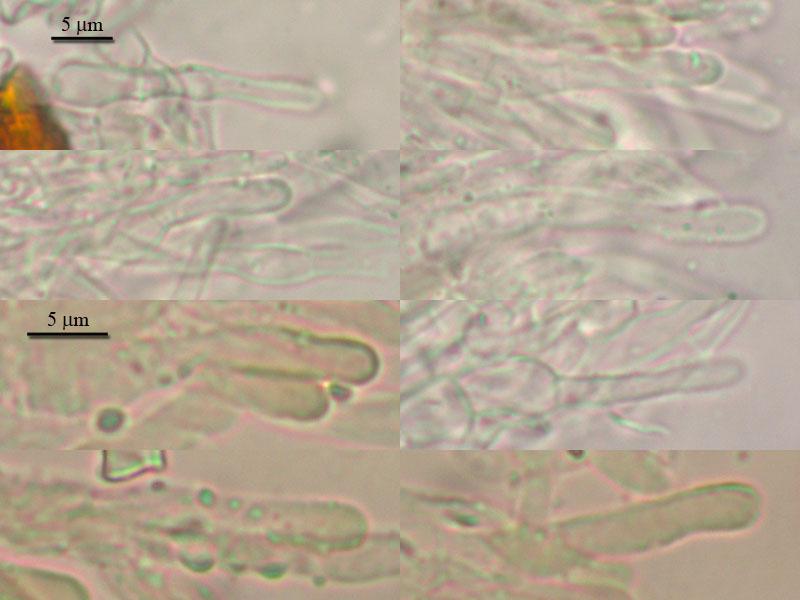
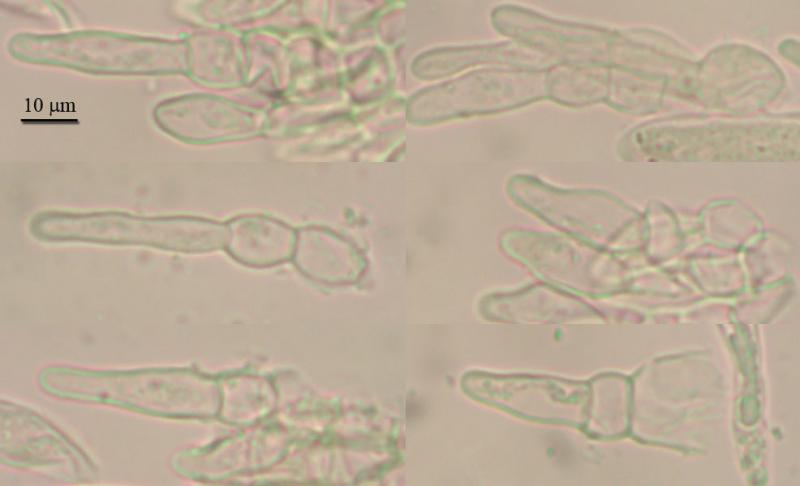
Excipulum from textura epidermoidea at base (brown), from textura globosa-angularis at flanks, cells with thickened walls, at the edge smaller; hairs ventricose-cylindrical, from 2-3 globose cells at the base and narrower cylindrical apical segment, brownish or hyaline, with scarse incrustation in some specimens, or smooth, incrustation not reacting with MLZ (not clear), 19-27 x 2,8-5,4 x 1,8-2,9 (lenght x base width x upper width); asci clavate, with obtuse-conical tip, clamped, pore euamyloid, 28-37 x 5-7,2; paraphyses cylindrical, segmented in basal part, some enlarged at upper segment, 46-55 x 2,6-3,5; spores subfusoid, slightly curved, with medium guttules, 10,4 (9,4-11,7) x 2,6 (2,2-2,9) (Q=4,1; N=17).
Ombrotrophic bog, N61,065408° E69,455652°, 04.08.2012.
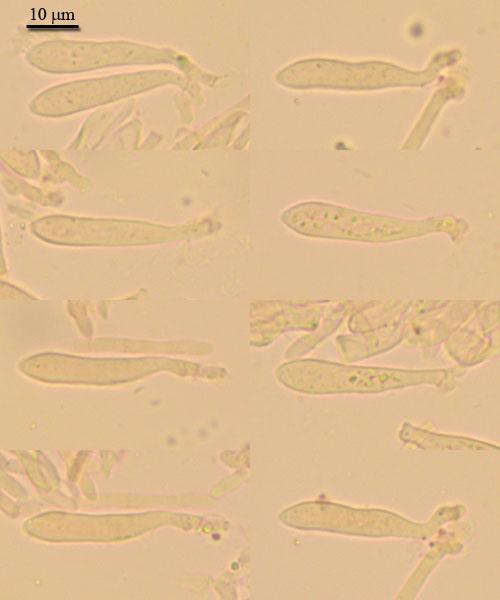
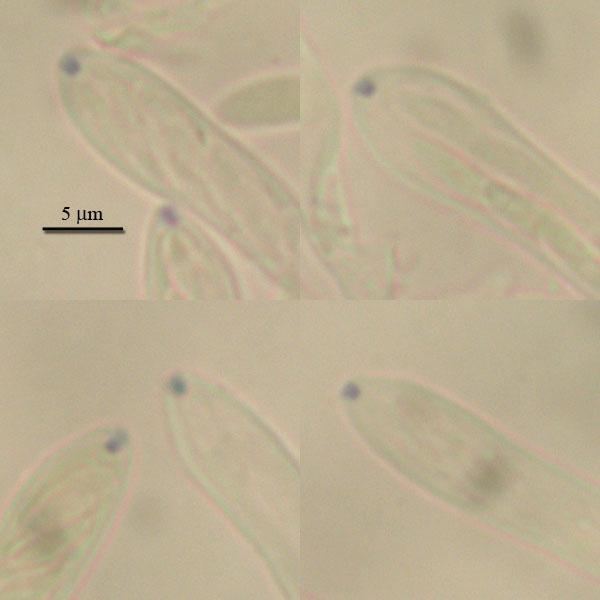
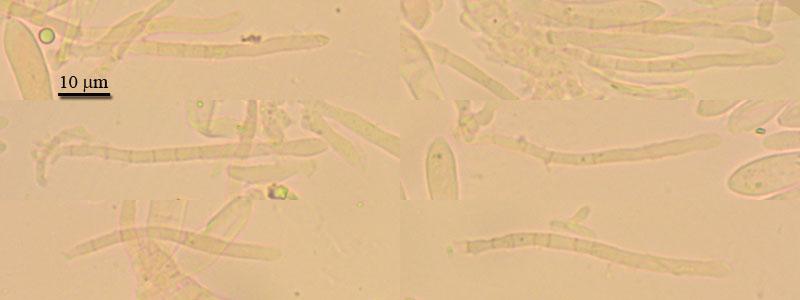
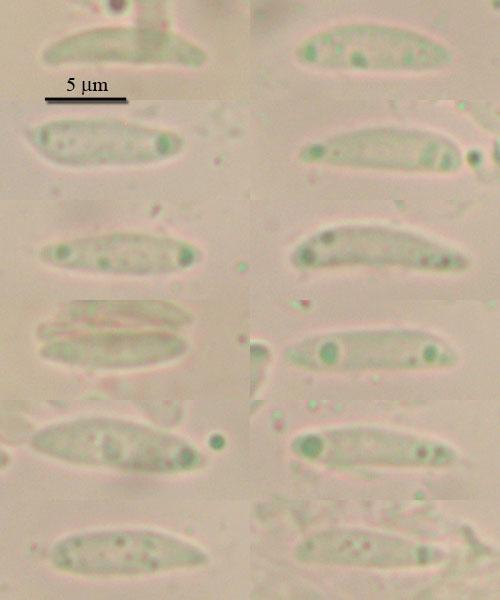

you are not the only one that is having trouble in genus recognition, Ciliolarina and Cistella I exclude because it is no granulation on the hairs but more like a resinous exudate and probably some (plasmatic) accumilation on the inside of the hair walls. It is a pity you did not study in water before adding KOH or something else to your mount ( standard procedure to check hair vesture). But as I see it now this shows some resemblance to Psilocistella and also Arachnopeziza emend. Huhtinen 1987. I will send the article. A clear generic idea does not pop up at the moment.
Cheers,
Stip
thank you for your ideas,
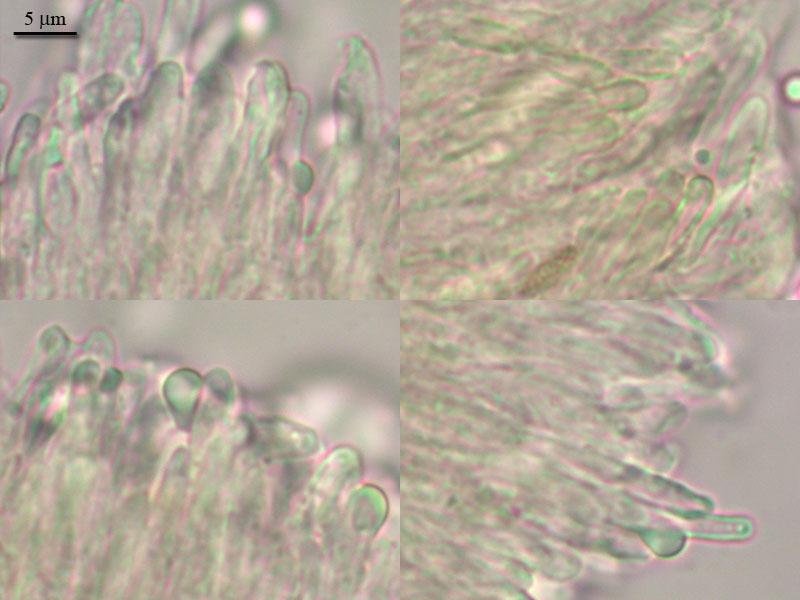
there is photo of hairs your are asking, i tried to understand incrustation properties and prepared one mount in pure water before adding KOH. Walls there were smooth, but in other exemplars they had irregular roughness, and some were brownish.
I've received the article, thanks!
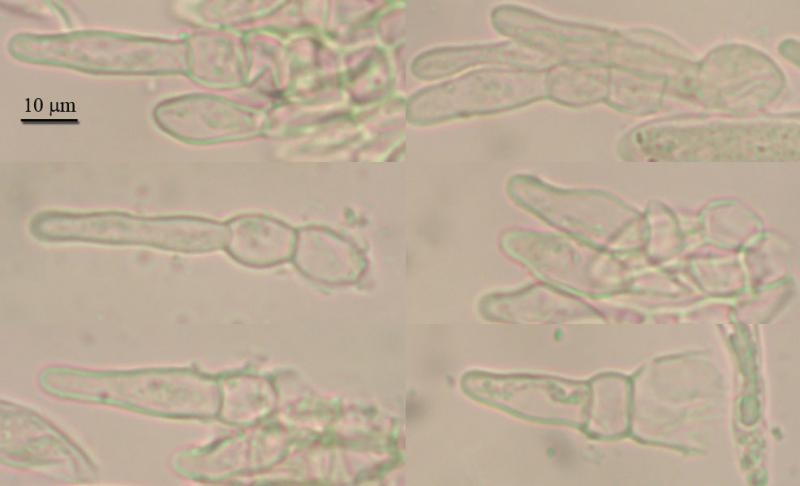
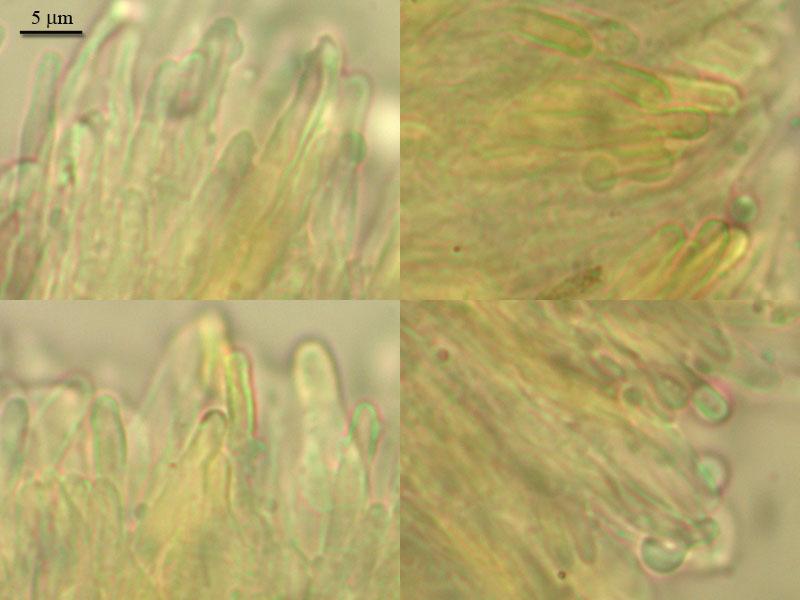
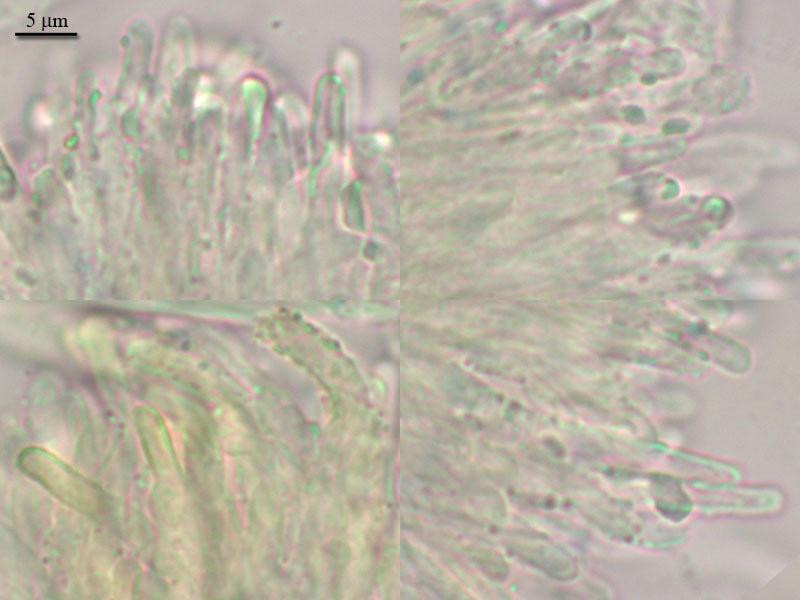
- Hairs with yellowish resinous exudate, evenly covering hair walls in young apothecia, making it glue together, becoming concentrated in warts at sides and at tips in older specimens; two specimens showed abscence of resinous exidates; walls smooth, partly thickened; mount with MLZ partly dissolves exudations, KOH the same, TB in lactic acid not or partly dissolves.
Probably, Arachnopeziza monoseptata may be close. But it is reported from wood, and paraphyses in my specimen are wider, and hairs in P. monoseptata much longer. My specimens may be underdeveloped (though spores well presented), i've seen in some of them hairs longer than in others. It is better to observe it repetedly in vital, i think.
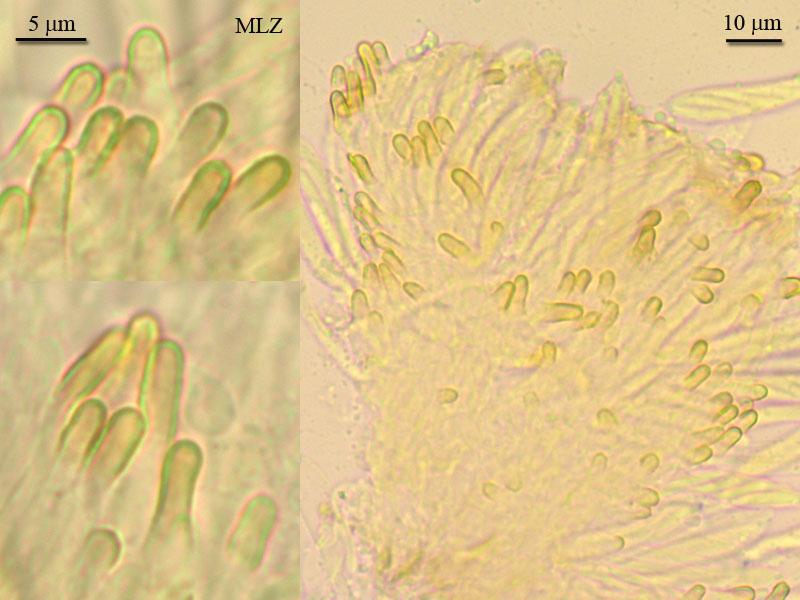
I am sorry but I have still no idea in which genus to put this species. This golden reaction of the hair walls I have not seen before, the resin however seems to be dissolved in MLZ as also is the case in Hyaloscypha. The golden color with MLZ? is recorded in the persistent Vbs of Calycellina incl. Phialina but not from hair wall, so this could point in that direction (perhaps VBs remnants accumilated to the hair-wall), as well the foliicolous habitat.
But untill further investigation of living material it is very difficult where to put this species, my heart goes to Calyellina but I don't know any resinous exudate there.
Cheers,
Stip
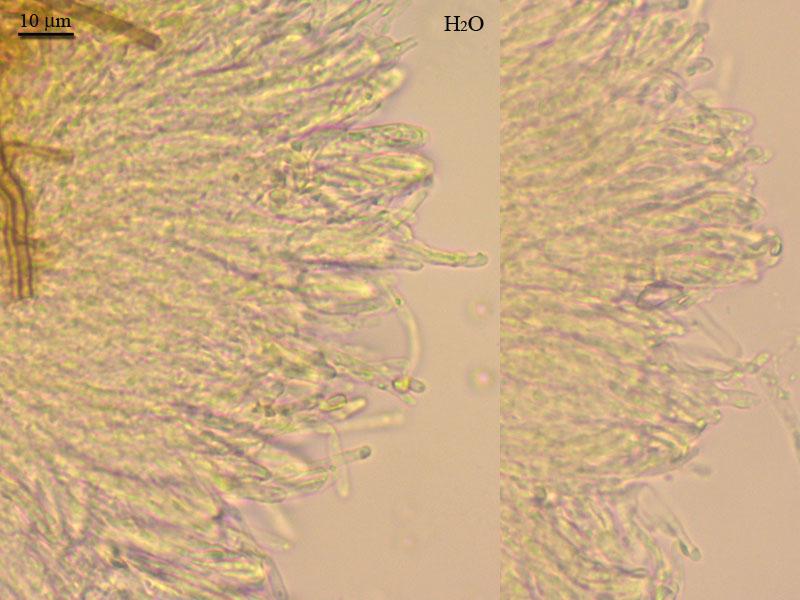
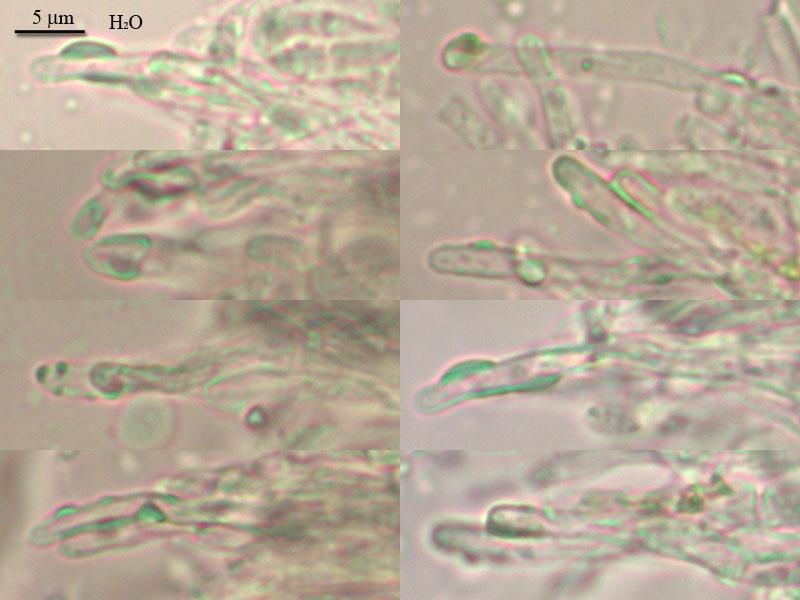
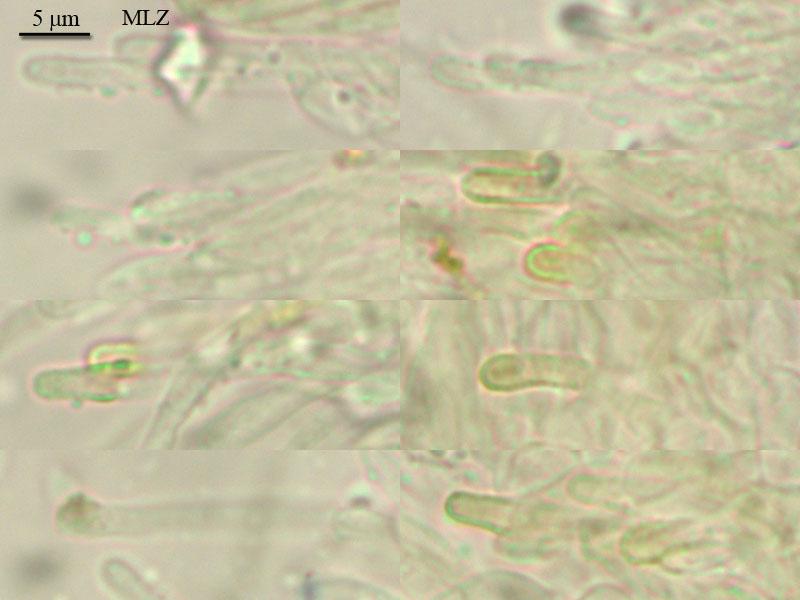
I checked once more resinous exudates with MLZ. I am not sure about golden reaction, it seems have this color occasionally naturally. Mounts with MLZ only highlight the yellowish tinge, (?) i would think. There are pictures: 1) apothecia with golden hairs naturally (rehydrated with water), it must be younger frb since hairs are short. 2) hairs of more mature frb, with exudates, in water, yellow pigment in hairs occationally present. 3) the same mount with MLZ. 4) the same mount with MLZ, then washed with KOH.
it will interesting to check vital frbs, in any case. and i will look for Calycellina to compare.