
12-06-2026 14:50
 François Freléchoux
Bonjour, Voici la brève description d'une Mollis
10-06-2026 21:16
François Freléchoux
Bonsoir,Le dernier du jour, en attendant votre avi
11-06-2026 19:01
 William Slosse
Hello all,In an attempt to make a culture of a sus
11-06-2026 19:03
 Nicolas VAN VOOREN
Chers membres d'Ascofrance,Le site sera placé en

09-06-2026 18:32
Camille MertensSur morceau de roseau immergé 0,5 - 0,7 mm de dia
10-06-2026 12:54
Steve ClementsBonjour encore, Pouvez-vous m'aider, s'il vous pl
10-06-2026 21:07
François Freléchoux
Toutes les tiges de gentianes jaunes de l'an passÃ
10-06-2026 13:41
François Freléchoux
Bonjour à nouveau, Voici une trouvaille d'hier.
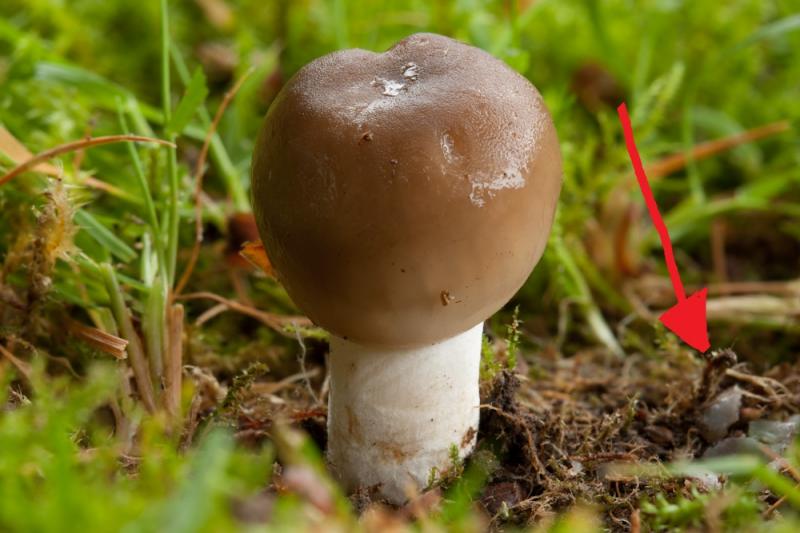
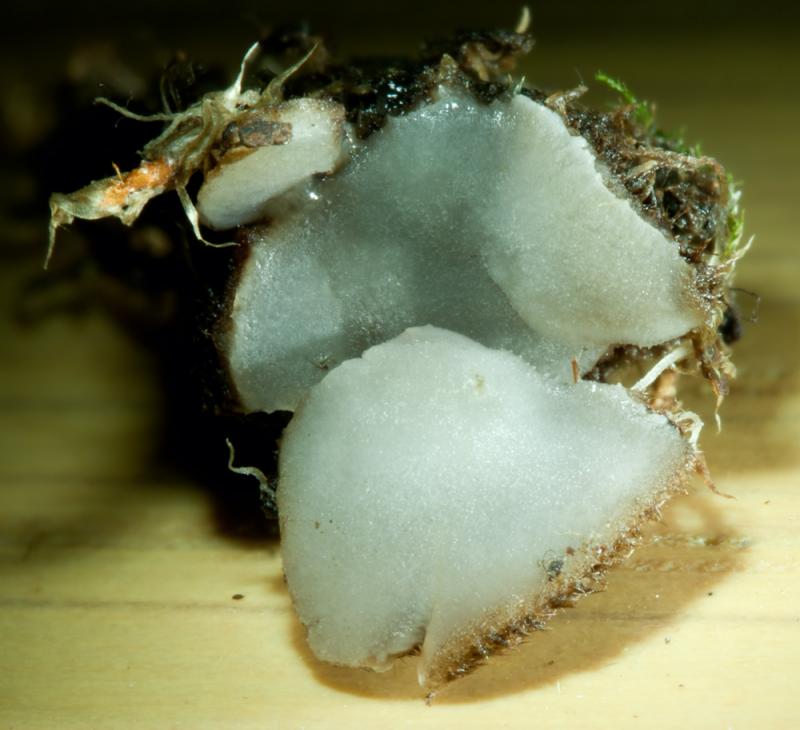
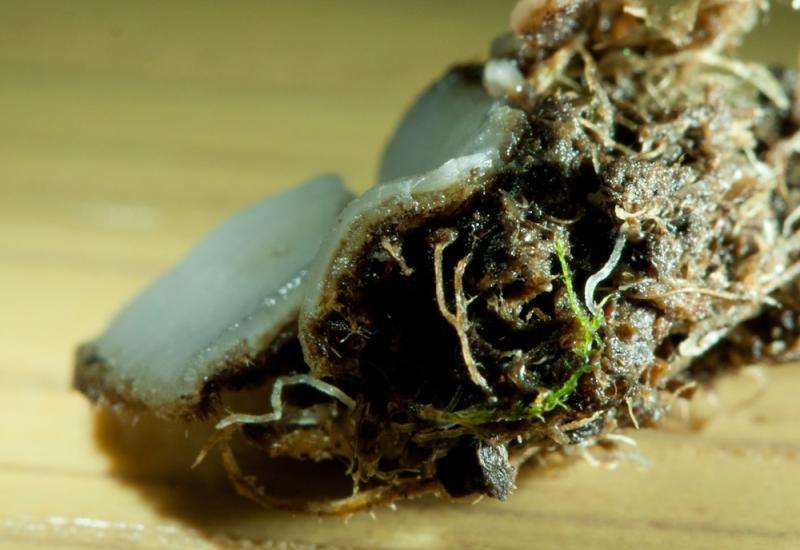
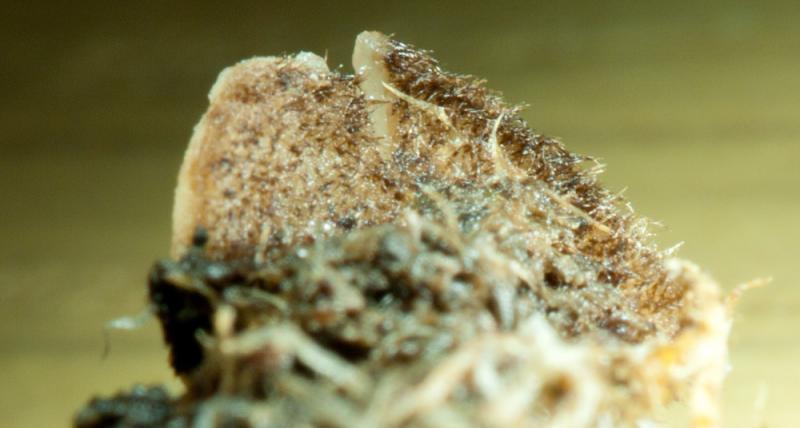
I'm in the South of England, in the area of The New Forest. I was looking at a Russula on grass and moss on my lawn when I saw a small (up to 5mm) grey ascomycete. It was slightly curled but not cup-shaped. The hymenium was grey. There were no hairs around the edges but hairs covered the underside.
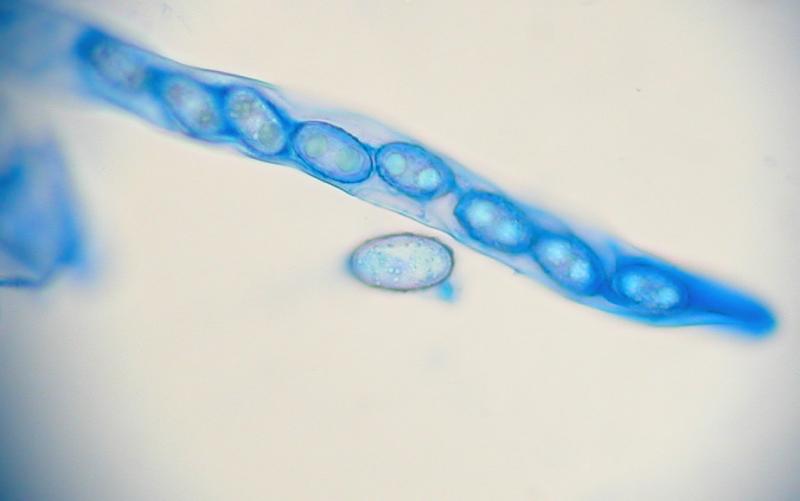
The asci had eight ascospores and the ascospores had two oil drops, measured 23 X 15 and appeared to be irregularly warty with small warts but there is some question whether this is pseudo-reticlation. Spores that were relased in a spore print were measured. The first photo's are in water and the next are in Cotton Blue.
The spore size points me to Trichophaea woolhopeia the reticulation points to something like Trichophaea variornata.
I'm new to the study of fungi.
Here are some photo's
Dave
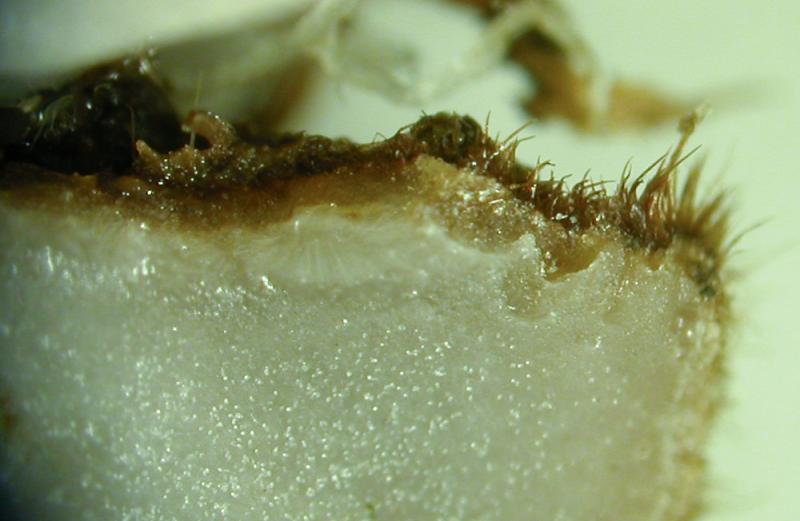
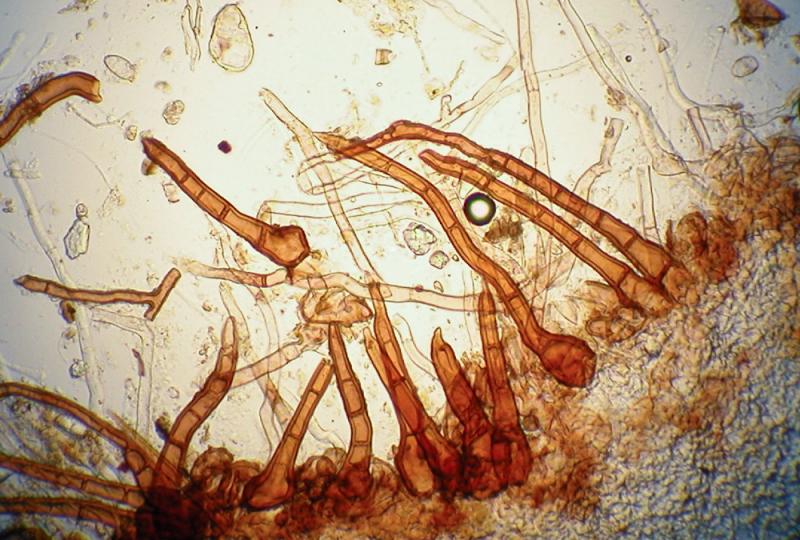

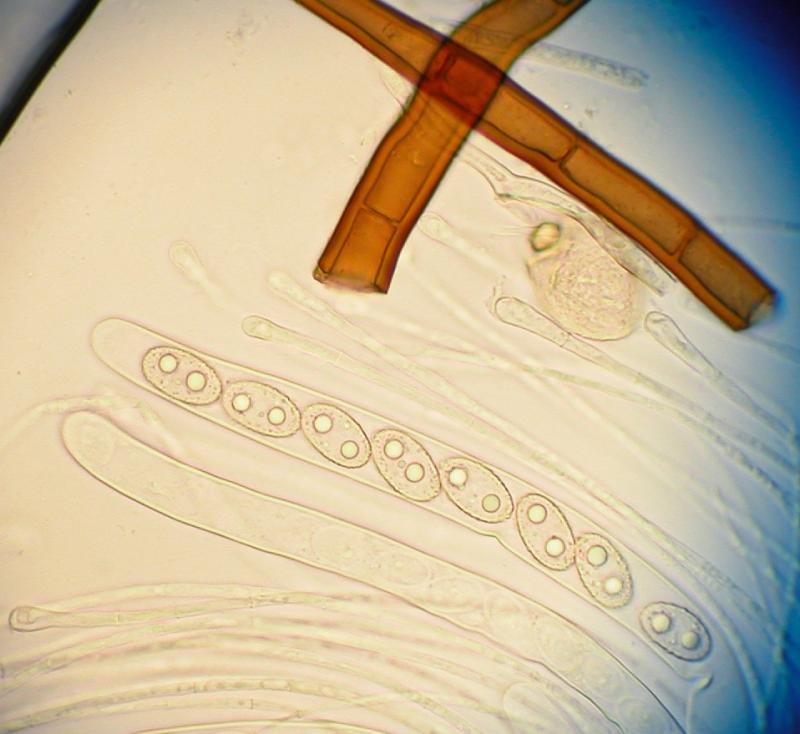

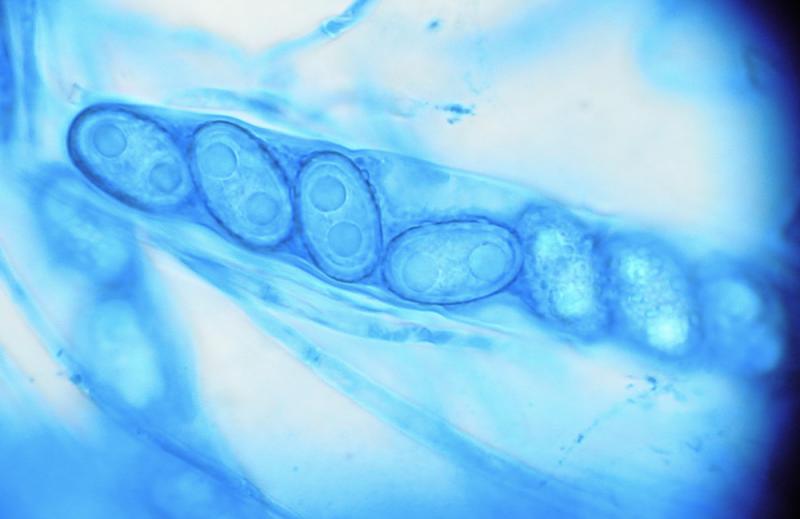
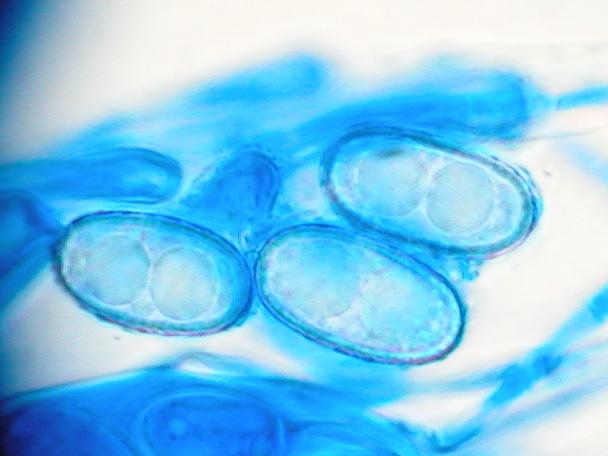

For me, this is T. livida. However, the spore dimensions are slightly too large, but the rough warts are suitable for this species. The spores of T. pseudogregaria are only slightly punctured.
Peter
PS: It can also be a tiny copy of Humaria hemisphaerica. Since the spores would also fit dimensions.
many thanks for the reply. That is interesting because the naturally shed free-spores, measured in water did look like they had expanded and quite a few burst. The few spores that I measured in Cotton blue, like the one in the third photo from the end, measured 21 X 12 but I do understand that Cotton Blue kills the spores and they can shrink. I can only find one photograph of T. livida on Google but it does look the same.
Dave
Macroscopic view this ascomycete all the same. The ornamentation of the spores must be examined. Can you send me a piece?
Peter
 Revised-key-RPKedit-2-0002.doc
I have a body left that is still fresh. I can send it to you. Should I dry it first or send it fresh?
Dave
Peter Welt
Bernhardstr. 122
D-09126 Chemnitz
Peter
I sent you my last piece on Friday.
Dave
I have examined the Trichophaea. I'm only a result of
T. cf. pseudogregaria because
the spores not almost spindle-shaped. (As specified in Bronkers, I do not own
proof)T. livida has warty spores.
Peter
PS: Would you back the rest, Dave?
No, I don't need it back .
Regards
Dave