28-05-2026 11:06
Thomas Læssøehttps://svampe.databasen.org/observations/10596750
23-05-2026 11:44
 Charles Grapinet
Hello, I am having trouble identifying this copro
25-05-2026 16:44
François BartholomeeusenHi forum members,During an excursion organised by
26-05-2026 21:25
Dirk GerstnerHello everyone, I'm completely stumped by this li
26-05-2026 22:44
Ethan CrensonHi all, I think I have Incrucipulum capitatum her
22-05-2026 14:44
 Lothar Krieglsteiner
in unripe condition citrine yellow, then soon fadi
25-05-2026 16:35
 Bernard CLESSE
Bonjour à toutes et tous,J'ai trouvé récemment,
22-05-2026 13:29
Gernot FriebesHi,I am curious to hear your opinion on this mater
23-05-2026 18:57
Sylvie Le GoffBonjour à tousRécolté sur une branchette de Sal
Phaeosphaeria subgenus Vagispora
Björn Wergen,
22-02-2012 20:43
 Hi,
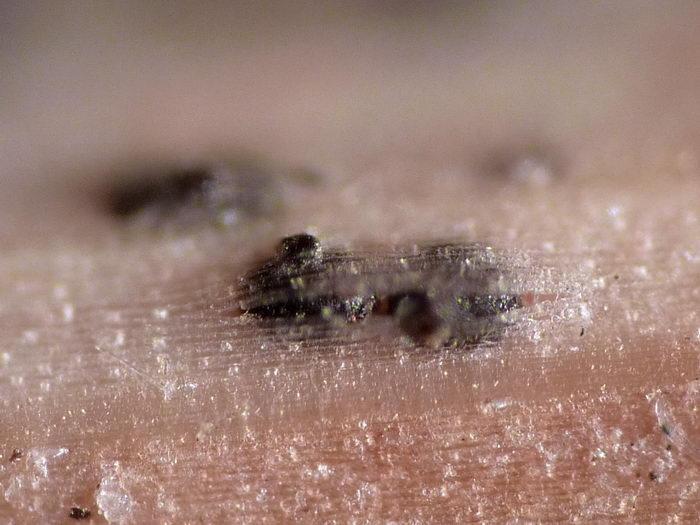
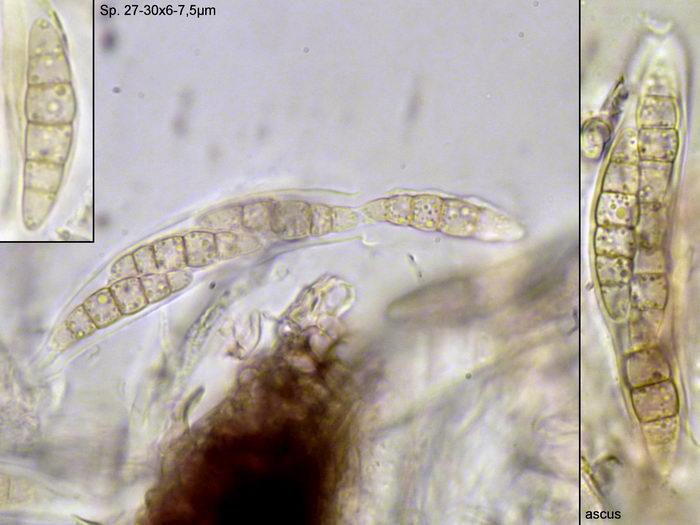
Hi,I have found a Phaeosphaeria on dead Poaceae stems with 5septated, 27-30x6-7,5µm spores. I have tried Shoemaker&Babcock and Leuchtmann and come to Phaeosphaeria larseniana, which has smaller spores (Shoemaker: 20-27x7-9µm). I am sure it is a species of subgenus Vagispora. Perhaps someone can help :)
I did not see a sheath. The spores are smooth.
regards,
björn
-------------------
I think it can be P. vagans with no longitudinal septa. P. vagans seems to be a very variable specimen...
Björn Wergen,
23-02-2012 14:56
Re : Phaeosphaeria subgenus Vagispora
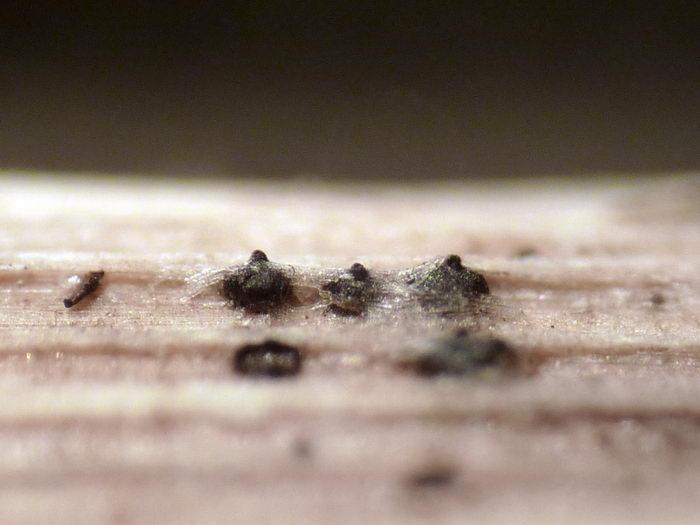
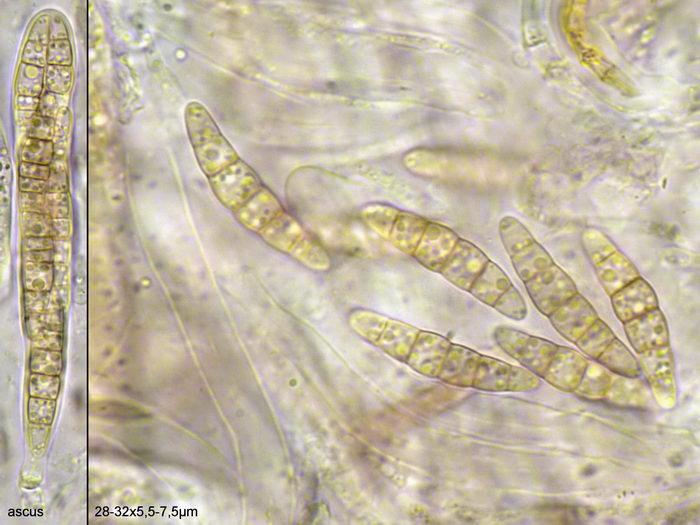
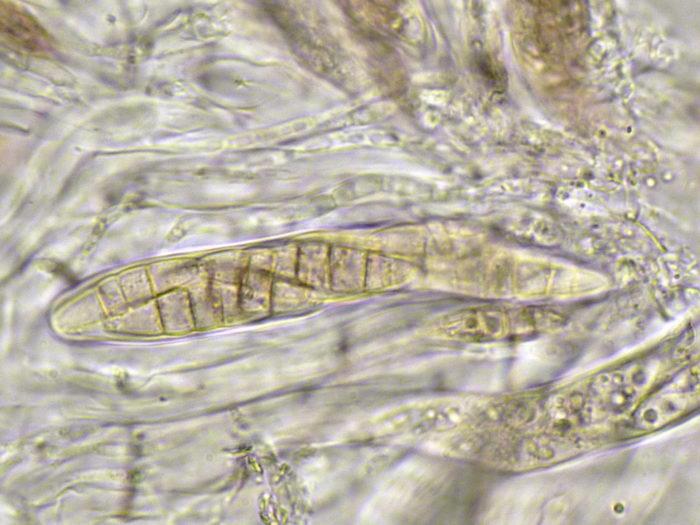
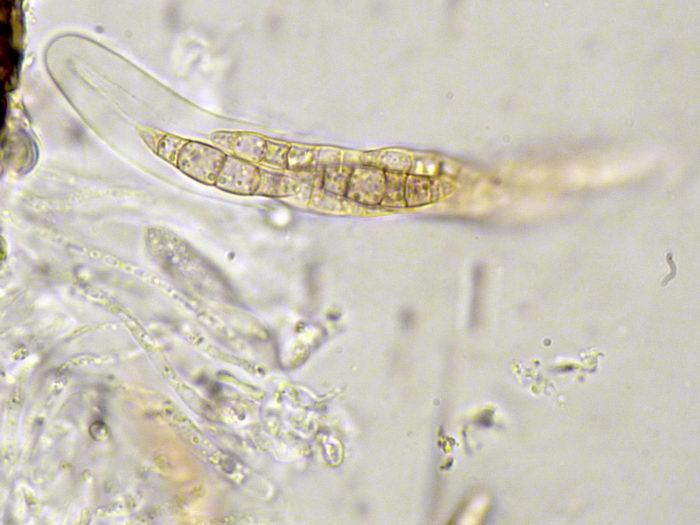
Here are some new photos, I am sure it is a dicote substrate, the fb are about 80-150µm broad and have a small ostiolus. Spores are permanently (I have 3 collections now) around 28-32x5,5-7,5µm, quiet too big and too pale for P. luctuosa, which has a similar length. Perhaps this photos will help by identification.
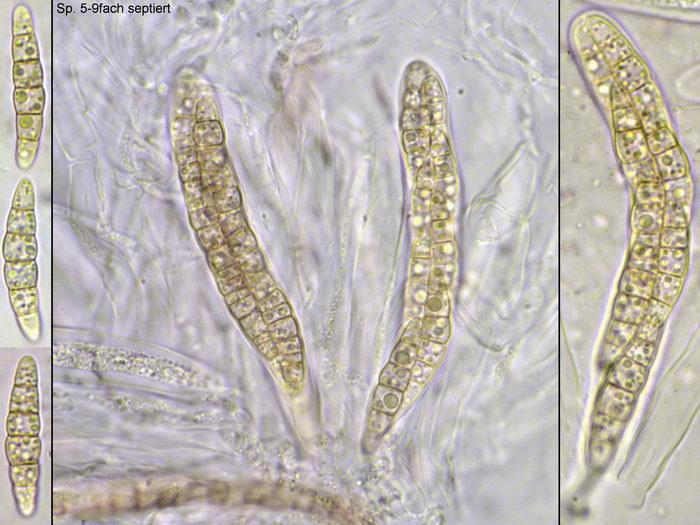
The interesting thing is that the spores have obviously 5 septa in most cases, but inside asci there are many with more septa, I have counted up to 9 septa in some cases). There are no longitudinal septa.
regards,
björn
btw: I am always looking for literature about Phaeosphaeria, Leptosphaeria and allies (Massariosphaeria, Kalmusia, Paraphaeosphaeria etc.).
The interesting thing is that the spores have obviously 5 septa in most cases, but inside asci there are many with more septa, I have counted up to 9 septa in some cases). There are no longitudinal septa.
regards,
björn
btw: I am always looking for literature about Phaeosphaeria, Leptosphaeria and allies (Massariosphaeria, Kalmusia, Paraphaeosphaeria etc.).