27-04-2026 20:52
 Lothar Krieglsteiner
Found on hanging tiwg of Olea europaea in dried-ou
27-04-2026 18:48
Tony MoverleyCollected 23rd April 2026, Norfolk, EnglandSwarms
27-04-2026 17:41
Lothar Krieglsteiner
.. Algarve, same leaf than the last post. The con
27-04-2026 18:05
Lothar Krieglsteiner
... still attached at standing tree. The green con
27-04-2026 17:16
Lothar Krieglsteiner
.. Algarve, moist lying.The conidiomata look like
27-04-2026 12:54
Steve ClementsBonjour. Ce petit champignon blanc résupiné et
27-04-2026 09:59
Pauline. PennaBonjour Can anyone advise me on these pycnidia fo

22-04-2026 20:54
 Enrique Rubio
Hi to everybody.This Pyrenopeziza grew in moist le
Peziza arvernensis
roman vargas alberto,
12-08-2011 14:54
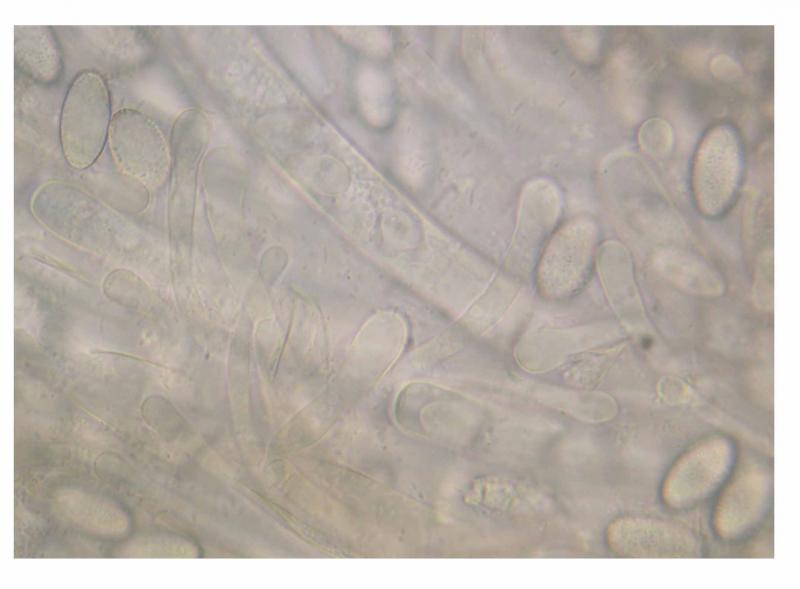
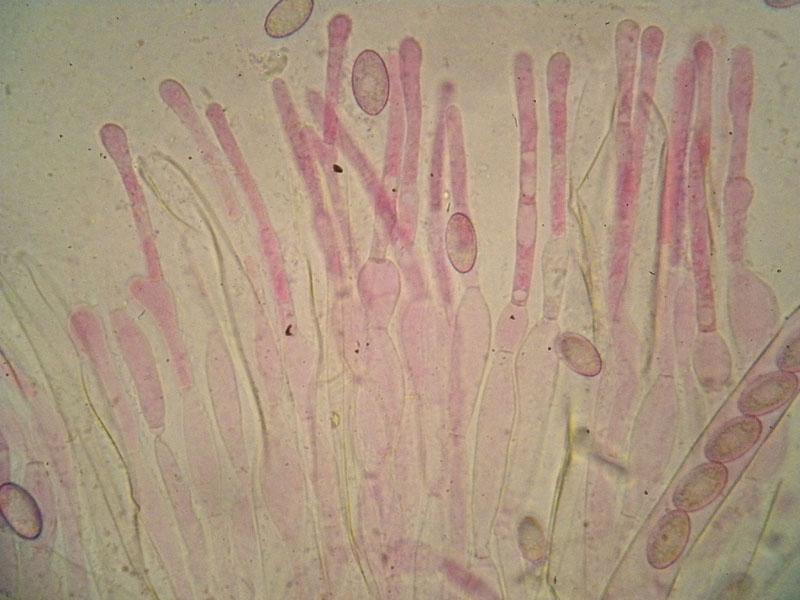
Do you know if the Peziza arvernensis has inflated paraphyses elements.
Thank you very much.
Alberto Román
Daniel Ghyselinck,
12-08-2011 18:39
Re : Peziza arvernensis
Hello Alberto,
Although I think it is not mentioned in the literature, I also have some gathering with such very inflated paraphyses.
Best regards,
Daniel
Although I think it is not mentioned in the literature, I also have some gathering with such very inflated paraphyses.
Best regards,
Daniel
roman vargas alberto,
12-08-2011 18:56
Re : Peziza arvernensis
Hi Daniel, thank you very much,.
I have two different collection, both on wood of Fagus sylvatica could be Peziza arvernensis, literature but do not find that the elements are inflated near the apex in the paraphyses.
Best regards.
Alberto Román.
I have two different collection, both on wood of Fagus sylvatica could be Peziza arvernensis, literature but do not find that the elements are inflated near the apex in the paraphyses.
Best regards.
Alberto Román.
Guy Garcia,
12-08-2011 20:36
Re : Peziza arvernensis
Il me semble que j'ai toujours observé de telles paraphyses chez Peziza arvernensis. En voici une photo.
D'ailleurs, Donadini (1981 : 19, Le genre Peziza ...) écrit : "Paraphyses : simples, septées, droites, épaissies en haut (5-8 µm)".
Désolé, mais je n'avais pas tout de suite compris qu'il s'agissait d'un élargissement des articles situés vers le bas des paraphyses ! Alors, non je n'ai jamais observé de telles paraphyses chez Peziza arvernensis. Mais, peut-être s'agit-il tout simplement d'un cas de fortoulisme ?
D'ailleurs, Donadini (1981 : 19, Le genre Peziza ...) écrit : "Paraphyses : simples, septées, droites, épaissies en haut (5-8 µm)".
Désolé, mais je n'avais pas tout de suite compris qu'il s'agissait d'un élargissement des articles situés vers le bas des paraphyses ! Alors, non je n'ai jamais observé de telles paraphyses chez Peziza arvernensis. Mais, peut-être s'agit-il tout simplement d'un cas de fortoulisme ?