
18-05-2026 12:43
Sylvie Le GoffBonjour à tousPuis je avoir votre aide sur ce que
18-05-2026 10:13
 Lieve Deceuninck
Dear forum members,I identified this as the teleom

17-05-2026 19:05
Thomas FlammerI have found this tiny 200 ym cup shaped apothecia
17-05-2026 16:41
Margot en Geert VullingsWe found this Lachnum on an old Rubus stem.Fruitbo
05-04-2026 22:46
 Lothar Krieglsteiner
on wood of Ceratonia, Algarve, 3.4.2026.The color
15-05-2026 13:33
Sylvie Le GoffBonjour à tousJe serais très reconnaissante enve
16-03-2011 14:31
roman vargas albertoHi. I would like some opinion about this Peziza
14-05-2026 05:36
Ethan CrensonHi all, I haven't paid much attention to Lachnu
10-05-2026 23:17
 Andreas Gminder
Hello,today we found in a moist steep decidous for
Nectriaceae?
Piet BORMANS,
07-09-2010 12:01
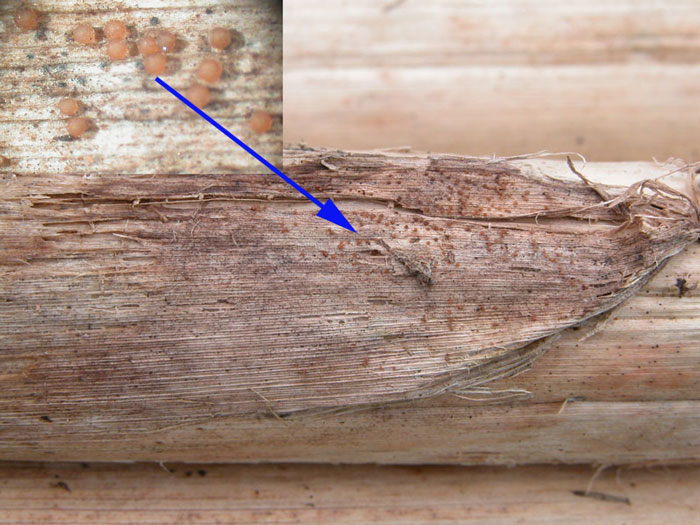
 Est-ce que quelqu'un peut m'aider à déterminer cet asco, qui selon moi appartient au genre Nectriaceae.
Récolté samedi passé sur des tiges mortes de Typha latifolia.
Ascomata rond, couleur jaune-orange, poussant au-dessus du substrat, dimension du diamètre 0,20-0,23mm
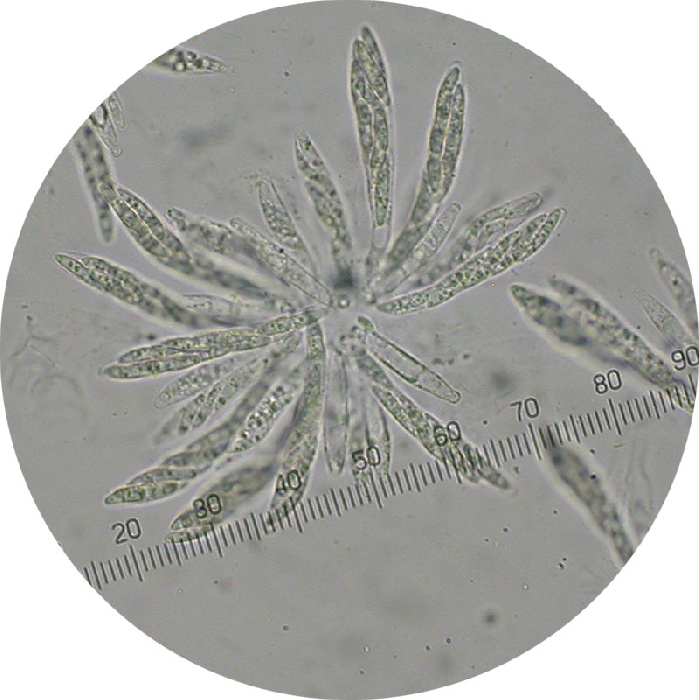
Asci 70-85 x 9 - 12 µm.
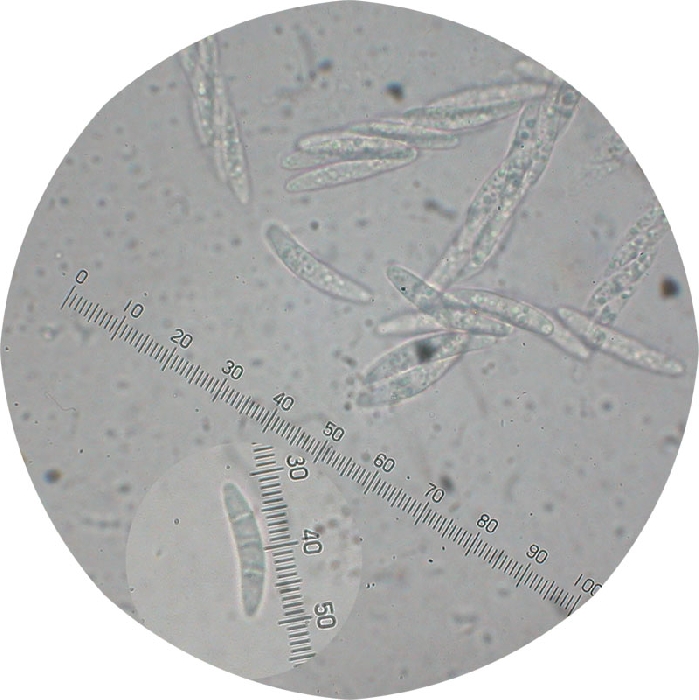
Spores 17-24 x 4-5 µm, cloisonnées 3 fois.
Alain GARDIENNET,
07-09-2010 12:12

Re:Nectriaceae?
Bonjour Piet,
Un Hydropisphaera certainement, donc un Bionectriaceae (tester la non réaction à KOH).
Probablement Hydropisphaera erubescens. Les spores seraient-elles striées ?
Alain
Un Hydropisphaera certainement, donc un Bionectriaceae (tester la non réaction à KOH).
Probablement Hydropisphaera erubescens. Les spores seraient-elles striées ?
Alain
Alain GARDIENNET,
07-09-2010 12:17
Re:Nectriaceae?
Mais je m'interroge sur l'habitat, H. erubescens étant régulièrement observé sur feuille de houx.
Si un spécialiste pouvait prendre le relai...
Alain
Si un spécialiste pouvait prendre le relai...
Alain
Piet BORMANS,
07-09-2010 12:25
Re:Nectriaceae?
Asci dans l'eau (x 400)
Piet BORMANS,
07-09-2010 12:26
Re:Nectriaceae?
Spores dans l'eau (x 1000)
Piet BORMANS,
07-09-2010 12:28
Re:Nectriaceae?
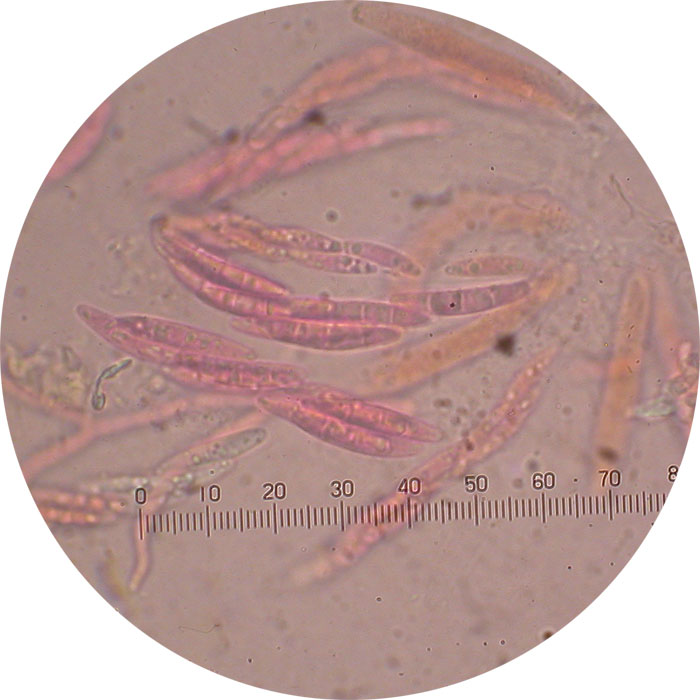
Spores dans eosine x kongorouge
Gary Samuels,
07-09-2010 14:26
Re:Nectriaceae?
Good Morning Piet!
I agree with Alain, your fungus is most likely Hydropisphaera erubescens. We've had it on a wide range of substrata, including Holly (Ilex) in France, and geographic locations (as far away as New Zealand). An interesting, and distinctive, feature of this species is the presence of orange globules in crush mounts in water.
Gary
I agree with Alain, your fungus is most likely Hydropisphaera erubescens. We've had it on a wide range of substrata, including Holly (Ilex) in France, and geographic locations (as far away as New Zealand). An interesting, and distinctive, feature of this species is the presence of orange globules in crush mounts in water.
Gary
Piet BORMANS,
07-09-2010 21:40
Re:Nectriaceae?
Merci beaucoup Alain pour votre réponse trés rapide. La réaction au KOH est négative et les spores sont lissent.
Also many thanks to Gary for his confirmation and explanation.
Piet Bormans
Also many thanks to Gary for his confirmation and explanation.
Piet Bormans