12-06-2026 14:50
 François Freléchoux
Bonjour, Voici la brève description d'une Mollis
10-06-2026 21:16
François Freléchoux
Bonsoir,Le dernier du jour, en attendant votre avi
11-06-2026 19:01
 William Slosse
Hello all,In an attempt to make a culture of a sus
11-06-2026 19:03
 Nicolas VAN VOOREN
Chers membres d'Ascofrance,Le site sera placé en

09-06-2026 18:32
Camille MertensSur morceau de roseau immergé 0,5 - 0,7 mm de dia
10-06-2026 12:54
Steve ClementsBonjour encore, Pouvez-vous m'aider, s'il vous pl
10-06-2026 21:07
François Freléchoux
Toutes les tiges de gentianes jaunes de l'an passÃ
10-06-2026 13:41
François Freléchoux
Bonjour à nouveau, Voici une trouvaille d'hier.
Pyreno #2
Gernot Friebes,
12-08-2010 13:28
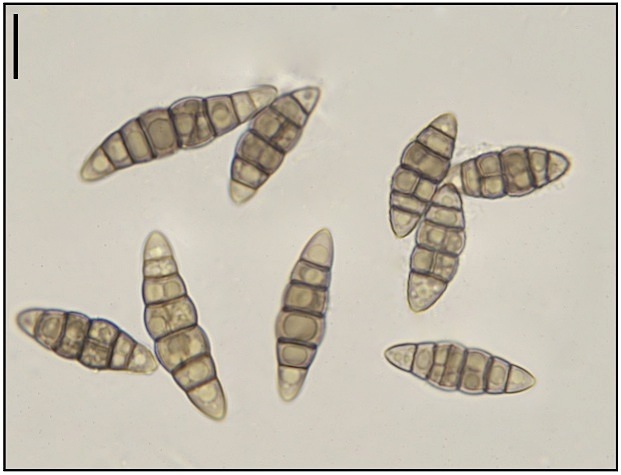
here is the second find by my friend. Again I didn't see any asci but the finder described them as bitunicate, IKI-, 8-spored and 150 x 15-17(22) µm. The spores are biseriate inside the asci, hyaline if young, later brown with an olive tinge, sometimes slightly rough, 23-27(30) x (7)7,5-8(9,5) µm, often with 1 or 2 longitudinal septa which are sometimes oblique. The paraphyses are branched and 1,5-2 µm thick.
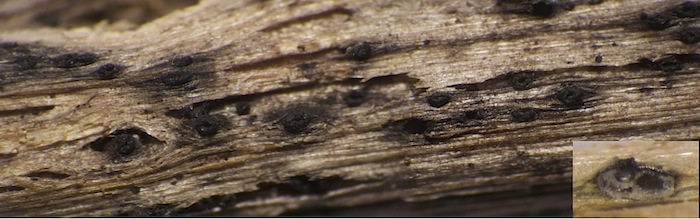
The ascomata are immersed, smooth, black, solitary or sometimes also confluent, with a thick, somewhat rugose ostile.
We would be happy for any comments!
Best wishes,
Gernot
Gernot Friebes,
12-08-2010 13:29
Re:Pyreno #2
spores (scale=10 µm):
Gernot Friebes,
12-08-2010 13:30
Re:Pyreno #2
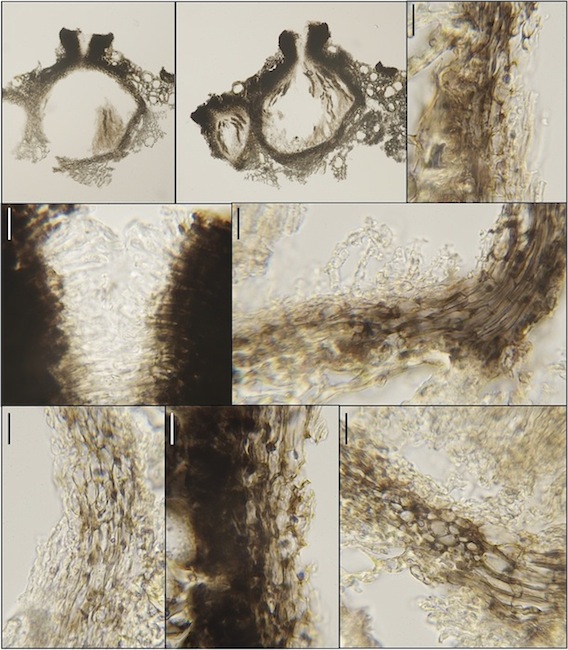
sections (scale=10 µm):