
10-05-2026 16:18
brigitte vignotbonjour trouvée en Ariège sur bois une petite
29-04-2026 10:44
 Lothar Krieglsteiner
growing at moist, drying-out soil at the side of a
10-05-2026 23:17
 Andreas Gminder
Hello,today we found in a moist steep decidous for
27-04-2026 17:16
Lothar Krieglsteiner
.. Algarve, moist lying.The conidiomata look like
10-05-2026 09:02
Buckwheat PeteHello everybody, ould this be Lachnum subvirgineu
08-05-2026 11:55
Gernot FriebesHi,found on a decorticated Picea abies branch stil
11-05-2016 20:37
 Zuzana Sochorová (Egertová)
Hi,this very little ascomycete grew on soil in a m
09-05-2026 07:37
Zuzana Sochorová (Egertová)
Hello,please, could anyone share this paper?Ferná

05-05-2026 22:40
Gernot FriebesHi,I believe this is a Plagiostoma growing on a Sa
It's been hot and dry here
Marja Pennanen,
07-08-2010 15:51
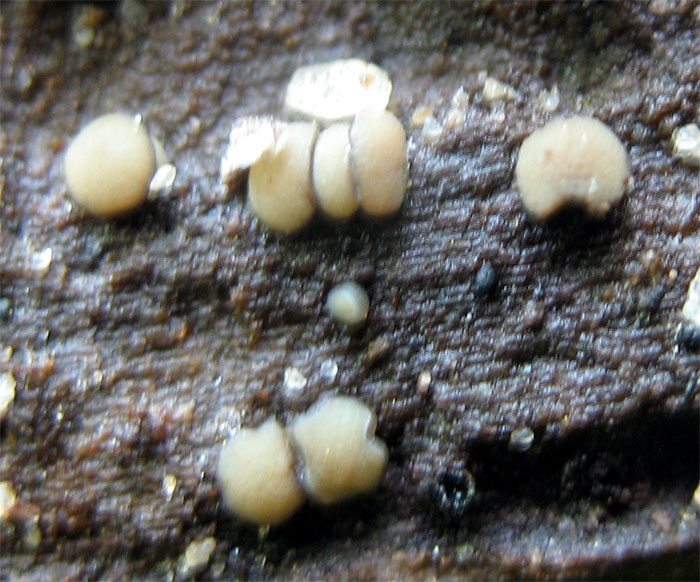
For instance these:
Marja Pennanen,
07-08-2010 15:53
Re:It's been hot and dry here
They are 1-1,5 mm wide.
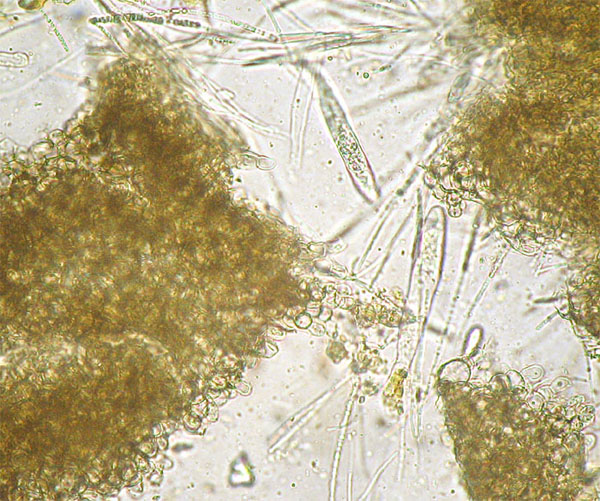
Heres an overview of microscophy:
Heres an overview of microscophy:
Marja Pennanen,
07-08-2010 15:56
Re:It's been hot and dry here
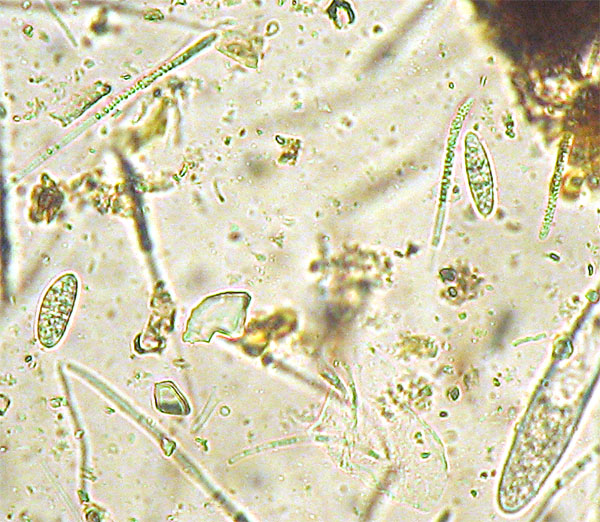
Mollisia?
But the spores are odd for a Mollisia.
They are about 15-18x6-8 and can have a septa
But the spores are odd for a Mollisia.
They are about 15-18x6-8 and can have a septa
Marja Pennanen,
07-08-2010 15:57
Re:It's been hot and dry here
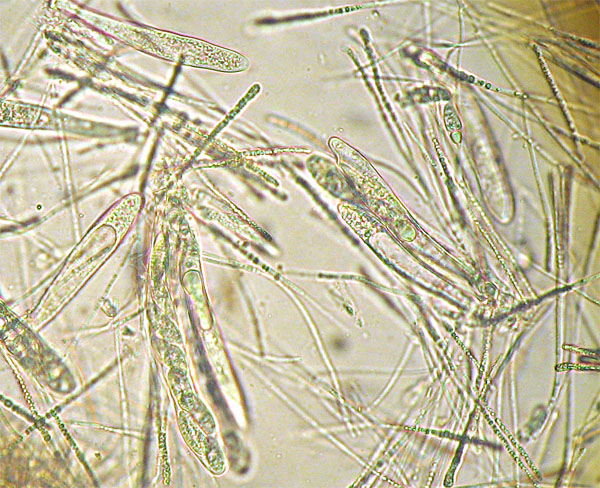
The asci are about 80-100x10-15.
Paraphyses are 2-3 micrometers wide, widening at tips and have many droplets and are about 20-30 micrometers longer than asci.
Paraphyses are 2-3 micrometers wide, widening at tips and have many droplets and are about 20-30 micrometers longer than asci.
Michel Hairaud,
07-08-2010 16:54

Re:It's been hot and dry here
Hi Marja,
The paraphyses full with Vbs and spore shape would rather fit Hymenoscyphus or Tatraea
Did you check the IKI reaction and the presence of a textura intricata in the medulla ?
I would suggest Tatrae dumbirensis though the spores are smaller than usually
Amitiés
Michel
The paraphyses full with Vbs and spore shape would rather fit Hymenoscyphus or Tatraea
Did you check the IKI reaction and the presence of a textura intricata in the medulla ?
I would suggest Tatrae dumbirensis though the spores are smaller than usually
Amitiés
Michel
Michel Hairaud,
07-08-2010 18:07
Re:It's been hot and dry here
Hi Marja,
I have just posted a new ''fiche'' in Ascofrance for Tatraea dumbirensis. There is another one by Enrique Rubio under the synonym Ciboria dumbirensis. The paraphyses do not fit your collection.
Hymenoscyphus remains a suggestion.
Amitiés
Michel
I have just posted a new ''fiche'' in Ascofrance for Tatraea dumbirensis. There is another one by Enrique Rubio under the synonym Ciboria dumbirensis. The paraphyses do not fit your collection.
Hymenoscyphus remains a suggestion.
Amitiés
Michel
Hans-Otto Baral,
07-08-2010 18:44

Re:It's been hot and dry here
Hi Marja & Michel
Tatraea has only faintly refractive VBs in the paraphyses, and curved spores. I believe this is Graddonia coracina. Ascus IKI-reaction should clarify this (Graddonia -, Tatraea strongly blue).
Zotto
Tatraea has only faintly refractive VBs in the paraphyses, and curved spores. I believe this is Graddonia coracina. Ascus IKI-reaction should clarify this (Graddonia -, Tatraea strongly blue).
Zotto
Marja Pennanen,
07-08-2010 20:48
Re:It's been hot and dry here
Hello folks,
I meshed with the specimen by adding too much lugol. So the views were not clear.
But I saw no strong blue reactions, actually was very uncertainly claiming this to be IKI-.
Thought, that I must be asked to tell something of so uncertain observations ;) (But was almoust sure to be forced to do so ;) )
Naturally I'm now overloaded of specimen to be studied and not very willing to take another try...
Even more naturally I've never before met a Graddonia, which I suppose this is :)
Yes, once again a new genus for lucky me :)
Thank you very, very much Michel and Zotto.
This seemed to turn browner in fridge:
I meshed with the specimen by adding too much lugol. So the views were not clear.
But I saw no strong blue reactions, actually was very uncertainly claiming this to be IKI-.
Thought, that I must be asked to tell something of so uncertain observations ;) (But was almoust sure to be forced to do so ;) )
Naturally I'm now overloaded of specimen to be studied and not very willing to take another try...
Even more naturally I've never before met a Graddonia, which I suppose this is :)
Yes, once again a new genus for lucky me :)
Thank you very, very much Michel and Zotto.
This seemed to turn browner in fridge:
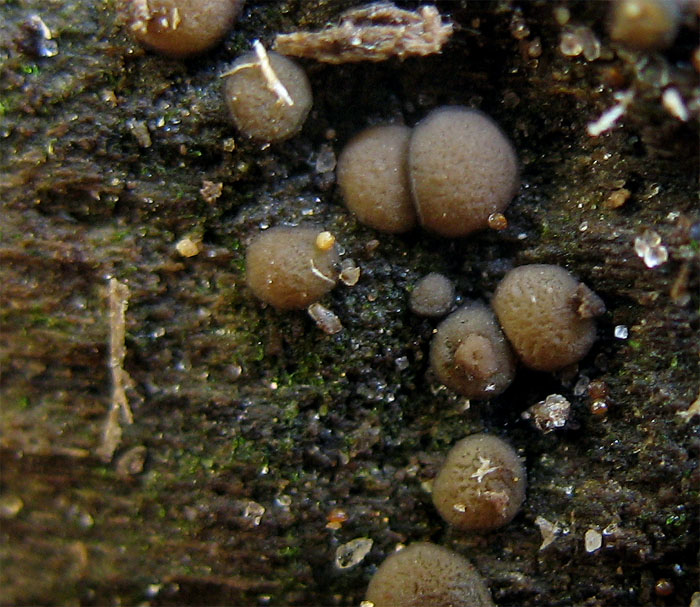
Andreas Gminder,
08-08-2010 15:46
Re:It's been hot and dry here
Hello Marja,
you can see some macro- and microfotos of Graddonia coracina here:
http://www.mollisia.de/Galerie/Ascomycetes/F-K.html
best regards,
Andreas
you can see some macro- and microfotos of Graddonia coracina here:
http://www.mollisia.de/Galerie/Ascomycetes/F-K.html
best regards,
Andreas
Marja Pennanen,
08-08-2010 16:08
Re:It's been hot and dry here
Thank you Andreas :)
There seems to be many other photos of interesting species in the gallery, too :)
Thankfully Marja
There seems to be many other photos of interesting species in the gallery, too :)
Thankfully Marja