
29-05-2026 15:35
daniel FERREBonjour à tous,Je voudrais votre aide pour cette
28-05-2026 16:15
James MitchellHello,Does anyone have the original publication of
28-05-2026 11:06
Thomas Læssøehttps://svampe.databasen.org/observations/10596750
23-05-2026 11:44
 Charles Grapinet
Hello, I am having trouble identifying this copro
25-05-2026 16:44
François BartholomeeusenHi forum members,During an excursion organised by
26-05-2026 21:25
Dirk GerstnerHello everyone, I'm completely stumped by this li
26-05-2026 22:44
Ethan CrensonHi all, I think I have Incrucipulum capitatum her
22-05-2026 14:44
 Lothar Krieglsteiner
in unripe condition citrine yellow, then soon fadi
25-05-2026 16:35
 Bernard CLESSE
Bonjour à toutes et tous,J'ai trouvé récemment,
22-05-2026 13:29
Gernot FriebesHi,I am curious to hear your opinion on this mater
Perrotia cf. - index 20061109-001-PERZ
Perz Piotr,
28-11-2006 20:13
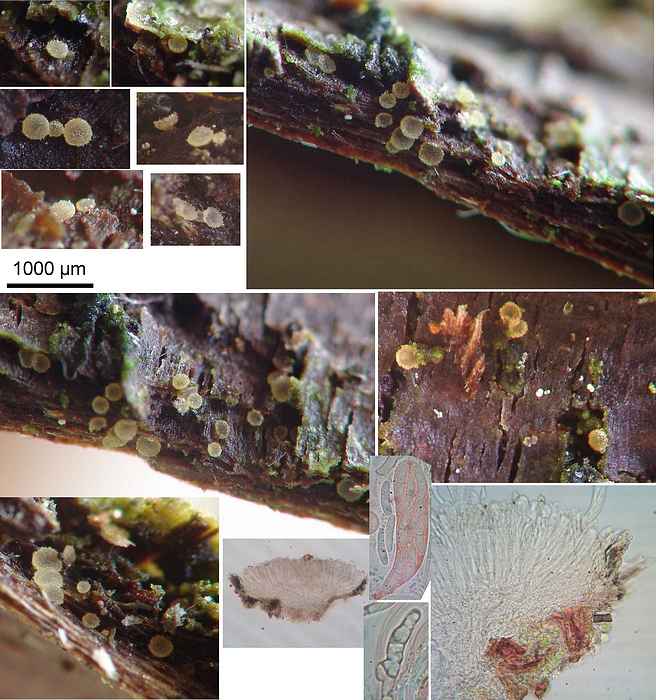
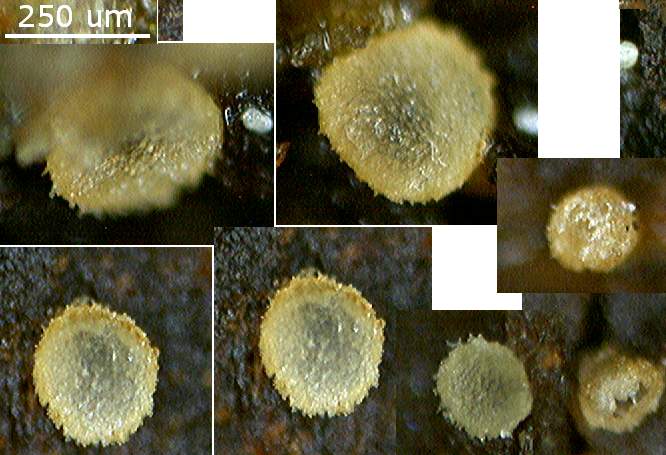
I was found an intresting Perrotia spec., on Salix bark (on periderm, uder epiderm), but I can not identyfi this species.
Here are
- High resolution MAKRO: http://wwkk.mikologia.pl/temporary/ascofrance/Perrotia_PP_20061109_001.jpg
- High resolution Habitat & Ecology picure: http://wwkk.mikologia.pl/temporary/ascofrance/Perrotia_PP_20061109_001_hab2.jpg
- ZIP file with 68 high resolution MICRO pictures: http://wwkk.mikologia.pl/temporary/ascofrance/Perrotia_PP_20061109_001_micro.zip
The Spores are Perrotia flammea-type but this is not P.flammea, cause no KOH reaction with Crystals on hairs. The hairs in my spec. are smooth, but with gelatinous exsudate - see microfoto.
best wishes
Pimpek
NC NC,
28-11-2006 23:15
Re:Perrotia cf. - index 20061109-001-PERZ
Bonsoir à tous,
ca ressemble un peu à Perrotia coccinea fiche HB 6433 du disque de Baral (Helotiales-Lachnaceae-Perrotia ) mais ça ne pousse pas forcement sur Salix (donné sur Lonicera sauf erreur )
Bon courage;
Robert
ca ressemble un peu à Perrotia coccinea fiche HB 6433 du disque de Baral (Helotiales-Lachnaceae-Perrotia ) mais ça ne pousse pas forcement sur Salix (donné sur Lonicera sauf erreur )
Bon courage;
Robert
Perz Piotr,
29-11-2006 00:27
Re:Perrotia cf. - index 20061109-001-PERZ
Hi Robert,
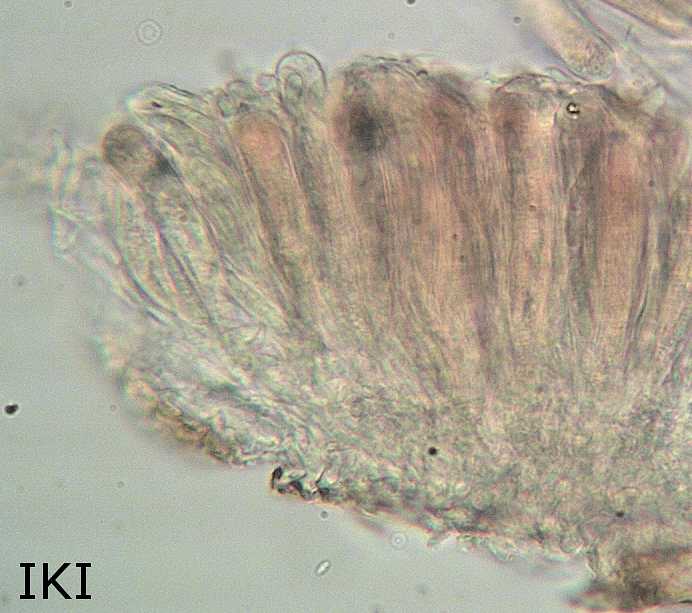
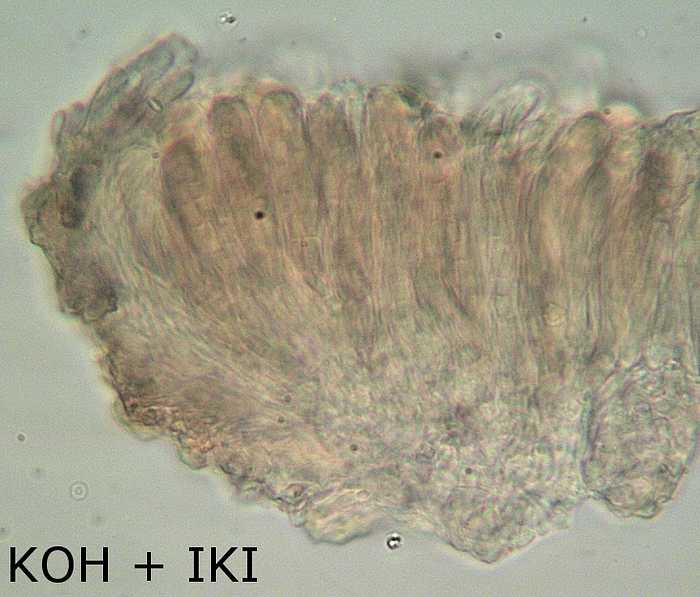
My species. even dry or rehydrated is yellow and does not have IKI or KOH+IKI reaction. Also I have no intercellular reddish gel, only gelatinous exsudate on hairs and ectal excipulum, and every ascus is with true croziers.
I know - the colors can be not important, OK. Then, if the KOH+IKI reaction can be not constant - then the species can be identyfied als HB6433.
Now is importatnt to gen another description and see, what are writing other mycologis.
P.
My species. even dry or rehydrated is yellow and does not have IKI or KOH+IKI reaction. Also I have no intercellular reddish gel, only gelatinous exsudate on hairs and ectal excipulum, and every ascus is with true croziers.
I know - the colors can be not important, OK. Then, if the KOH+IKI reaction can be not constant - then the species can be identyfied als HB6433.
Now is importatnt to gen another description and see, what are writing other mycologis.
P.
Perz Piotr,
29-11-2006 00:27
Re:Perrotia cf. - index 20061109-001-PERZ
P.
NC NC,
29-11-2006 15:02
Re:Perrotia cf. - index 20061109-001-PERZ
I have great dificulty in assuming this to be a Perrotia. I must congratulate you on the beautiful microphotos in your download! I'm sure Zoitto willl be interested in the hymenial parasite. The spore septation and great shots of the croziers are well-documented.I really have no good idea of a better generic position, I'm sorry to say.
Dick Korf
Dick Korf
Perz Piotr,
19-10-2007 01:49
New Found - index 20071003-004
Hi,
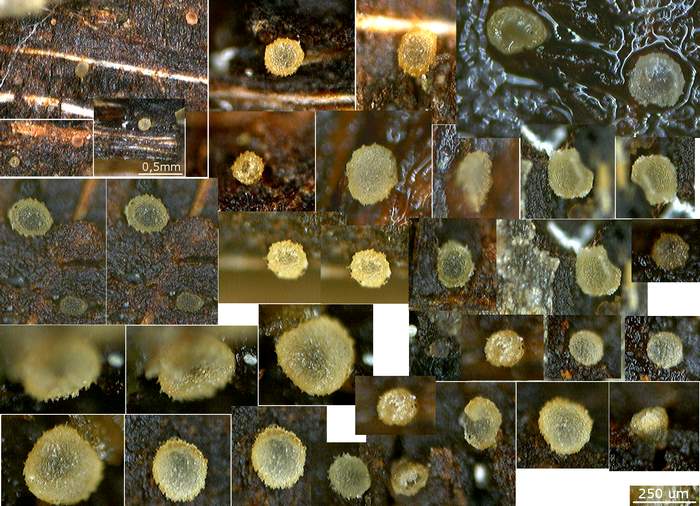
I have next found of this species
I have next found of this species
Perz Piotr,
19-10-2007 01:50
Re:Perrotia cf. - index 20061109-001-PERZ
close up
Perz Piotr,
19-10-2007 01:51
Re:Perrotia cf. - index 20061109-001-PERZ
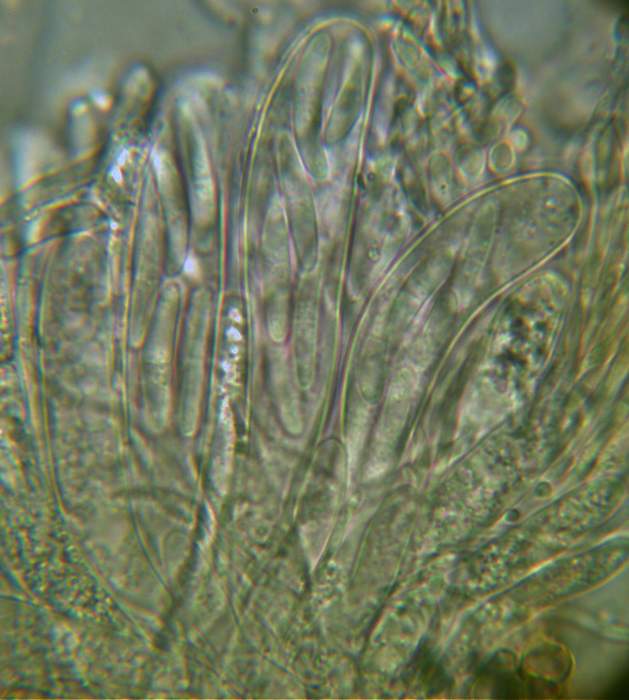
Spores are mostly 1-septate (also 2-celled) in turg. asci, but sometimes up to 3-septate (also 4-celled)
Perz Piotr,
19-10-2007 01:51
Re:Perrotia cf. - index 20061109-001-PERZ
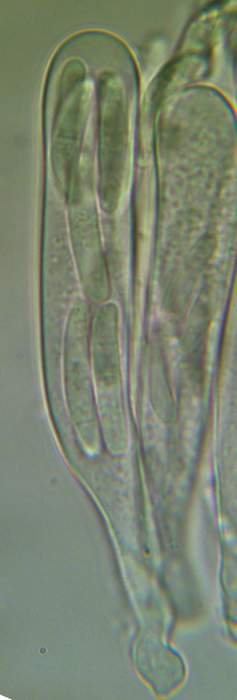
.
Perz Piotr,
19-10-2007 01:52
Re:Perrotia cf. - index 20061109-001-PERZ
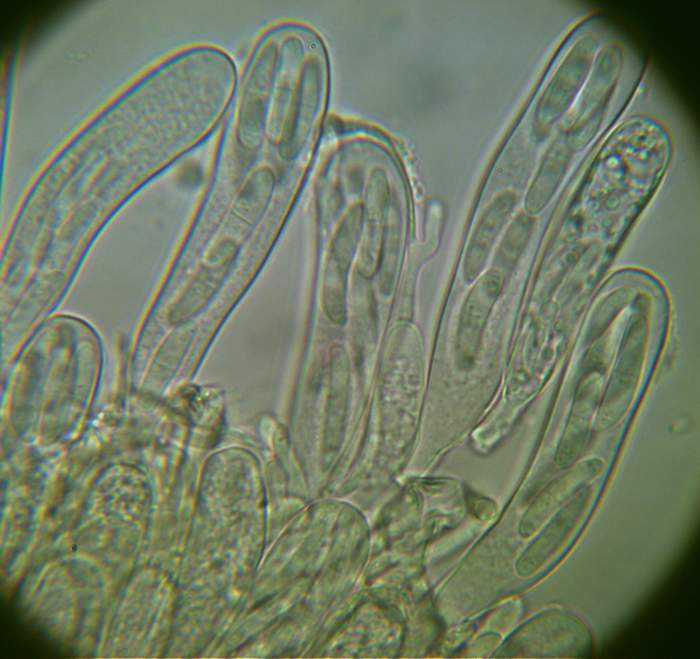
..
Perz Piotr,
19-10-2007 01:53
Re:Perrotia cf. - index 20061109-001-PERZ
This is the found from bark of Salix. Any idea? Any help?
best wishes from Poland
Pimpek
best wishes from Poland
Pimpek
Perz Piotr,
19-10-2007 02:39
Re:Perrotia cf. - index 20061109-001-PERZ
the ZIP-file with all micros of the current found:
http://wwkk.mikologia.pl/temporary/ascofrance/20071003-004%20Perrotia%20'salicina'.zip
http://wwkk.mikologia.pl/temporary/ascofrance/20071003-004%20Perrotia%20'salicina'.zip
Hans-Otto Baral,
19-10-2007 17:30

Re:Perrotia cf. - index 20061109-001-PERZ
Hi Piotr
like in your "Pezicula", I here guess that the species is undescribed and its resemblance with Perrotia, in my opinion, restricted to the shape of asci and spores. In the other features the species resembles genera like Cistella or Ciliolarina, perhaps Pseudohelotium.
Such inamyloid hemispherical ascus apices as in your fungus are surely an adaption to a xeric environment, and derive from the loss of a conical amyloid apex during evolution. Spores of such a n allantoid shape occur in various groups, actually.
I searched for a name for this fungus since I heared of it from your previous find last year, but so far I found nothing. If Velenovsky would have worked more carefully we would perhaps have a chance to find it among his drawings.
Zotto
like in your "Pezicula", I here guess that the species is undescribed and its resemblance with Perrotia, in my opinion, restricted to the shape of asci and spores. In the other features the species resembles genera like Cistella or Ciliolarina, perhaps Pseudohelotium.
Such inamyloid hemispherical ascus apices as in your fungus are surely an adaption to a xeric environment, and derive from the loss of a conical amyloid apex during evolution. Spores of such a n allantoid shape occur in various groups, actually.
I searched for a name for this fungus since I heared of it from your previous find last year, but so far I found nothing. If Velenovsky would have worked more carefully we would perhaps have a chance to find it among his drawings.
Zotto
Perz Piotr,
20-10-2007 12:36
Re:Perrotia cf. - index 20061109-001-PERZ
Hallo!
Thanks Zotto. Also unknow genus, something like 'Cistelloperrotia' :) I try to find someone in Poland to obtain anamorph - may be this can help us to find the correct genus ?
best wishes
Pimpek
Thanks Zotto. Also unknow genus, something like 'Cistelloperrotia' :) I try to find someone in Poland to obtain anamorph - may be this can help us to find the correct genus ?
best wishes
Pimpek
Hans-Otto Baral,
20-10-2007 18:54
Re:Perrotia cf. - index 20061109-001-PERZ
An anamorph and a sequence would probably help. But a new genus is not surely necessary for inamyloid asci with hemispherical apex. Look in Lachnellula, such occur there also.
Zotto
Zotto
Perz Piotr,
20-10-2007 19:07
Re:Perrotia cf. - index 20061109-001-PERZ
Hi,
by writing "correct genus" I think not "new genus", but "propertly genus". I means the genus of course can be an existing genus, but with anamorph is much easy to find them !
Pimpek
by writing "correct genus" I think not "new genus", but "propertly genus". I means the genus of course can be an existing genus, but with anamorph is much easy to find them !
Pimpek