
14-06-2021 01:16
Ethan CrensonHello all,About a week and a half ago in a cemeter
12-06-2021 16:38
Mirek GrycHello everyoneA colleague sent me this Peziza in a


11-06-2021 09:25
Juuso ÄikäsYesterday I stumbled upon a group of Hyaloscypha f
31-05-2021 19:40
 Riet van Oosten
Hello, Found by Laurens van der Linde (May 2021,
08-06-2021 18:16
Aouali SouhilaHi,I lately studied P. nigra pine needles sufferin
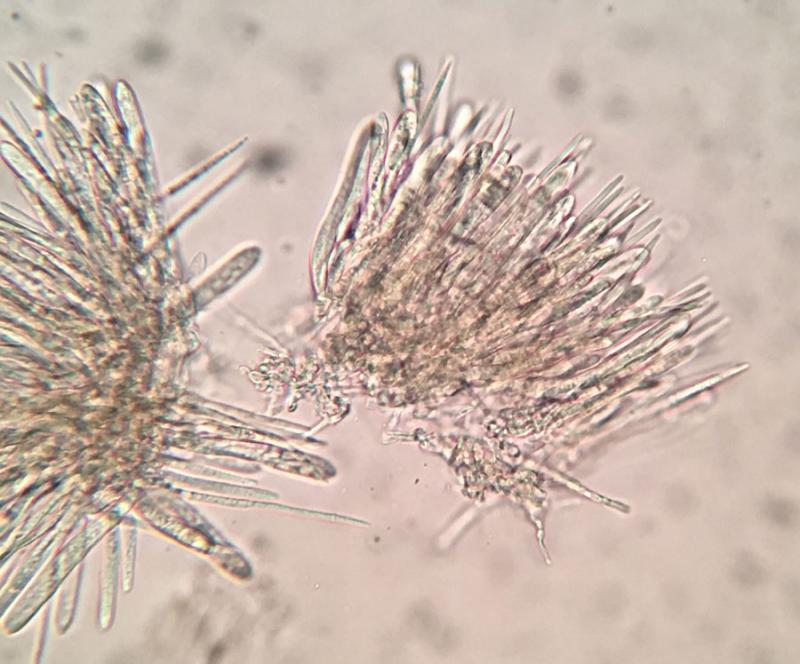
About a week and a half ago in a cemetery in Brooklyn NY I found what I believe is a Lachnellula on the bark of Pinus flexilis. The apothecia are tiny, with a yellow hymenium clothed in white hairs.
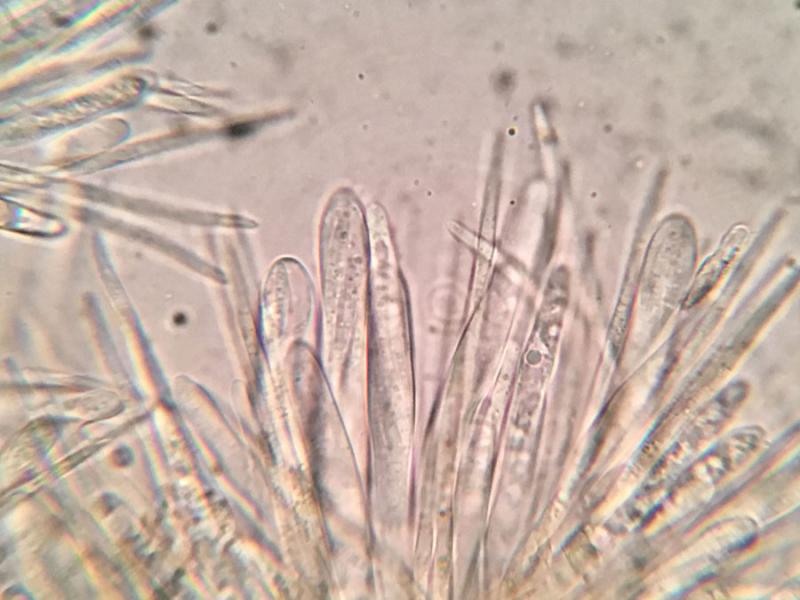
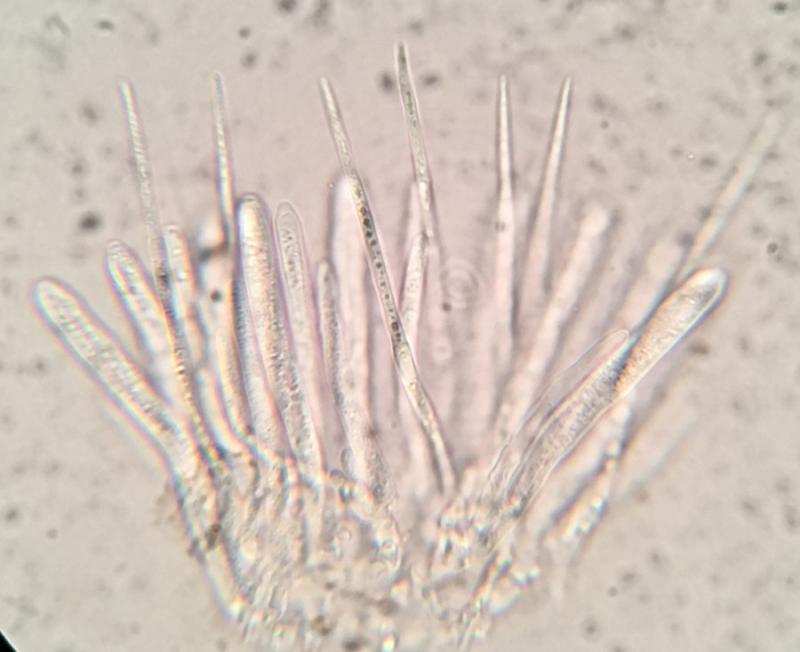
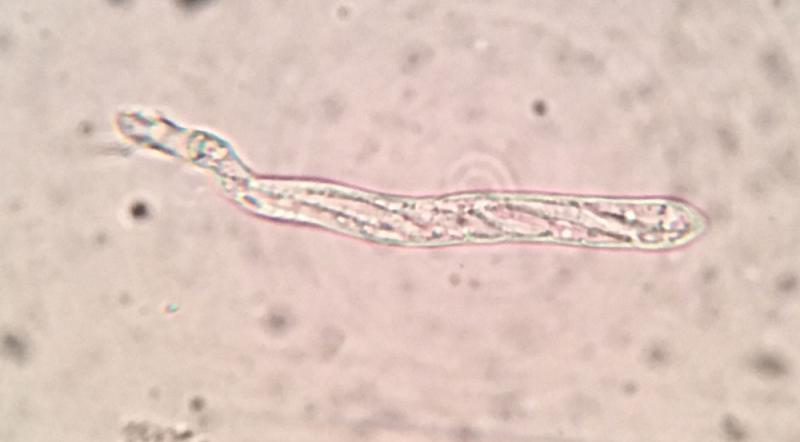
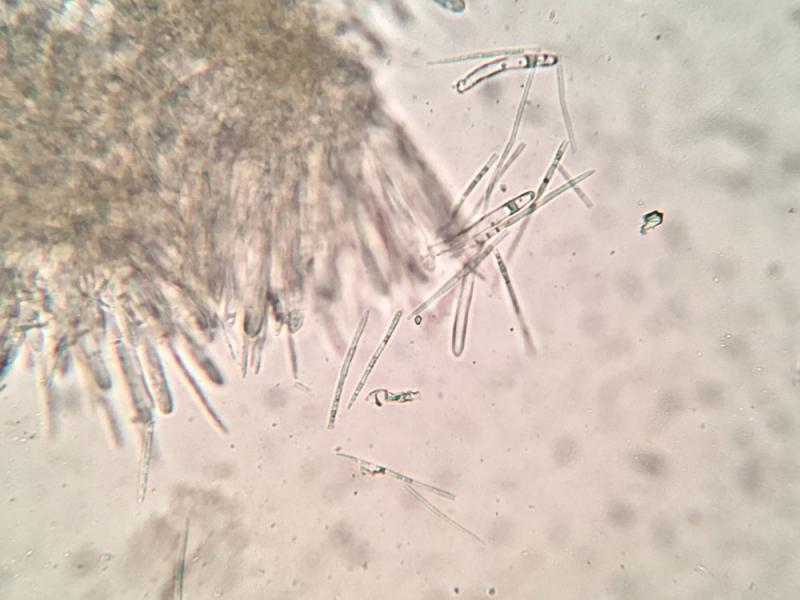
The hairs are septate, tapering, smooth or minutely punctate. Paraphyses extend well beyond the asci and taper to an almost acute point. They appear to contain oil droplets.
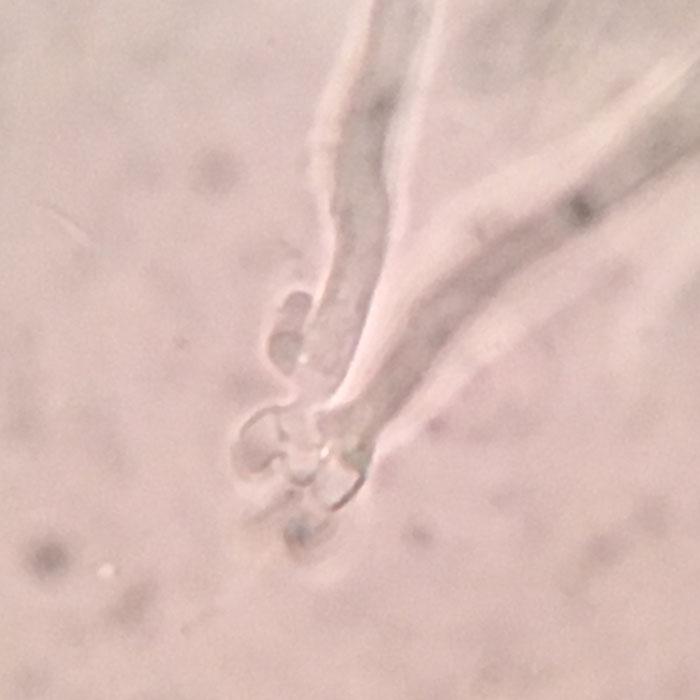
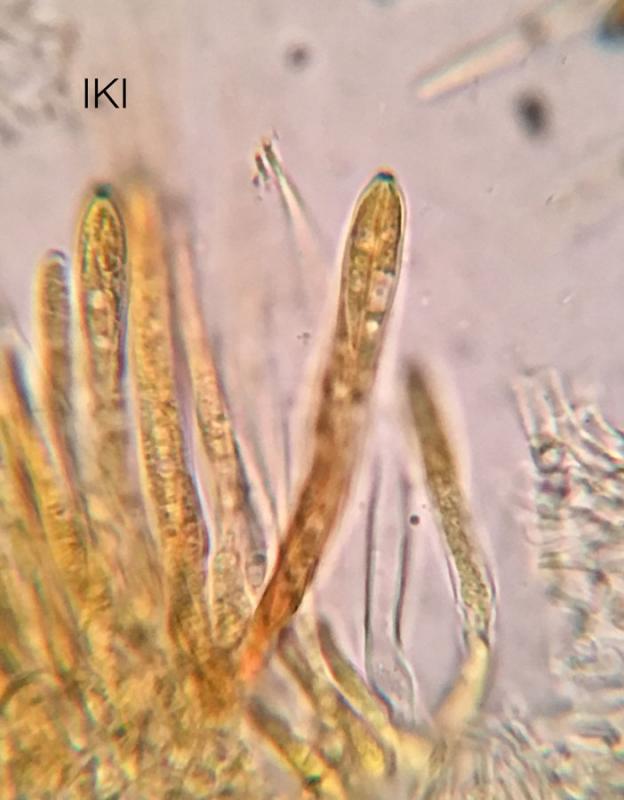
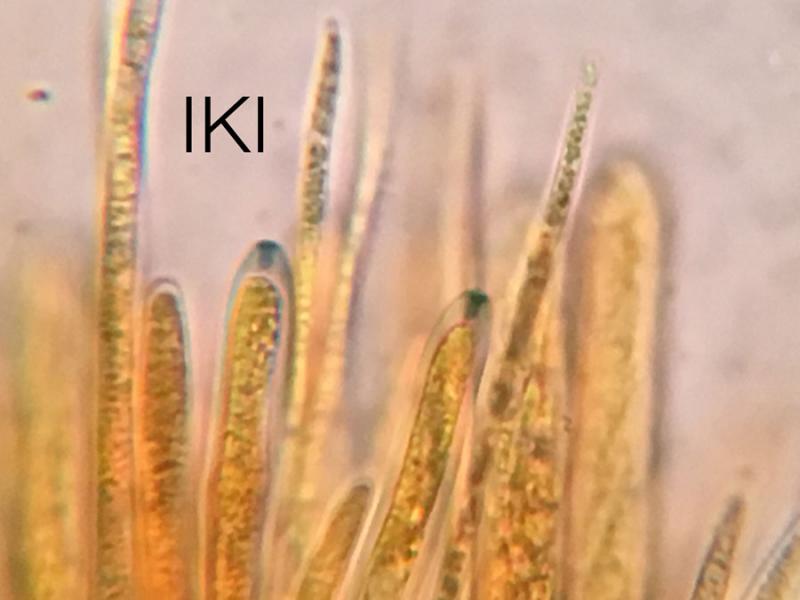
Asci are 61-72 x 6-7µm, IKI+, croziers+ (please correct me if I am wrong).
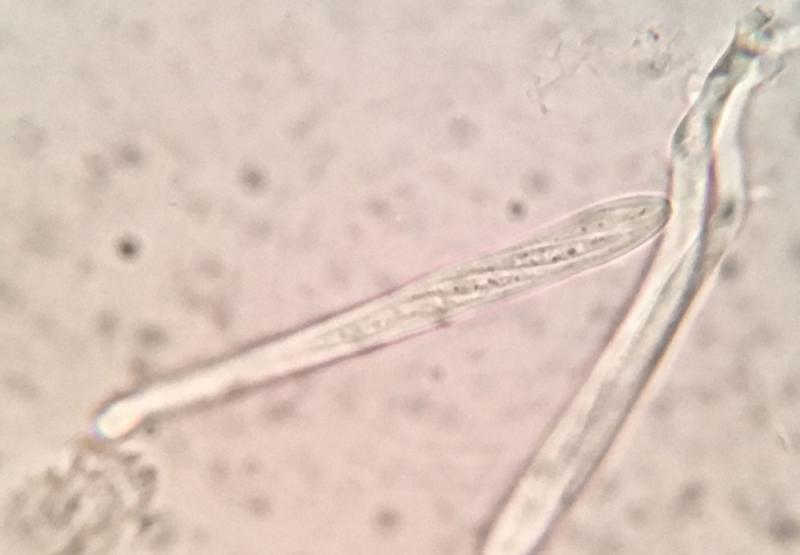
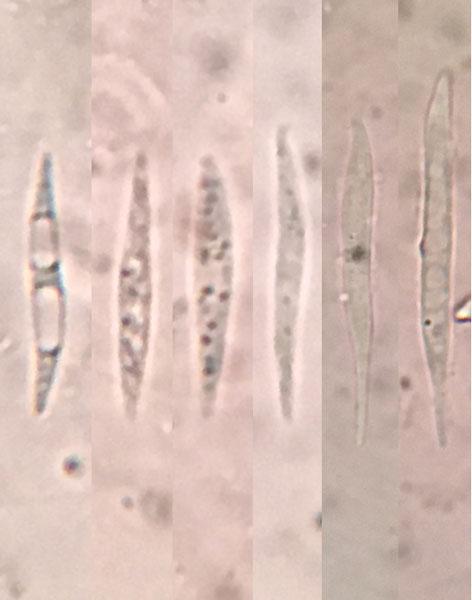
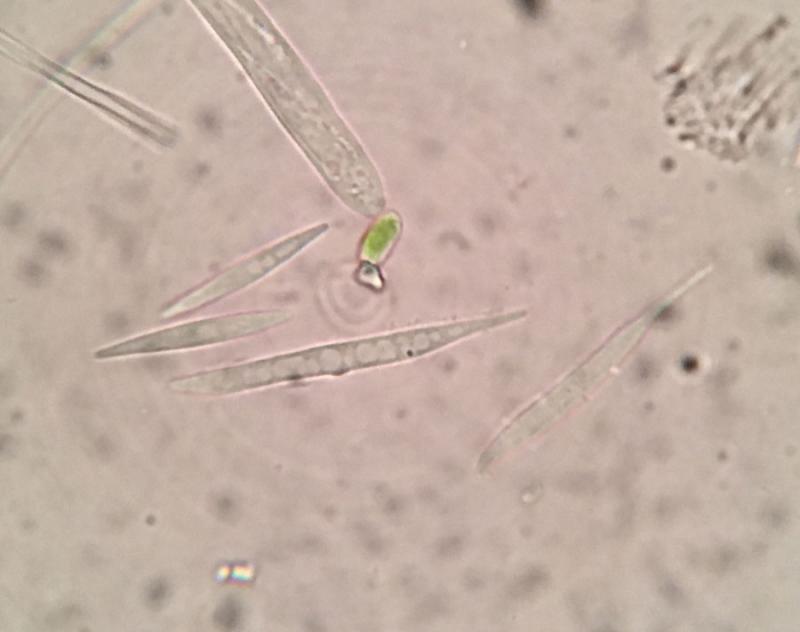
Spores are long with acute ends, 15-43 x 2-4µm. The spores might range somewhat longer than my measurements—in looking back over my photos I see what may be broken spores that I ignored because I thought they were broken paraphyses. (see the last photo)
I will probably have to return to the place of collection and look again to get more details about the hairs and the true spore measurements. But maybe someone can point me in the right direction with the limited information I have presented here?
Thanks,
Ethan
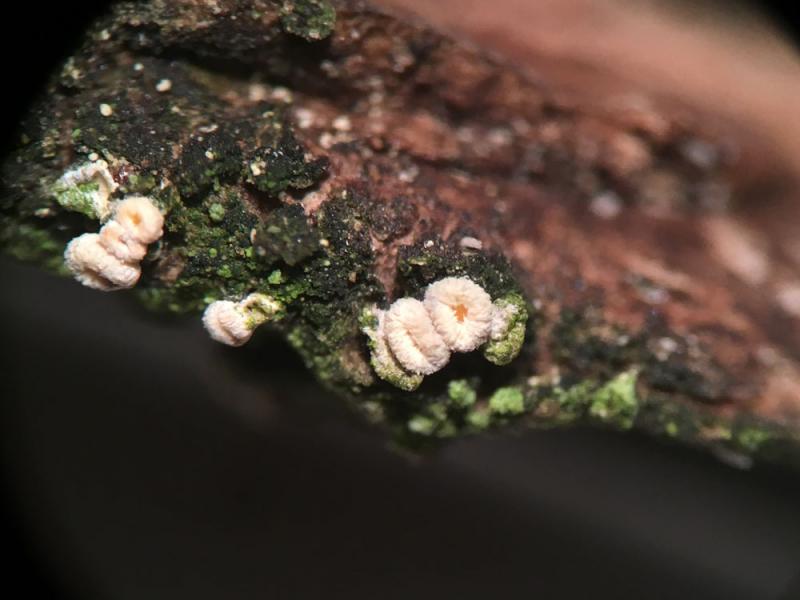
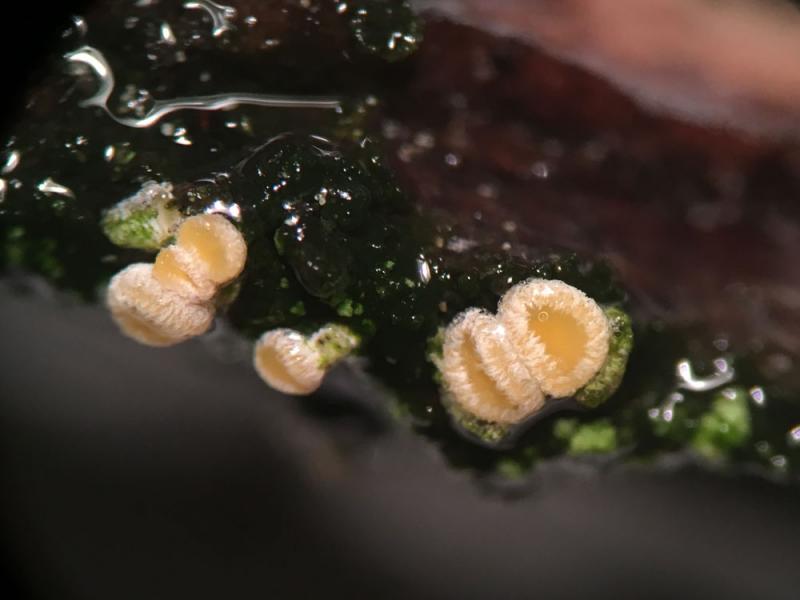
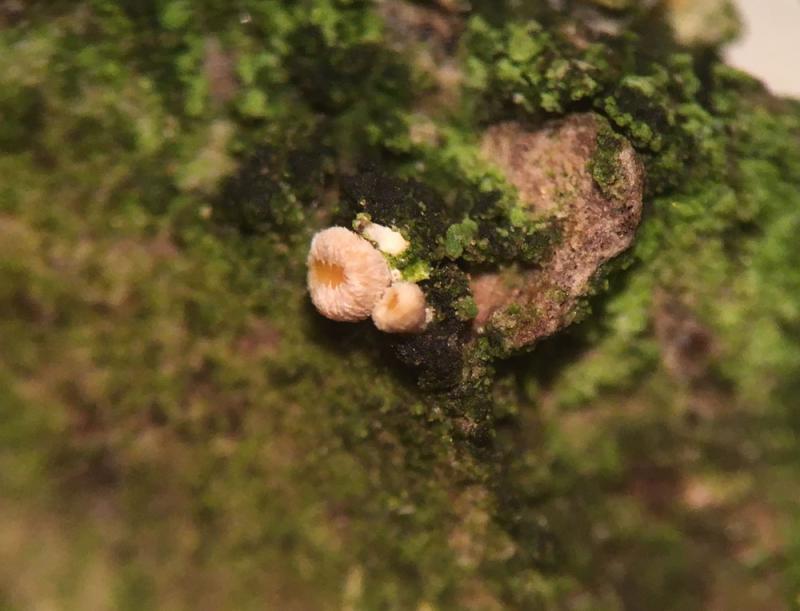
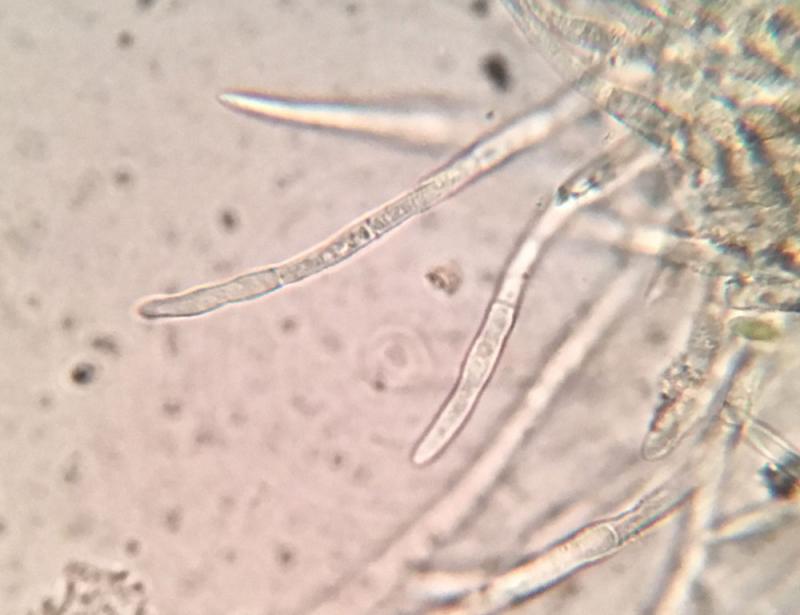
Using Zotto's key
https://in-vivo-veritas.de/wp-content/uploads/2015/10/Lachnellula-Baral-20081.pdf
L. ellisiana seems to be the closest match.


I am happy to offer ITS sequencing for this species. If you are interested, please drop me a message.
Cheers,
Edouard