
07-06-2026 15:10
 William Slosse
Hello everyone,On 05-06-26, I found following asco
07-06-2026 12:09
 François Freléchoux
Bonjour, Voici une brève description de ce qui m
05-06-2026 11:02
Thomas Læssøehttps://svampe.databasen.org/observations/10596691
07-06-2026 12:43
Steve ClementsBojour. This was a strange find on a stick on my
12-07-2015 00:05
 Nedim Jukic
This one from the same locality as the previous on
06-06-2026 17:44
Steve ClementsBonjour, This disco was on planed wood 3 x 1.5 cm
14-08-2016 23:15
 Alex Akulov
Dear friendsCan you help me to find the descriptio

04-06-2026 11:36
Gernot FriebesHi,found on Vaccinium myrtillus.Asci: IKI –, 8-s

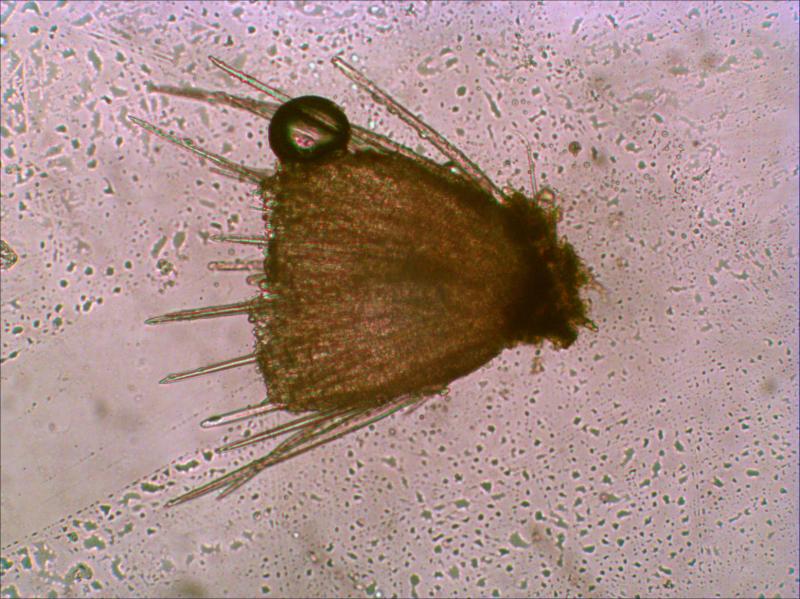
Found on deer dung.
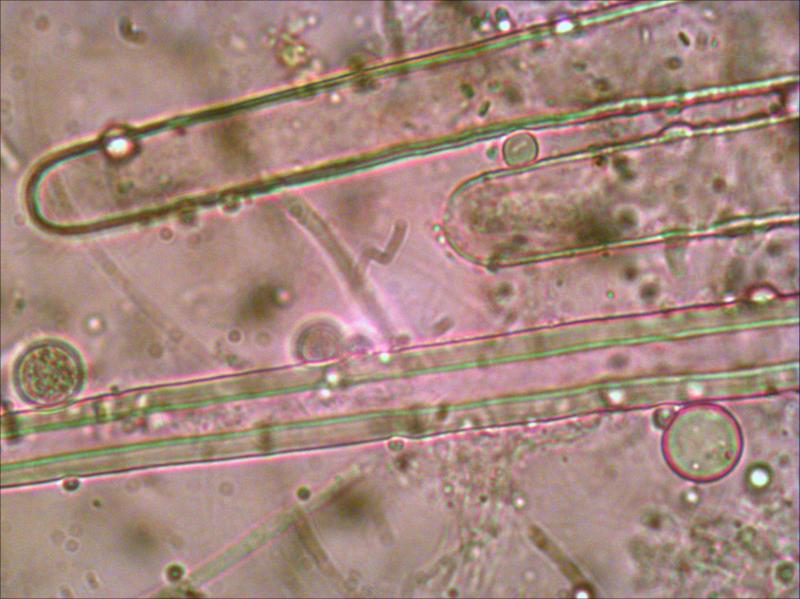
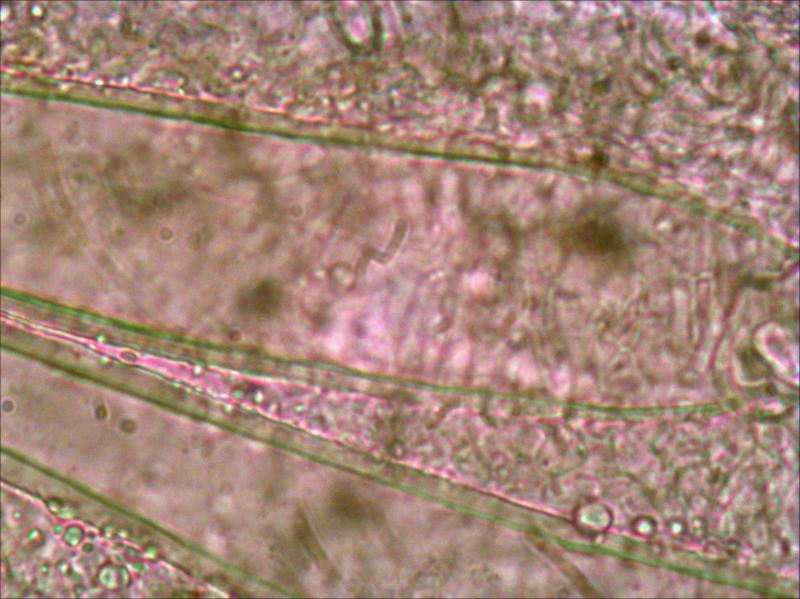
Fruitbody: 297 um wide - 305 um high, covered with straight setea originating from the base.
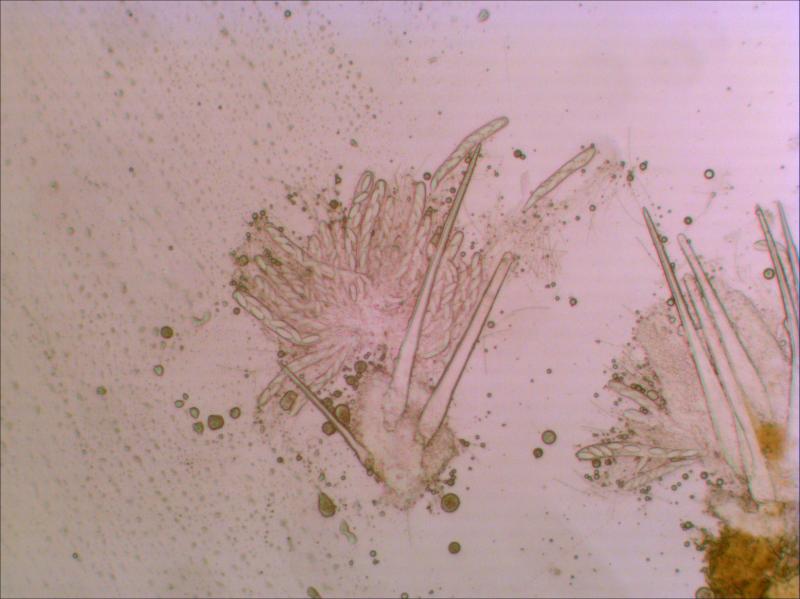
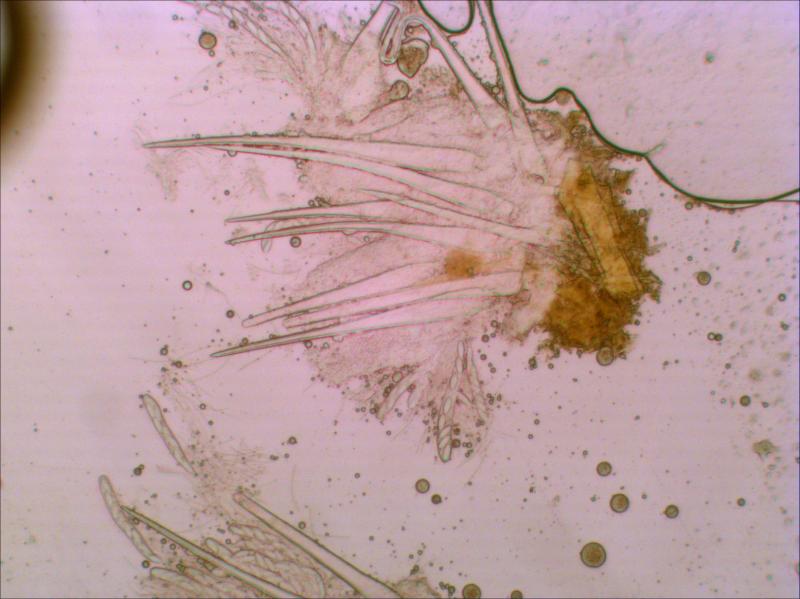
Setea: Non sepltated with round and pointed tops, thick walled.
Setea with round tops - 234-280x24.5-25 um (width measured at the base), wall 1.5-1.8 um
Setea with pointed top: 334-380x26-27.5 um (width measured at the base), wall 3.0-3.2 um
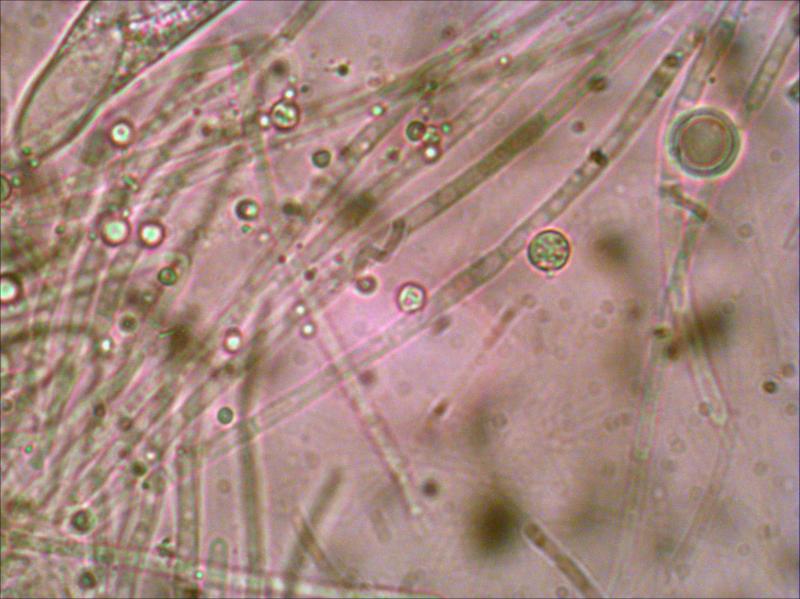
Pararyses: rounded top, septated, width 2.1-2.4 um
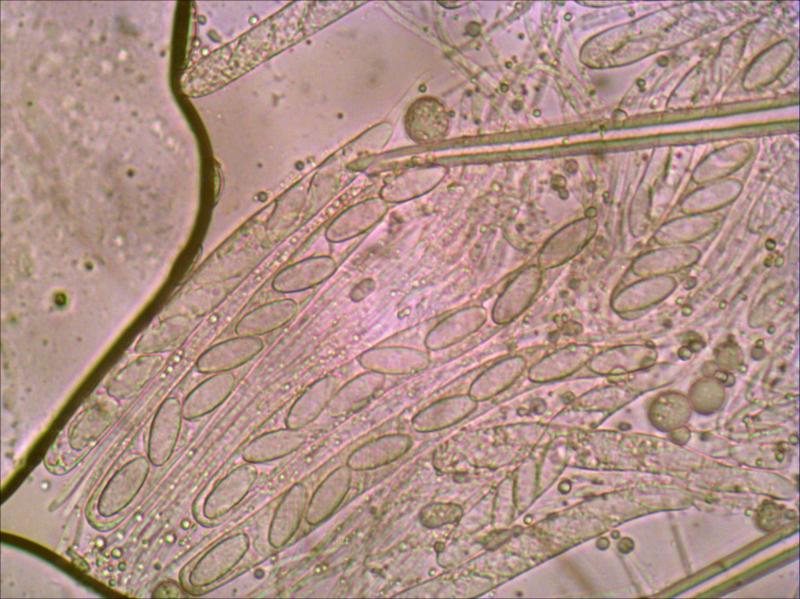
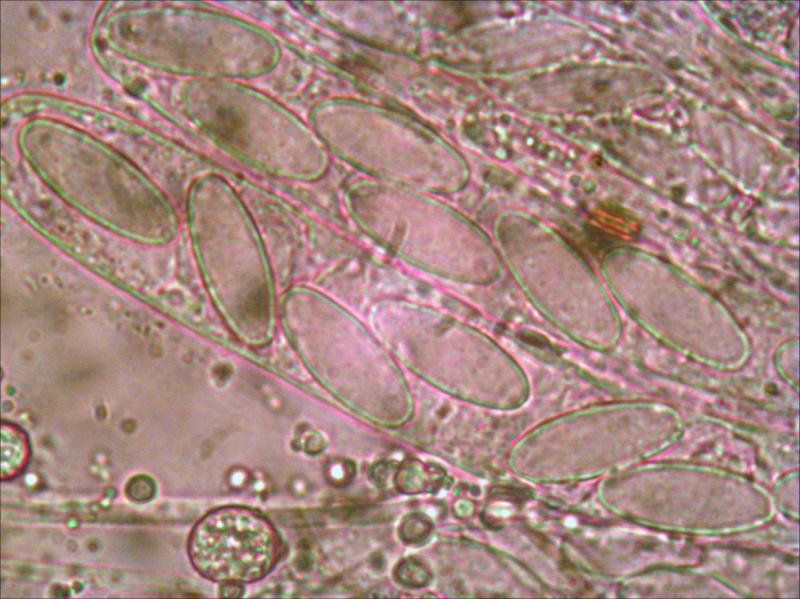
Asci: 8-spored, 149-170x13-14.5.
Spores: ellipsoid, thick walled, 18.5-20x7-7.5 um.
No free spores were found so only spores inside asci were measured but difference in final measurement will not be that much I think.

It must have somewhat shorter and broader, more elliptical spores.
Maybe, that the spores in the asci, you show us, are not mature, but however your species should be Lasiobolus macrotrichus.
The narrow, more or less fusiforme spores are typical for this species!
Regards, Norbert